
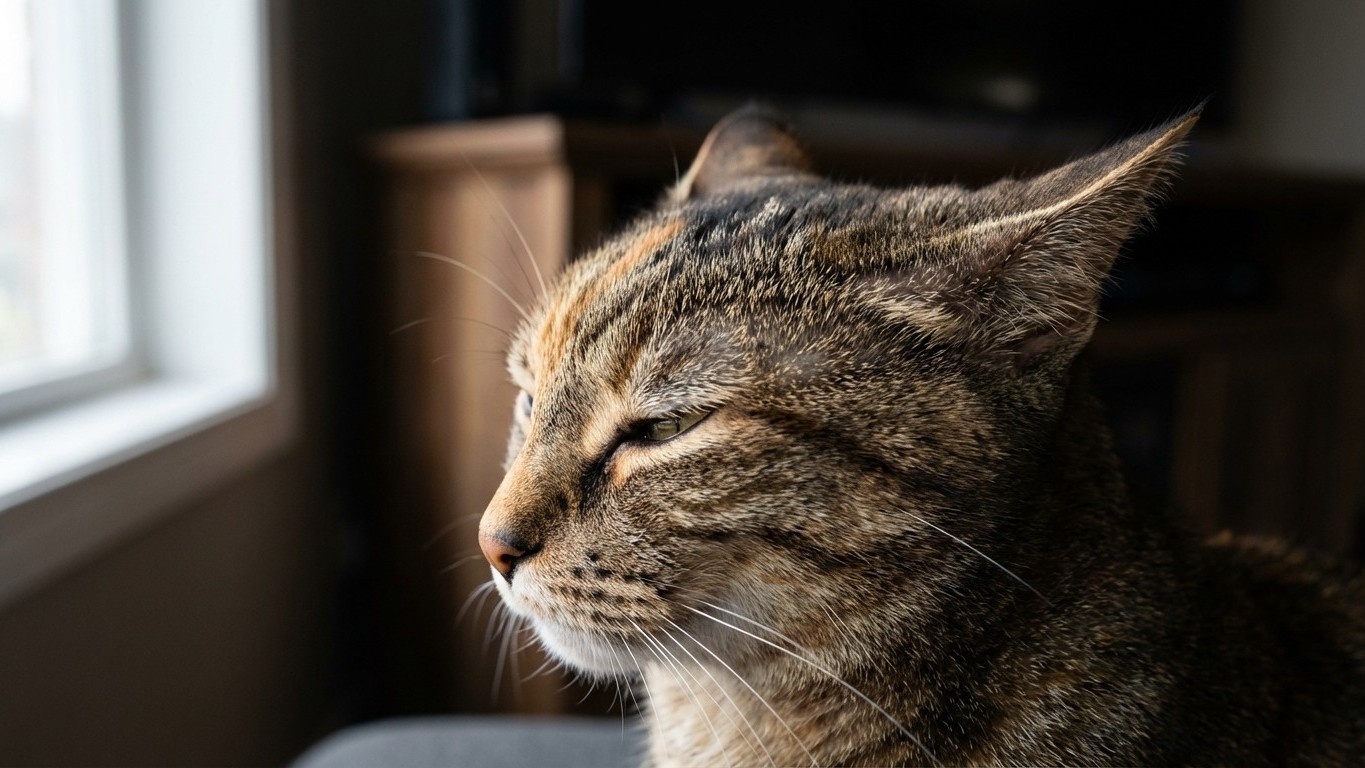
The slow blink is one of the most famous things in cat ownership, often described as a “kitty kiss,” a sign of pure contentment, something to mirror back with a warm smile of your own. But a cat that is squinting, persistently, without that dreamy half-lidded quality of relaxation? That is an entirely different story. In veterinary ophthalmology, squinting is actually one of the most important signs that something may be wrong with the eye. And the two are far too easy to confuse.
Key takeaways
- The slow blink looks like squinting but means the opposite — one is love, the other is pain
- Vets use a glowing dye test that reveals corneal ulcers in seconds, but delays can mean permanent blindness
- Feline herpesvirus affects up to 97% of cats worldwide and triggers recurring eye crises from stress alone
The slow blink and the squint are not the same thing
Feline eyes communicate volumes, and the distinction here is critical. According to certified feline Behaviourist Stephen Quandt, slow blinks, which might resemble squinting, often signify affection. But a frightened cat may also squint, without blinking, when they want space. Context, as ever with cats, is Everything.
A true slow blink has a quality to it: the whole body tends to follow. Slow-blinking behaviour is often coupled with rolling over and displaying the belly, or perhaps a slow purring noise, this shows that a cat feels comfortable and safe. Squinting, by contrast, tends to be tenser, more fixed, often one-sided. The cat may sit hunched rather than sprawled. If one or both eyes are being held partially closed with frequent, forced blinks, this is a classic sign of pain.
The technical term for pathological squinting is blepharospasm. Blepharospasm is a common presentation in cats that normally indicates pain in or around the eye, it describes repeated, spasmodic movement of the eyelids, commonly referred to as squinting. Unlike normal blinking, blepharospasm doesn’t stop after a moment: your cat seems unable to fully open the affected eye, which is a clear sign that something is irritating or hurting it.
Why cats squint when they’re in pain, and what’s usually behind it
Squinting is a symptom of eye disease. Whenever an eye is painful or inflamed, cats tend to squint. If your cat squints for more than a few hours, schedule an appointment with your vet. The causes range from the minor and transient to the genuinely urgent.
At the more serious end, corneal ulcers are a frequent culprit. A corneal ulcer is extremely painful, so the cat usually keeps the eye tightly shut. These ulcers, wounds on the surface of the eye, won’t heal on their own. Without proper care, ulcers can worsen and lead to serious complications like infection or vision loss. An untreated ulcer can deepen, become infected, and potentially rupture the eye, leading to permanent blindness or eye removal. That is a long way from a happy squint.
The most common underlying cause of corneal ulcers in cats is one that might surprise you. Feline herpesvirus-1 (FHV-1) has a worldwide distribution, with reported exposure rates in some cat populations of up to 97%, making it a significant cause of clinical disease in the global cat population. Following exposure to the virus, virtually all cats become persistently infected, and many will develop recrudescent disease on one or more occasions during their lifetime. Acute ocular herpetic disease manifests as conjunctivitis, corneal ulceration and keratitis, and can be severe and painful. Repeated bouts of recrudescent ocular disease can lead to progressive corneal pathology that can be ultimately blinding in affected cats. Stress, a house move, a new pet, even a change in routine, is often the trigger for a flare-up. Minimising stress is vital in managing FHV-1, as it can trigger reactivation. To help reduce flare-ups, maintain a consistent daily routine, provide enrichment activities, and avoid sudden changes in your cat’s environment.
Beyond herpesvirus, pain, conjunctivitis, a corneal ulcer, glaucoma, and infection can all occur in just one eye, which is why one-sided squinting warrants particular attention. If your cat is squinting one eye but there’s no discharge, it’s typically an indicator of pain. An injury, scratch, or foreign object may be to blame. Glaucoma is another possibility. Glaucoma generally develops when the tear duct can’t drain properly, leading to pressure that damages the optic nerve.
How to tell the difference, and when to act fast
Honestly, the body language surrounding the squint is your best guide. Abnormally squinting one or both eyes can be a sign of Discomfort due to an eye irritant, injury, or other health condition. Other signs of pain include pawing at the eyes, increased vocalisation, loss of appetite, hiding more than usual, and abnormal irritability or aggressiveness. A cat quietly squinting on the sunny windowsill with a relaxed tail is rather different from one who is hunched in the corner, blinking rapidly at a half-closed eye, and refusing their tea.
A goopy or sticky discharge coming from your cat’s eyes is typically a sign of infection. A clear discharge often indicates a viral infection, whereas green or yellow discharge suggests a bacterial infection. If you spot any redness alongside the squinting, don’t delay. If your cat’s eyes appear red and inflamed, there is a good chance your feline friend has conjunctivitis. Other signs include swollen eyes and increased sensitivity to light. This common eye condition can be caused by anything from an infection or allergy to feline herpes virus, and without treatment it could lead to more serious complications.
Any squinting that lasts more than a few hours, or comes with tearing, redness, cloudiness, or pawing at the eye — warrants an exam. In some cases, delays can mean the difference between saving and losing vision. Always consult your vet if you’re uncertain, eye conditions in cats can deteriorate quickly, and it is never worth a wait-and-see approach when sight may be at stake.
What your vet will actually do about it
A vet examining a squinting cat will typically reach for a small but rather beautiful diagnostic tool: fluorescein dye. The fluorescein dye application will be the most effective test at your vet visit when a corneal ulcer is to blame for your cat’s squinting eye. A special dye is applied, taken up by certain layers of the cornea, and gently flushed out, the vet will then be able to see if any dye remains as it glows neon green. It is one of those moments in veterinary medicine that is genuinely astonishing to witness.
To determine the cause of a cat’s abnormal squinting, a vet will likely perform a full physical examination, including an eye exam. Some common eye issues in cats can be identified simply by looking at the eye with a light and magnifying lens in a darkened room. Treatment varies widely by cause: antibiotic eye drops for bacterial infections, antivirals for herpesvirus flare-ups, and in more severe cases involving deep ulcers, surgery. Most ulcers heal well if they are treated quickly, but left without treatment, they can be very painful, cause permanent damage and in severe cases lead to loss of an eye.
One thing worth knowing for flat-faced breeds: Persians, British Shorthairs, and Exotic Shorthairs are anatomically more prone to eye issues because of their skull shape, which means their tear drainage works less efficiently and debris more easily irritates the cornea. Regular grooming, especially for flat-faced breeds like Persians or Himalayans, helps keep fur and debris out of the eyes. For these cats especially, a persistent squint should be treated as a red flag, not a quirk of personality. The slow blink is a love letter; the sustained squint is a cry for help. Learn to read the difference, and your cat’s eyes will tell you everything you need to know.
Sources : petsofparadise.store | vetster.com