
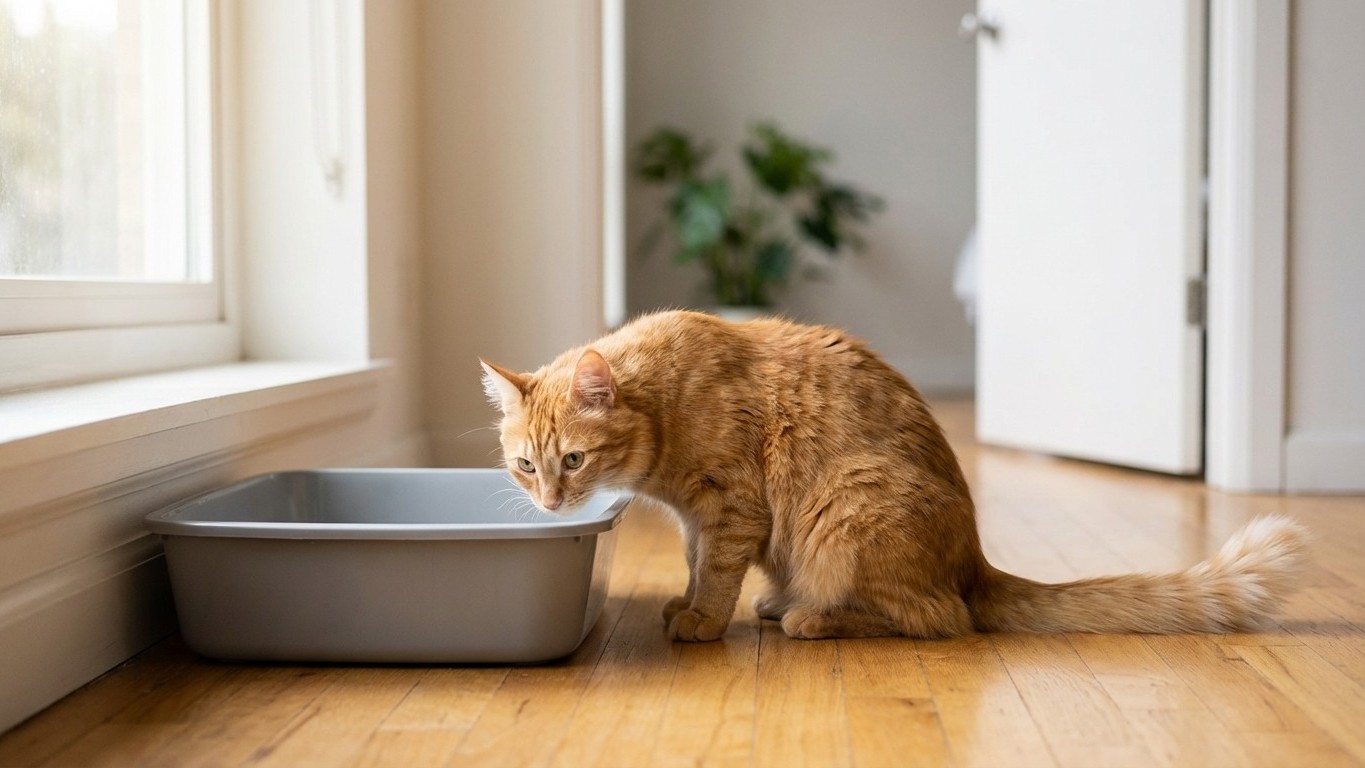
Your cat has been using the litter box perfectly for months, and then one day you find a puddle on the bath mat, a deposit behind the sofa, or something unspeakable on your duvet. You’ve changed nothing, you tell yourself. Except, possibly, you have. The litter box has been sitting in the corner of your bathroom since day one, and according to feline behaviourists, that tidy little arrangement might be quietly driving your cat mad.
Key takeaways
- A cat’s survival instincts make bathrooms feel like dangerous dead-ends with no escape routes
- Closed doors, loud appliances, and humidity can trigger litter box avoidance without you realizing it
- Once a cat chooses an alternative spot, that preference becomes surprisingly difficult to break
Why the bathroom feels logical to us, but not to your cat
The bathroom seems like the obvious answer. Tiled floors, easy to clean, tucked out of sight. Guests don’t have to see it. The smell is contained. From a human perspective, it is practically elegant. The problem is that your cat is not thinking about your interior design choices.
Cats feel vulnerable in their litter boxes. Once in position, they worry about potential invaders in their territory. An insecure cat might simply choose another location to do their business. That other location, to be absolutely clear, is almost certainly somewhere you would not choose.
A single-occupancy bathroom can work in some homes, but the devil is very much in the details. A cat’s toilet can be placed near your toilet, if it’s just you and your pet living in the home and the room is large enough. However, if someone in the home shuts out the cat by closing the bathroom door, it may prompt the animal to do their business somewhere else. Think about how often that door gets shut. Every shower, every private moment, your cat just got locked out of their only toilet.
There is also the noise problem, and this one catches people off guard. If you don’t have a particularly confident cat, the sound of showering may scare them. Since cats like to relieve themselves in quiet places, experts advise owners not to place litter boxes near appliances or sound-heavy environments. A bathroom with a powerful shower, a humming extractor fan, and pipes that clank is not exactly a peaceful sanctuary.
The deeper issue: escape routes and survival instinct
Here is where feline behaviour gets genuinely interesting. Your cat is not simply fussy. They are, neurologically speaking, still operating on the survival software of a small wild predator. A wild cat’s bathroom sites typically leave them vulnerable to predators, so your domestic cat also searches for safe places to do their business. Cats are also fastidious creatures who prefer to keep themselves and their environment clean, and these basic instincts affect behaviour.
When choosing a location for the litter box, the priority should be opportunities for a safe escape and a location that provides ample visual warning time to see any potential threats. A room with multiple open doors, multiple escape routes, is preferred. A bathroom, especially a small one with a single door, is practically the worst possible setup from this perspective. It is a dead end. Your cat goes in, does what they need to do, and has exactly one way out. If something startles them, they are cornered.
Sharing a bathroom is possible, but tucking a litter box under a sink or in a corner is not ideal, tight spaces block the view and air circulation. That instinct to see the whole room, to monitor the exits, is not something cats can simply switch off because we have provided a stylish wicker box hider.
There is also the humidity factor, which most owners overlook entirely. Bathrooms can be humid, especially after showers, which may affect the litter’s texture and odour control. If the bathroom is small, finding adequate space without compromising functionality can also be tricky. Clumping litter that absorbs moisture before it can clump properly is litter that stops working. Your cat notices this long before you do.
What actually happens when the setup fails
A poorly placed litter box can cause major stress and anxiety for your cat. When a location doesn’t meet their needs, cats often make it clear by choosing another spot in the home to do their business. This is not spite. Cats do not do spite. Your cat isn’t trying to upset you or cause messes on purpose. Litter box avoidance is often their way of signalling that something isn’t quite right.
The really frustrating part is how quickly a bad habit sets in. Once a cat avoids her litter box for whatever reason, that avoidance can become a chronic problem, because the cat can develop a surface or location preference for elimination, and that preference might be your living room rug or your favourite easy chair. The carpet by the bath. The corner of the bedroom. Once a location has been used, scent marking makes it feel right to your cat, and breaking that association takes real effort.
Stress can cause litter box problems, and cats can be stressed by events that their owners may not think of as traumatic. Changes in things that even indirectly affect the cat, moving, adding new animals or family members, even changing your daily routine — can make your cat feel anxious. Add an inaccessible or frightening litter box location to any of these stressors, and you have a recipe for accidents.
Before attributing any of this to behaviour, though, always rule out a medical cause first. If Your Cat Suddenly stops using the litter box, it’s a sign something’s wrong, either medically, behaviorally, or environmentally. Your first step should always be a vet check-up to rule out health problems. Urinary tract infections, bladder stones, and arthritis can all make using the box painful, and pain gets remembered.
Making it work, or knowing when to move the box
The bathroom is not automatically off the table. It can work, but it requires honest thought about your specific home and your specific cat. The best places for litter boxes are usually quiet, easy-to-reach corners that offer privacy. If your bathroom genuinely meets those criteria, large enough, rarely closed off, free from loud appliances, with the box positioned away from the wall rather than wedged behind the toilet — it may be fine.
Cats like convenience. If your cat must go on an indoor journey just to get to their box, they may opt for another location. The box needs to be somewhere your cat actually spends time, accessible without a trek through unfamiliar or stressful territory.
The gold standard, according to behaviour guidelines, is to have more than one option. The general rule is one litter box per cat, plus one extra, placed in different areas of your home. This ensures that every cat feels safe using a box without fear of being ambushed or bullied. For multi-cat households, having enough boxes isn’t helpful if they’re all grouped together. Grouping them makes it easy for one dominant cat to control them all. Instead, spread the litter boxes out in different areas of your home.
If you do keep one box in the bathroom, make sure the door stays open at all times, position the box where your cat has sightlines to the door, and keep the room as quiet as possible during their likely toilet times. If you need to relocate the box, don’t do it suddenly. Move it gradually, a few inches each day, until the box reaches its new destination. Cats rely on scent memory to find their toilets, and an abrupt change can itself cause accidents.
The bigger question, perhaps, is this: if we know that cats experience using their litter box as a genuinely vulnerable moment, shaped by thousands of years of predator avoidance, is our instinct to hide the box in the most enclosed, easily shut-off room in the house actually about our comfort rather than theirs? Most of the time, the honest answer is yes, and for a creature so acutely tuned to their environment, that gap between our logic and their instinct is exactly where the problems begin.
Sources : bdpets.com | dailypaws.com