
I’ll research the latest information on indoor cats, hairballs, and seasonal shedding before writing this article.
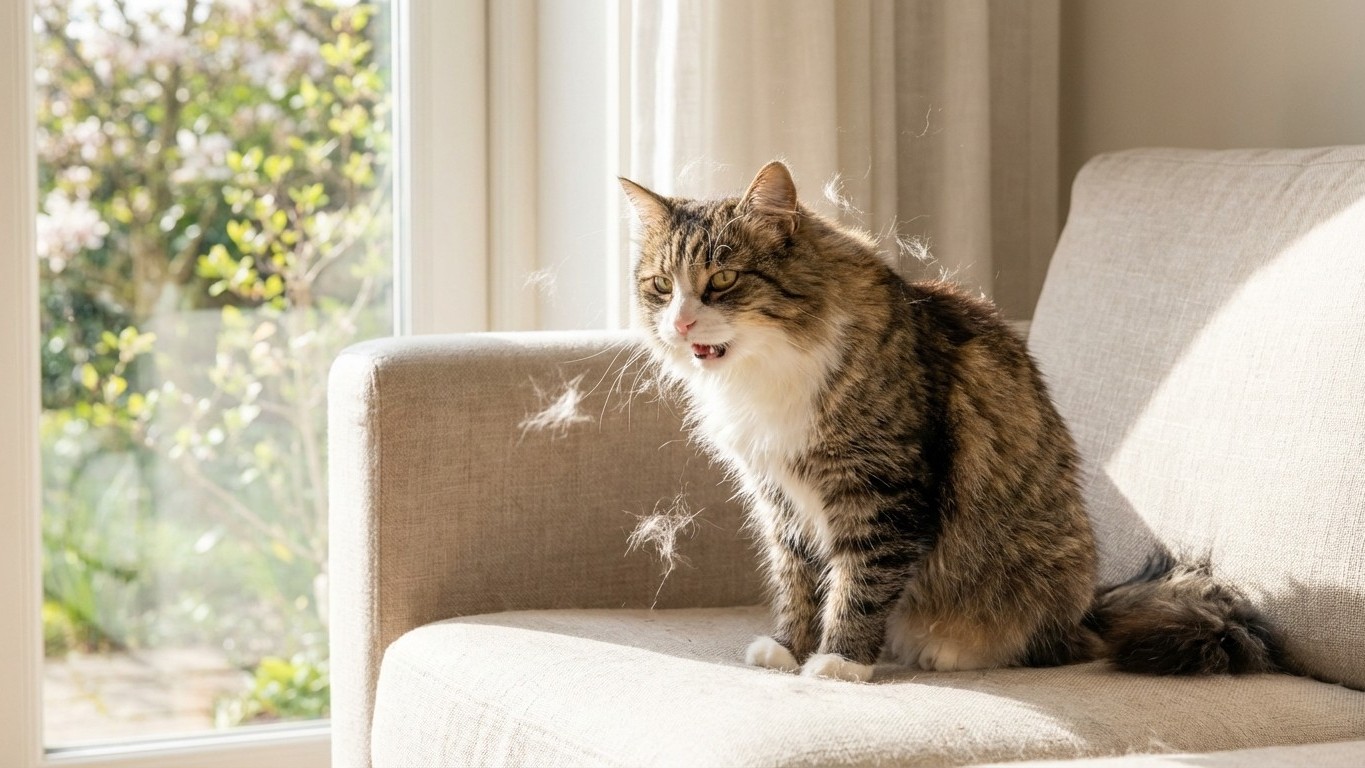
Your indoor cat sailed through winter Without a single retching episode. No grim surprises on the Kitchen floor, no alarming 3am gagging sounds. Then March arrived, the days stretched noticeably longer, and suddenly your sofa doubles as a fur factory and your cat is producing hairballs like clockwork. You haven’t Changed a thing. So what on earth happened?
The short answer is: spring happened. And your cat’s biology responded exactly as it was designed to.
Key takeaways
- Your cat’s body detects longer daylight hours and triggers a biological coat-blow that has nothing to do with temperature
- More shedding means more loose fur being groomed and swallowed—the direct path to hairballs becomes unavoidable
- Strategic brushing, hydration, and targeted diet changes can reduce hairballs without waiting for summer to end
It’s Not the Warmth : It’s the Light
Most owners assume that rising temperatures trigger shedding, but the real culprit is daylight. Cats are guided by daylight as much as temperature. Day length (called photoperiod) signals the body to switch coats, longer days in spring cue the shedding of the heavier winter coat. It’s a common myth that heat causes shedding. In reality, it’s the light. As spring brings longer daylight hours, your cat’s brain signals the body to release the heavy, insulating undercoat they grew for winter. This process is often called a “coat blow,” and for long-haired cats, it can be overwhelming.
Now, here’s where indoor cats have a particular quirk. Indoor cats may shed more consistently year-round due to artificial lighting and stable indoor climates, but even they can experience a noticeable increase in hair loss during spring and summer. The artificial light that keeps their shedding relatively steady all winter can’t fully override the Natural light pouring through the windows once the days genuinely lengthen. Many indoor cats shed moderately all year round. However, they will still often experience slightly heavier moults during the spring and autumn months, as their bodies still respond to the subtle changes in natural light from windows. So your cat wasn’t broken before, they were just coasting. Spring flips a biological switch.
Why the Hairballs Suddenly Appear
The leap from “more shedding” to “more hairballs” is painfully direct. Cats are meticulous groomers, and when they shed more, they’re also likely to ingest more loose fur during grooming. This fur can accumulate in their stomach and form hairballs (technically called trichobezoars). Most of the time, cats manage to pass these through their digestive system or vomit them up, but frequent hairballs can be uncomfortable or even problematic.
The anatomy behind this is worth understanding. The tiny backward-slanted projections (papillae) that roughen the surface of your cat’s tongue propel the hair down their throat and into their stomach. The main structural component of the hair, a tough, insoluble protein substance called keratin, is indigestible. There is no way for a cat to “decide” not to swallow the fur their tongue catches, the hook-like structure makes swallowing it involuntary. More loose fur in the coat simply means more fur going down.
Our feline friends do most of their grooming themselves, up to six hours a day. Multiply that dedication by a coat that’s actively releasing its winter layer, and the maths become uncomfortable rather quickly. The development of hairballs is more frequent in seasons of the year when cats normally shed their coats. Your previously hairball-free cat wasn’t doing anything special before — they simply had less loose fur to deal with.
There’s also a secondary factor that often goes unmentioned: indoor cats tend to groom more simply because they’re less stimulated by outdoor activities and environmental changes. With fewer distractions, grooming becomes a bigger part of the day, and that leads to more hair ingestion. Spring amplifies an already-established habit.
When to Stop, Watch, and Call the Vet
Occasional hairballs during shedding season are normal. Most cats produce a hairball every week or two. More frequent episodes could signal an underlying issue. The line between “seasonal nuisance” and “genuine concern” is worth knowing.
If you notice an increase in shedding accompanied by more frequent vomiting or coughing, the culprit is likely hairballs. As your cat grooms, they swallow loose fur. When they shed more, they swallow more, which can form indigestible clumps in their stomach. While occasional hairballs are normal, frequent ones are not. The warning signs that warrant a vet call are specific: if your cat is persistently gagging without producing a hairball, is constipated for over 48 hours, or is showing sensitivity in their abdomen, seek veterinary attention promptly. These could be signs of a digestive blockage, time is of the essence.
Occasional hairballs are normal, but if your cat has frequent or difficult episodes, it may be time to look closer. Hairballs can sometimes indicate an underlying issue, such as digestive trouble, stress, or excessive grooming due to allergies. Conditions like inflammatory bowel disease can increase hairball frequency, and worm infestations can cause digestive discomfort, leading to increased grooming and hairball formation. If in any doubt, always consult your vet, they’re best placed to rule out anything more serious.
What You Can Actually Do About It
The most effective intervention is also the simplest: brush your cat, and brush them more often than you think necessary. One of the simplest and most effective remedies for cat hairballs is regular brushing. By brushing your cat frequently, especially during shedding seasons, you can remove loose hair before your cat ingests it. Long-haired cats may need daily brushing, while short-haired cats benefit from a few sessions per week. The breed matters here: pedigree cats that shed a lot of hair are usually those with very long fur, such as Norwegian Forest Cats, Siberian Cats, Maine Coons and Ragdolls. If your cat falls into one of those categories, spring grooming is non-negotiable.
Diet plays a quieter but equally important role. Diets rich in animal protein and omega-3 fatty acids (like those from salmon oil) can support skin and coat health, reducing excessive shedding and helping hairballs pass more easily. Certain cat foods are formulated to support healthy digestion and reduce hairball formation. These diets are rich in fibre, which helps hair pass through the digestive system more easily. Look for hairball control formulas that contain natural fibre sources like beet pulp or psyllium husk. Always check with your vet before switching foods, particularly if your cat has any existing health conditions.
Hydration is the piece most owners overlook. Hydration aids digestion and helps fur move through the digestive tract. Ensure your cat always has access to fresh water, some cats prefer running water, so consider a pet fountain. For cats who refuse still water, a simple flowing fountain can make a genuine difference to how much they drink.
An indoor grass patch for cats provides natural fibre that aids digestion and helps control hair loss by reducing hairballs. This addition to your home mimics the outdoor environment, encouraging your cat to nibble and engage with the grass, which can help them pass ingested fur more easily. It’s a low-effort, low-cost addition that many indoor cats take to surprisingly quickly.
Finally, think about enrichment. Adding new toys, climbing towers, or scheduled playtime can help reduce grooming frequency and improve overall well-being. Introduce window perches, puzzle feeders, and rotating toys to keep your cat mentally and physically engaged. A cat busy hunting a feather wand is a cat not compulsively grooming out of boredom, and that makes a difference come April.
Spring shedding is, in the end, proof that your cat’s body is working as it should. The question is whether your grooming routine is keeping pace with it. And perhaps the more interesting thing to consider: if your previously hairball-free indoor cat is now producing them regularly every spring, what does that tell you about how connected they still are to the rhythms of the natural world, even from the comfort of your living room sofa?