
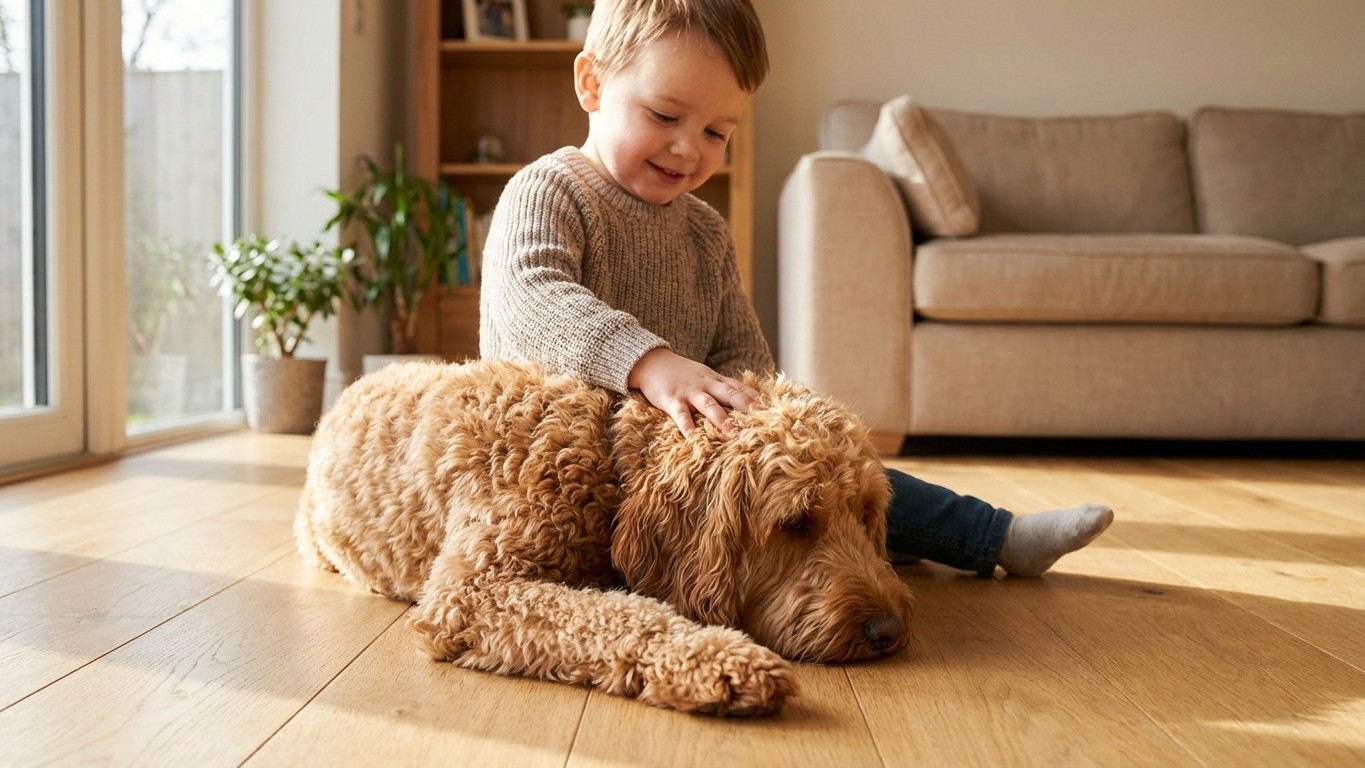
Choosing a dog when someone in the family has allergies and you have young children running around is one of the trickiest decisions a household can face. The wrong choice doesn’t just mean sneezing and itchy eyes, it can mean heartbreak, rehoming, and a child who associates dogs with discomfort rather than joy. The good news? With the right information, the right breed, and some practical adjustments at home, a dog and an allergic child can absolutely coexist happily.
Before anything else, a word of honest perspective: no dog is completely allergen-free. The term “hypoallergenic” is widely used, often loosely, and it deserves a proper explanation before any breed is even mentioned.
Why Allergies and Children Make Breed Choice So Important
Understanding Dog Allergies in Children
Most people assume dog allergies are triggered by fur. They’re not, or at least not directly. The main culprit is a protein called Can f 1, produced primarily in a dog’s saliva, urine, and skin cells (dander). Fur itself isn’t the allergen, but it acts as a fantastic vehicle, carrying dander and saliva particles around the home and into the air. This distinction matters enormously when choosing a breed, because focusing purely on coat type without considering dander production will lead you astray.
Children tend to be particularly vulnerable to allergic reactions because their immune systems are still developing and their behaviours (hugging dogs, letting them lick their faces, rolling on the floor together) maximise direct contact with allergens. That said, some research suggests that early exposure to dogs in the first year of life may actually reduce the likelihood of developing allergies later, which is one of the more counterintuitive findings in this space. The relationship between children and dogs is genuinely complex from an immunological standpoint, and any family considering adoption should consult both their GP and a vet before committing.
The Real Risks for Families with Allergic Children
For families where a child has already been diagnosed with a dog allergy, the stakes are clear. Persistent exposure to allergens can worsen asthma, trigger eczema flares, and contribute to chronic sinusitis. A breed that sheds heavily and drools copiously will spread Can f 1 across every surface in the home within weeks. Conversely, a low-shedding, low-drool breed that’s groomed regularly can dramatically reduce the allergen load in the environment.
The emotional dimension is worth acknowledging too. Children who desperately want a dog but can’t be around one safely often feel excluded from a rite of childhood that feels universal to them. Getting the breed decision right isn’t just about managing symptoms, it’s about giving a child the experience of growing up with an animal companion, with all the empathy, responsibility, and joy that brings.
Coat, Allergens, and Energy: The Three Criteria That Actually Matter
Hypoallergenic Versus Non-Hypoallergenic: What the Science Actually Says
The honest answer is that truly hypoallergenic dogs don’t exist. Every dog produces Can f 1. What varies significantly between breeds is how much dander they shed, how much saliva they spread, and how their coat type affects allergen dispersal in the home. Breeds described as hypoallergenic tend to have single-layer coats that shed minimally, or tightly curled coats that trap loose hair (and with it, dander) rather than releasing it into the air. This genuinely does reduce the overall allergen load in a household, but it doesn’t eliminate it.
Some individual dogs within a breed also produce more Can f 1 than others, which means that even within supposedly hypoallergenic breeds, individual variation exists. If possible, spending time with the specific dog (not just the breed) before adoption is always worth doing, particularly if a family member has a confirmed allergy. Your vet can advise on allergy testing options that may help identify individual sensitivity levels before you bring a dog home.
Energy and Temperament: What Works Alongside Children
A low-allergen dog that’s highly strung, easily startled, or prone to snapping under stress is not a safe or happy choice for a family with young children. Energy level, patience, and sociability all need to weigh alongside allergen potential. The ideal family dog for allergic households tends to be confident but gentle, playful but not manic, and resilient enough to tolerate the (occasionally chaotic) unpredictability of life with children.
Active families benefit from higher-energy breeds that can match children’s enthusiasm for outdoor play. Quieter households, or families with very young children or a mix of ages, often do better with calmer, more adaptable dogs. Our dog breeds guide covers how to match energy levels and temperament to your lifestyle in much more detail, which is worth reading alongside this article.
Recommended Breeds: Low-Allergen and Child-Friendly
Comparing Breeds Across Allergy Risk, Coat, and Energy
Rather than an exhaustive list, the breeds below represent a genuine selection that balances all three criteria: reduced allergen dispersal, child-appropriate temperament, and manageable energy levels. Each comes with real considerations, because no breed is perfect for every family.
The Poodle (standard, miniature, or toy) is consistently at the top of this conversation, and for good reason. Poodles have tightly curled, low-shedding coats that trap dander effectively, produce relatively low levels of Can f 1, and are among the most intelligent, trainable, and emotionally attuned breeds. Standard Poodles have energy to match active children; miniature and toy varieties suit smaller homes. The trade-off is regular professional grooming (every six to eight weeks) and a coat that mats quickly without consistent brushing.
The Bichon Frisé is another low-shedding option with a gentle, sociable temperament that suits families well. They’re small but sturdy enough for gentle play, and their powder-puff coats, while high-maintenance, don’t release dander into the air the way a Labrador’s double coat does. They can be prone to separation anxiety, so they suit households where someone is usually home.
The Portuguese Water Dog offers more energy and substance, this is a working breed with a robust, wavy or curly coat that sheds minimally. They’re athletic, love water, and tend to be excellent with children. The grooming commitment is significant, but for active families they’re a brilliant fit.
The Soft Coated Wheaten Terrier deserves mention for families who want something a bit different. Their single-layer, silky coat sheds very little, they’re playful and affectionate with children, and they have the terrier spirit without the extreme prey drive of some relatives. They can be stubborn, so consistent training from puppyhood is important.
The Labradoodle and Cockapoo are popular choices in British households, though it’s worth being clear that these are crossbreeds, and coat type (and therefore allergen dispersal) can vary considerably even within the same litter. Some individuals inherit low-shedding Poodle coats; others get the Labrador or Cocker Spaniel double coat. For allergic families, seeing the specific puppy’s parents and ideally spending time with them is especially important with doodle-type crosses.
For families exploring a wider range of profiles, the best dog breeds guide for families with children offers a comprehensive look at temperament, energy, and compatibility across many more breeds, and the best dog breeds guide for families with children digs into safety and child-specific criteria in even more detail.
Practical Considerations Before You Adopt
Grooming, Maintenance, and the Daily Reality
Low-shedding coats sound convenient until you realise they need far more active maintenance than a short-coated dog. A Poodle or Bichon that isn’t brushed daily will matt badly; a matted coat traps moisture, becomes a haven for skin irritation, and ironically increases the dander problem you were trying to avoid. Factor professional grooming costs into your budget from the start, for many of the breeds listed here, that’s a meaningful recurring expense.
Washing the dog regularly (ideally weekly, or at least every two weeks) does genuinely reduce surface allergen levels, as does wiping paws and face after outdoor time. These are habits that become routine quickly, but they require commitment.
Preparing Children to Live With a Dog Despite Allergies
Practical education makes a real difference. Teaching children to wash their hands after playing with the dog, avoid letting the dog lick their face, and keep the dog out of their bedroom (where they spend a significant chunk of time sleeping and breathing) can substantially reduce their allergen exposure. These aren’t restrictions that diminish the relationship, most children adapt quickly once they understand the reason behind them.
If you have a senior family member also navigating health considerations alongside the new dog, the dog breeds guide for seniors covers calm, lower-maintenance breeds that may overlap usefully with allergy-friendly options.
How to Reduce Allergens at Home
Even with the best breed choice, some allergen management at home is necessary. HEPA air purifiers in main living areas and bedrooms make a measurable difference to airborne dander levels. Vacuuming with a HEPA-filter vacuum (rather than redistributing allergens back into the air) two or three times a week keeps surfaces manageable. Washing pet bedding weekly, choosing smooth flooring over carpets where possible, and using washable sofa covers all help significantly.
Keeping the dog off beds and sofas is one of the single most effective interventions, though this requires consistency from every family member (children included). It’s harder to enforce than it sounds, but the allergen reduction in sleeping and relaxing spaces is genuinely worthwhile.
Antihistamines and other medications prescribed by a GP can manage mild to moderate symptoms, but they work best as a supplement to environmental controls rather than a substitute for them. Always discuss the full picture with your GP before adopting, and loop in your vet for advice on breed-specific grooming and care from an allergen perspective.
Frequently Asked Questions
Which dogs are suitable for allergic children? Breeds with low-shedding, single-layer or curly coats tend to disperse less dander and are generally better tolerated. Poodles, Bichon Frisés, Portuguese Water Dogs, and Soft Coated Wheaten Terriers are among the most recommended. No breed is completely safe for every allergic person, so individual assessment matters.
Do hypoallergenic dogs really exist? Not in the absolute sense. All dogs produce the Can f 1 protein. What varies is how much allergen they disperse into the environment. “Hypoallergenic” is a relative term, these breeds are less likely to trigger reactions, not guaranteed not to.
How can you reduce allergies with a dog at home? Regular dog washing, HEPA air purifiers, frequent vacuuming, keeping the dog out of bedrooms, washing pet bedding often, and choosing smooth flooring over carpet all help meaningfully. Consistent grooming of low-shedding breeds also prevents dander build-up in the coat.
Which dog suits an active, allergic family? The Portuguese Water Dog and Standard Poodle are the standout options here, both have energy to match active children, minimal shedding, and the temperament to handle busy family life. Labradoodles can be a good fit too, provided the individual dog’s coat type is confirmed before adoption.
There’s something worth sitting with before you make this decision: the dog you choose will live with your family for a decade or more. The breed matters, the individual dog matters, and the systems you put in place at home matter. Getting all three right is entirely achievable, and the reward, for children and adults alike, is a relationship unlike any other.