
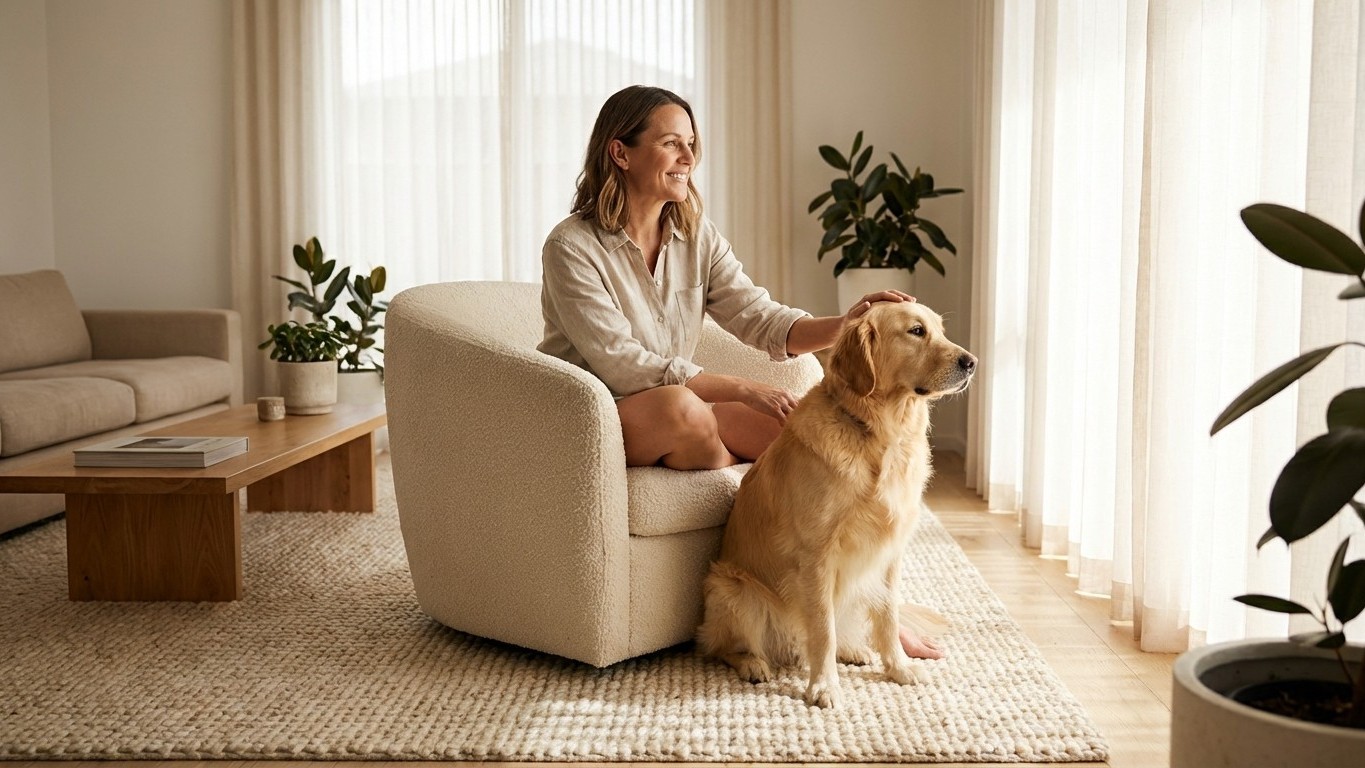
Choosing a dog when you’re prone to anxiety or stress is a very different exercise from the breezy “pick your favourite” approach you’ll find in most pet guides. For anxious owners, the wrong breed doesn’t just mean inconvenience, it can trigger genuine spirals of worry, sleep disruption, and that creeping sense of having made an irreversible mistake. The good news is that some dogs are genuinely well-suited to calmer, more cautious personalities, and matching yourself to the right breed can transform dog ownership from a source of dread into one of the most grounding experiences of your life.
Why breed choice matters so much for anxious owners
Understanding what anxiety actually looks like in dog owners
Anxious owners aren’t simply “worriers” who need to toughen up. The profile is wide: it includes people with generalised anxiety, those recovering from burnout, first-time owners who fear getting things wrong, parents managing a busy household, or anyone who finds unpredictability genuinely distressing rather than merely inconvenient. For these people, a dog that screams, bolts, chews through furniture, or requires a professional trainer to manage basic commands isn’t a challenge to rise to, it’s a daily source of cortisol spikes.
The key thing anxious owners need from a dog is predictability. Not perfection, not a robot, but a temperament that behaves consistently enough that you can read your dog’s needs, anticipate their reactions, and feel competent in their care. That sense of competence is, for many people, the difference between a dog that helps manage anxiety and one that amplifies it.
When the wrong breed quietly makes everything worse
High-energy working breeds placed with sedentary or anxious owners are one of the most common welfare mismatches in the UK. A Border Collie with nowhere to channel its intelligence will redecorate your house and make eye contact that feels faintly accusatory. A Husky will escape the garden, howl at 3am, and pull you off your feet. These are wonderful dogs, in the right hands. In the wrong ones, the owner ends up feeling inadequate, the dog ends up understimulated, and everyone is miserable.
Certain breeds also carry health predispositions that generate their own anxieties: emergency vet visits, expensive procedures, chronic conditions requiring daily management. For someone who already catastrophises, learning that their dog has a 40% lifetime chance of a specific condition can feel overwhelming before anything has even gone wrong.
What to look for: the real criteria for a low-stress dog
Emotional stability and behavioural predictability
A stable temperament means your dog responds to everyday situations, strangers at the door, children running past, unexpected noises — without extreme reactions in either direction. You’re not looking for a dog that never reacts; you’re looking for one that processes and recovers quickly, without escalating. Breeds that have been selected for centuries to work calmly alongside humans (retrievers, spaniels, certain pastoral breeds) tend to carry this quality more reliably than those bred for independent decision-making or guarding instincts.
Predictability in behaviour also means the breed’s typical patterns are well-documented and consistent. A dog that reliably signals when it wants to play, eat, or rest, rather than one whose moods shift without apparent cause, allows anxious owners to build the routines and rhythms that genuinely help manage stress.
Ease of training and stimulation needs
Trainability matters enormously here, but not for the reasons people often think. It’s not about impressing people at the park with a perfect heel, it’s about the owner feeling in control. A dog that grasps basic commands quickly, responds to a “settle” cue, and doesn’t require eight weeks of specialist classes just to walk politely on a lead gives an anxious owner a real, tangible sense of success. That builds confidence, and confidence reduces anxiety.
Stimulation requirements are equally worth scrutinising. High-drive breeds that need two hours of exercise plus daily mental enrichment will eventually exhaust even enthusiastic owners. For an anxious owner, the guilt of falling short of those requirements on a bad day can snowball badly. A breed with moderate exercise needs, content with a good 45-minute walk and some calm indoor time, is far more forgiving of the days when life doesn’t go to plan.
Grooming, health, and daily maintenance
A dog that requires professional grooming every six weeks, daily eye-cleaning, or regular ear checks can create a steady low-level anxiety in owners who worry about getting the care routine wrong. This doesn’t mean you should avoid all maintenance, all dogs need some, but it’s worth being honest about how much daily administration you can realistically handle without it becoming stressful. Short-coated breeds or those with fewer inherited health complications often make for a calmer ownership experience in this respect.
Suitability for your actual living situation
A dog that thrives in your environment is less likely to develop the problematic behaviours that fuel owner anxiety. A breed that suits flat living, tolerates being alone for a few hours, and gets along with other pets removes a whole tier of potential stressors from your daily life. Anxious owners in particular benefit from choosing a breed whose lifestyle requirements are genuinely compatible with their own, rather than aspirationally compatible.
Recommended breeds by size
Smaller breeds: the Cavalier King Charles Spaniel and the Pug
The Cavalier King Charles Spaniel has earned its reputation as one of the most emotionally attuned small dogs you can own. They seek human contact, adapt readily to their owner’s rhythms, and are genuinely gentle in temperament. They’re not yappy (mostly), they’re trainable without drama, and their whole disposition seems calibrated around companionship rather than excitement. The one honest caveat: they do carry significant cardiac health predispositions, so choosing a reputable breeder who health-tests their lines is non-negotiable. Worth checking the health screening requirements recommended by the breed club before committing.
Pugs occupy a slightly different position. They’re adaptable, affectionate, and delightfully low-drama in terms of exercise demands. But they’re a brachycephalic (flat-faced) breed, which means potential respiratory issues and eye problems that some anxious owners may find stressful to manage. If the idea of monitoring your dog’s breathing worries you, it’s worth factoring that in honestly. For owners whose anxiety is more about social unpredictability than medical concerns, a Pug’s consistent, easy-going personality can be wonderfully reassuring.
Medium breeds: Beagles and Whippets
The Whippet is criminally underrated for anxious owners. Calm indoors, moderate in exercise needs (they sprint when they want to, then sleep for hours), gentle by nature, and low-maintenance in grooming terms. They’re sensitive dogs, they pick up on your emotional state, which sounds alarming, but in practice it means they often match your energy rather than fighting against it. A quiet evening on the sofa suits a Whippet just as well as it suits you.
Beagles are trickier. Their nose can override their recall in an instant, which causes real anxiety for owners who value control on walks. But in a secure garden environment, with patient scent-based enrichment activities, a Beagle’s steady, sociable character can work well for the right anxious owner. The key is knowing yourself: if the possibility of your dog ignoring you in public fills you with dread, a Beagle might amplify rather than soothe that particular anxiety.
Larger calm breeds: Labrador Retrievers and Bernese Mountain Dogs
The Labrador Retriever remains one of the UK’s most popular breeds for a reason, it’s consistently good-natured, eager to please, and responsive to training. Labs are forgiving of beginner mistakes, recover quickly from minor upsets, and their emotional reliability is something anxious owners consistently cite as deeply comforting. They do need proper daily exercise and are exuberant puppies, so the first eighteen months require patience, but the adult dog is genuinely one of the most straightforward large breeds to live with.
The Bernese Mountain Dog brings a certain gentle gravity to a household that anxious people often find settling. They’re calm, affectionate, and typically excellent with children and other animals. Their size is a genuine consideration for flat-dwellers, and their grooming needs are substantial, but the emotional predictability they offer is hard to match among large breeds.
Breeds worth approaching with caution
Several breeds that appear frequently in “family dog” lists can quietly be mismatches for anxious owners. Dalmatians are high-energy and can be reactive. Jack Russell Terriers, charming as they are, are feisty, independent, and prone to stubbornness that can feel defeating when you’re trying to build confidence as a handler. Belgian Malinois and similar working breeds require levels of structured activity and handling experience that make them a poor fit for anyone who finds uncertainty distressing.
The risk isn’t that these breeds are bad dogs. It’s that the gap between what the breed needs and what an anxious owner can realistically provide creates a feedback loop: the dog acts out because its needs aren’t met, the owner feels inadequate, anxiety rises, the dog senses the tension, behaviour worsens. That’s a hard spiral to escape without professional help, and it’s entirely avoidable with better initial breed matching.
Practical advice for a calmer life together
Building routines that work for both of you
Routine is perhaps the single most powerful tool for anxious dog owners. Dogs thrive on predictable feeding times, consistent walk patterns, and reliable bedtime rituals, and so, frankly, do anxious humans. Structuring your day around your dog’s needs can paradoxically reduce anxiety by providing an external scaffold that makes daily decisions feel less overwhelming. The dog needs feeding at 7am and walking at 8am: those things happen regardless, and that certainty is quietly regulating.
Investing early in clear, reward-based training also pays enormous dividends for anxious owners. A dog that responds to a handful of core cues, sit, stay, come, settle, gives you effective tools for managing situations before they escalate. You don’t need to train to competition standard; you need to train to the point where you feel genuinely capable of handling your dog in everyday life.
Tools and support that genuinely help
A well-fitting harness rather than a collar gives anxious owners more control and reduces the physical tension of walking a dog that pulls. Puzzle feeders and snuffle mats provide mental stimulation for your dog without requiring you to be physically active or “on”, useful on higher-anxiety days when you want your dog settled but your own energy is low. Some owners find that dog training classes, particularly those run with a focus on positive reinforcement and owner confidence-building, are as much therapy for the human as education for the dog.
If your anxiety is such that it significantly affects your daily functioning, speaking to your GP is always the right first step, regardless of whether you have a dog or are considering getting one. A dog can be a wonderful support, but they work best alongside human wellbeing strategies, not instead of them.
FAQ: common questions from anxious prospective owners
Which breeds are most reassuring for anxious owners? Cavalier King Charles Spaniels, Whippets, Labrador Retrievers, and Golden Retrievers consistently rank among the most emotionally stable and predictable breeds. They respond well to clear, calm handling and tend to match their owner’s energy rather than escalate it.
How do you choose a dog when you lack confidence or fear the unexpected? Start by being brutally honest about your lifestyle: how much time you genuinely have, your physical capacity for exercise, your tolerance for mess and noise. Then prioritise temperament and trainability over aesthetics. Reading breed-specific owner forums, rather than idealised breed descriptions, gives you a much more realistic picture of what daily life actually looks like.
Are there ways to make shared life calmer when you’re easily stressed? Consistent routines, clear training foundations, and a low-maintenance breed are the three most impactful factors. Beyond that, building a network, a trusted local vet, a dog walker for the days you can’t manage, a trainer you can call on — removes the sense of being entirely alone with a problem if one arises.
Find the right match for your whole life situation
If you’re also navigating a household with children, older relatives, or other pets, breed compatibility extends well beyond anxiety management alone. The best dog breeds guide for families with children covers how to balance multiple needs in a single household, and our best dog breeds guide for families with children offers specific criteria for family-safe breeds. Older owners will find parallel thinking in our dog breeds guide for seniors, which prioritises similar qualities: calm temperament, predictable behaviour, manageable care routines. For a broader overview of how to match any lifestyle to the right breed, the full dog breeds guide is the best place to start before narrowing your search.
The question worth sitting with isn’t “am I too anxious to own a dog?”, plenty of people with anxiety are wonderful, attentive, deeply caring dog owners. The real question is whether the specific dog you’re considering will work with your nervous system or against it. Get that match right, and a dog might turn out to be one of the most stabilising things in your life.