
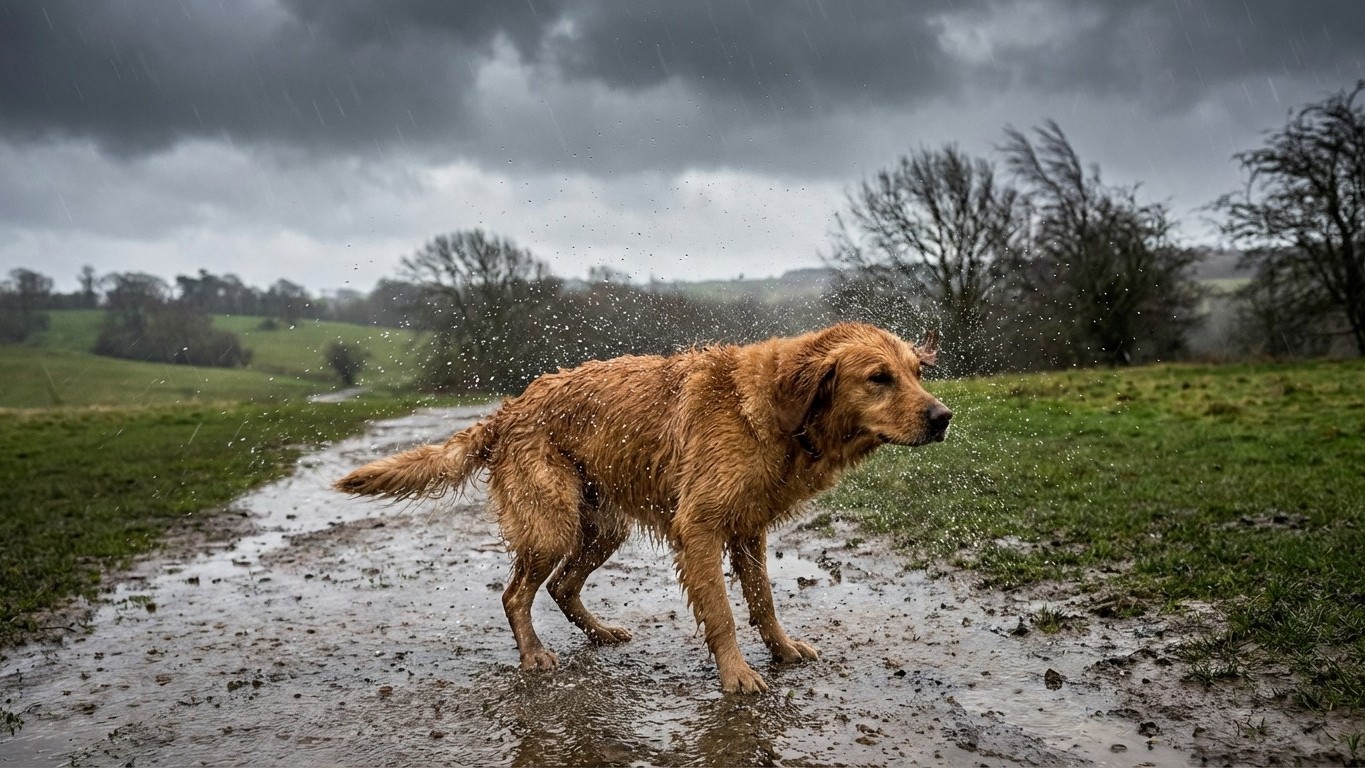
Britain’s weather has a personality of its own. One morning it’s crisp and bright; by afternoon, a horizontal drizzle has rolled in off the Atlantic, and the wind has turned the park into an obstacle course. For dog owners, this isn’t just an inconvenience, it’s a daily reality that shapes how, where, and how long you can exercise your dog. And if you’re still choosing which breed to bring home, the UK climate deserves a genuine seat at the table in that conversation.
Why Consider the UK Weather When Choosing a Dog Breed?
The British climate: rain, cold, and wind realities
The UK receives, on average, around 133 days of rain per year, though if you’re in the Lake District or the Scottish Highlands, that number climbs considerably higher. Temperatures in winter regularly dip to single digits, and the wind-chill along coastal and upland areas can make it feel far colder than the thermometer suggests. Summer offers respite, but even July and August can bring grey skies and wet grass underfoot. The climate is temperate, yes, but temperate doesn’t mean mild. It means variable — and that variability is what catches many new dog owners off guard.
What does UK weather mean for your dog’s daily life?
A dog needs exercise every single day, rain or shine. That’s not a guideline, it’s a welfare requirement. So choosing a breed that physically and mentally copes with the UK’s damp, wind-battered conditions isn’t about luxury. It’s about whether your dog will spend half its life shivering, miserable, and reluctant to step off the doormat. A dog whose coat offers no insulation or water resistance, kept in a rainy northern town, will need significant additional kit, grooming care, and veterinary attention for skin and joint issues. Getting the breed match right from the start saves a great deal of suffering — for the dog, and frankly, for the owner too.
For a broader perspective on selecting breeds by lifestyle and practicalities, the dog breeds guide covers the full picture of matching a dog to your circumstances.
Dog Breed Characteristics Suited to the UK Climate
Weather-resistant coats: types and functions
Not all fur is equal, and understanding the difference matters enormously in a British context. Double-coated breeds, those with a dense, insulating undercoat beneath a longer guard layer — are the gold standard for wet and cold climates. Breeds like the Labrador Retriever have a short but exceptionally dense double coat with a natural oil that repels water. Golden Retrievers carry a water-resistant outer coat developed through generations of working in Scottish rivers and estates. Nordic breeds such as the Siberian Husky and the Norwegian Elkhound have coats engineered for Arctic conditions, though keep in mind this also means they can overheat quickly indoors during mild UK winters.
Wire-coated terriers, like the Welsh Terrier or Lakeland Terrier, were bred specifically for British moorland work. Their coarse, wiry topcoat sheds rain rather than absorbing it, and the tight texture prevents the coat from matting when wet. Smooth-coated breeds, Whippets, Greyhounds, Boxers, Chihuahuas, have almost no insulation and very little water resistance. They can become cold extremely quickly in typical UK conditions, and many genuinely need a coat to be worn outdoors in autumn and winter.
Energy, activity, and exposure to outdoor conditions
High-energy breeds designed for outdoor work, Border Collies, Springer Spaniels, German Shepherds, are built to keep going regardless of weather. Their working heritage means they have both the physical resilience and the psychological drive to function in rain and cold without distress. The trouble arises when these dogs don’t get sufficient outdoor exercise because the weather’s poor: a bored, under-exercised Border Collie will redecorate your kitchen. Lower-energy breeds that are also cold-sensitive present a double challenge: they need less exercise but struggle with outdoor conditions, which makes short, well-equipped walks a necessary compromise.
Best Dog Breeds for Rainy, Cold and Windy UK Weather
Top breeds that thrive in rain and cold, with breed profiles
The Labrador Retriever tops the list for good reason. Bred in Newfoundland for retrieving waterfowl in icy conditions, the Lab treats a soggy British field like a playground. Their dense, slightly oily coat shakes off rain in seconds, and their love of water means a muddy puddle is a bonus, not a deterrent. The most popular dog breeds in the UK guide consistently places the Labrador among the nation’s favourites, and the climate compatibility is a significant part of why.
The Border Collie, Scotland’s working sheepdog, is equally at home in blustering Highland winds. Their medium-length double coat handles cold and damp well, and their mental resilience means they don’t shut down when conditions are tough. The Bernese Mountain Dog, large, gentle, and gloriously fluffy, was developed for Swiss Alpine winters, making a rainy British autumn feel positively balmy by comparison. The West Highland White Terrier, beloved Scottish breed that it is, offers a compact package of weather-proof wiry coat and terrier toughness. Short, stout, and surprisingly hardy, the Westie will happily trot across a sodden moor and look rather pleased about it.
The Border Terrier deserves a special mention here. Often overlooked in favour of more glamorous breeds, this small, wiry-coated dog was developed along the England-Scotland border for all-weather fox hunting. Tough, low-maintenance in terms of coat care, and small enough for a flat or terrace, it’s one of the most practically sensible choices for UK owners.
Breeds to avoid in cold/rainy climates (and why)
This isn’t about ruling breeds out entirely, it’s about being honest about the commitment involved. Greyhounds and Whippets, despite being widespread in the UK, genuinely struggle with cold. Their near-hairless skin and extremely lean muscle mass offer almost no thermal regulation. They can live happily in Britain, but they need coats from October through March and shouldn’t be left outside for extended periods. Chihuahuas, French Bulldogs, and other short-coated, small or brachycephalic breeds face similar challenges. Breeds originating from tropical or subtropical climates, the Rhodesian Ridgeback, the Basenji, are often uncomfortable in extended wet and cold, though individual temperament varies.
Practical Tips: Keeping Your Dog Healthy and Happy in the British Weather
Coat care, grooming and wet weather tips
A wet dog brought indoors needs more than a quick rub with a towel. Long-coated and double-coated breeds that aren’t dried properly between their layers can develop skin irritation, matting, and even fungal issues in the fold areas around the ears and groin. A proper grooming routine after wet walks, using a dog-specific absorbent towel or low-heat dryer, prevents most of these problems. Paw checks after winter walks are equally important; salt and grit used on pavements can irritate and crack paw pads, and some dogs are sensitive enough to develop chemical burns from de-icing products.
Gear and clothing: waterproofs, boots, coats
Dog clothing has moved well beyond novelty. A quality waterproof dog coat for a Whippet or Greyhound isn’t anthropomorphism, it’s welfare. Look for coats that cover the back and belly (the belly gets equally wet and cold from wet grass), with a secure fit that doesn’t restrict shoulder movement. Dog boots are useful on heavily gritted pavements or icy terrain, though convincing a dog to walk in them is a project in itself; introduce them gradually at home before expecting a calm first outdoor attempt. For dog breeds guide UK context on how UK-specific conditions influence breed choices more broadly, there’s excellent background on how local climate shapes breed popularity and regulation.
Matching Your Dog’s Temperament and Needs to the UK Climate
Indoor/outdoor routines for bad weather
Even the most weather-hardy breed benefits from having a solid indoor enrichment routine during genuinely brutal weather days, though these should supplement, not replace, outdoor exercise. Scent work, puzzle feeders, and structured training sessions can burn mental energy when a force-10 gale makes the park inadvisable. For high-drive breeds like the Springer Spaniel, a 20-minute session of hide-and-seek with their favourite toy indoors can take the edge off — though it won’t fully replace the physical release of a proper run.
Signs your dog is not coping with the weather
Cold intolerance in dogs can look like reluctance to go outside, shivering that persists even after returning indoors, tucking the tail tightly under, or lifting paws repeatedly off cold ground. Some dogs develop joint stiffness in damp cold, older dogs and those with existing arthritis are particularly vulnerable. If your dog shows persistent reluctance to exercise, stiffness after rest, or changes in gait in colder months, consult a vet rather than assuming it’s just typical winter reluctance. These can be early signs of conditions that respond well to early treatment.
FAQ: Common Concerns About Dogs and UK Weather
Do small dogs struggle more with cold and rain?
Not always, but often yes. Smaller dogs have a higher surface-area-to-body-mass ratio, which means they lose heat faster than larger dogs. A small breed with a dense, insulating coat, the Scottish Terrier, the Miniature Schnauzer, the Pomeranian — can cope surprisingly well with cold. A small breed with a thin, smooth coat is genuinely at a disadvantage in British winters and needs additional gear. Size alone isn’t the deciding factor; coat type matters at least as much.
Can all dogs get used to the UK climate over time?
Dogs adapt to routines and environments to a degree, but they cannot grow a different coat through acclimatisation. A Greyhound living in Scotland will always feel the cold more acutely than a Bernese Mountain Dog living in the same conditions, no amount of exposure changes their fundamental physiology. What can adapt is behaviour: some dogs learn to associate outdoor time with positive experiences and become less reactive to rain or wind. But physical cold tolerance is largely fixed by breed genetics. The dog breeds guide UK explores how these breed-specific characteristics interact with owner expectations across different regions of the country.
Making the Right Choice for You and Your Dog
Choosing a dog for life in Britain means factoring in weather as a genuine, year-round variable, not an occasional nuisance. The breeds that thrive here tend to share common traits: water-resistant or insulating coats, robust constitutions, and the psychological resilience to exercise enthusiastically in grey, drizzly conditions. That said, any breed can live well in the UK with the right preparation, gear, and owner commitment. The difference lies in how much extra effort is required — and whether that effort is something you can sustain through February.
Before bringing a dog home, ask yourself: will I still be happy walking this breed at 7am in horizontal November rain? If the honest answer involves significant hesitation, that’s worth sitting with before you commit. The best dog for UK weather is ultimately the one whose needs align with your real daily life, wet pavements, muddy boots, and all.