
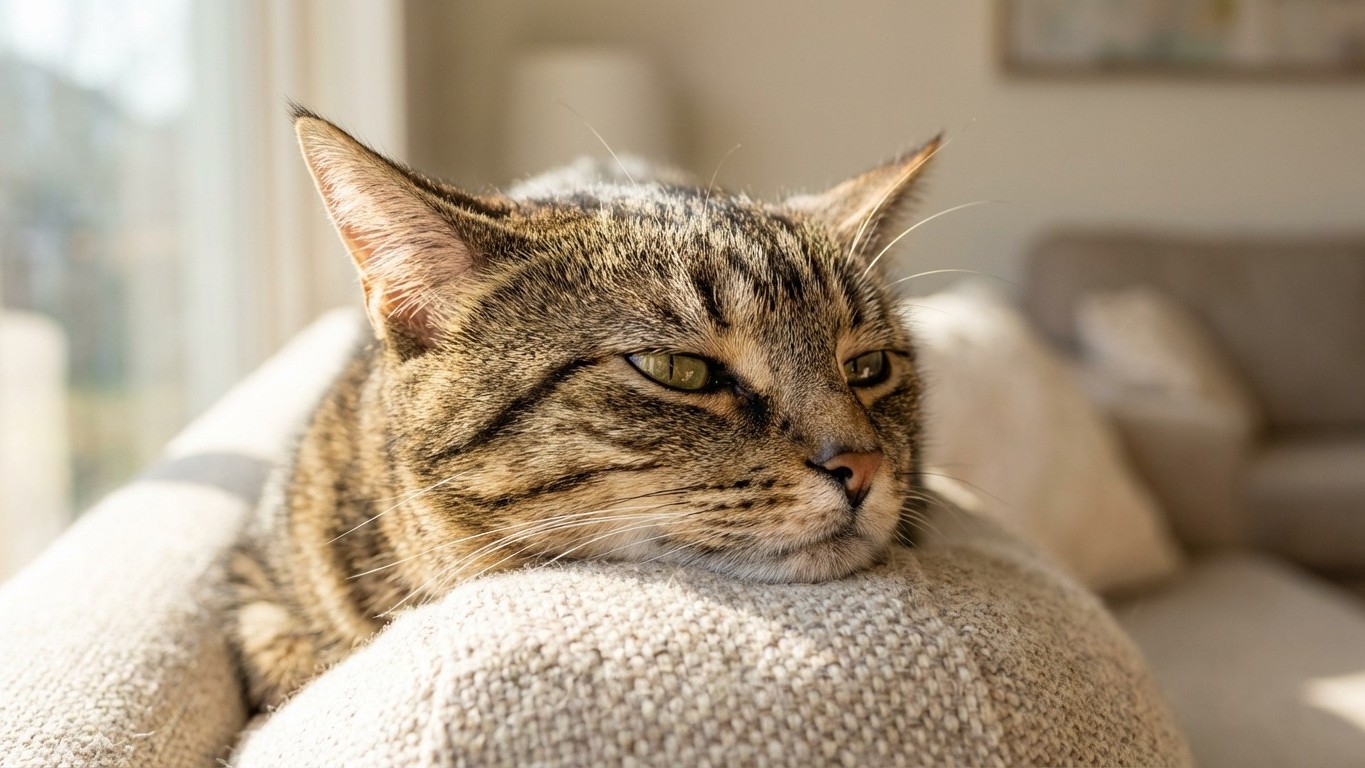
Cats purr when they’re happy. Everyone knows that. Except, well, they don’t, or at least, not exclusively. That low, rhythmic rumble that cat owners find so comforting is one of the most misunderstood sounds in the animal kingdom, and taking it purely as a sign of contentment can occasionally mean missing something important about how your cat is Actually feeling.
Key takeaways
- Your cat could be purring while experiencing pain, stress, or illness—and you might not even notice
- The ‘solicitation purr’ contains a hidden cry that manipulates humans into paying attention
- Missed diagnoses happen because owners assume purring means wellness, delaying critical vet visits
The purr is more complicated than you think
The mechanics of purring are genuinely extraordinary. Cats produce that sound through a rapid, repetitive movement of the laryngeal (voice box) muscles, which dilate and constrict the glottis, the part of the larynx that surrounds the vocal cords, around 25 to 150 times per second. The result is that distinctive vibration on both the inhale and exhale. What’s striking is that domestic cats are far from the only felines that purr: cheetahs do it too, as do pumas, ocelots, and a handful of other smaller wild species. The big cats, lions, tigers, can roar instead, which requires a different laryngeal structure.
So why do cats purr? Contentment is absolutely one reason. Your cat stretched out in a patch of afternoon sun, slow-blinking at you, yes, that purr almost certainly means life is good. But cats also purr when they’re stressed, anxious, unwell, or in pain. Mother cats purr during labour. Injured or dying cats have been observed purring. This isn’t a contradiction; researchers believe purring may serve a self-soothing function, a kind of internal regulation that helps cats manage difficult states. Some studies have even suggested that the vibration frequencies produced during purring (typically between 25 and 50 Hz) may support bone density and tissue healing — which would make the purr one of nature’s more elegant coping mechanisms.
When a purr is actually a cry for help
The tricky part for cat owners is learning to read context rather than sound. A cat that is purring while also hiding under the bed, refusing food, or holding an unusual posture is sending a very different message to the cat that’s purring while kneading your lap. Cats are notoriously good at masking discomfort, it’s thought to be an evolutionary holdover from when showing vulnerability in the wild could attract predators — which means their distress Signals can be subtle to the point of near-invisibility.
There’s also what researchers call the “solicitation purr,” which is a slightly different beast. Described in research published in the journal Current Biology, this type of purring embeds a higher-frequency cry within the normal purr frequency, something closer to the sound of a human infant. Cat owners tend to rate it as more urgent and less pleasant than the standard purr, even if they can’t quite put their finger on why. Cats appear to have figured out, over thousands of years of living alongside humans, that this particular sound is harder for us to ignore. Whether that counts as manipulation or just very effective communication is, perhaps, a matter of perspective.
Paying attention to the whole picture, your cat’s body language, eating habits, litter box use, and general energy levels — gives you far more information than the purr alone. A cat that’s genuinely content tends to have relaxed ears, a softly curved tail, half-closed eyes, and a loose, unhurried posture. Contrast that with a cat who is purring but whose ears are flattened, body is tense, or who flinches when touched: that’s a cat who may be in pain or deeply uncomfortable, not a cat enjoying a quiet moment.
What owners often miss
One of the most common misconceptions I hear from cat owners is that a purring cat is a cat who doesn’t need veterinary attention. That assumption has delayed more than a few diagnoses. Cats in the early stages of kidney disease, dental pain, or even injury can continue to purr, and because owners associate the sound with wellness, the visit to the vet gets put off. By the time the cat stops eating or becomes visibly lethargic, the condition can be considerably more advanced than it needed to be.
This is why regular veterinary check-ups matter so much, even for cats who seem perfectly fine. Cats are masters of the stoic performance. A vet who knows your cat’s baseline, their weight, coat condition, heart rate, and general demeanour over time — is far better placed to spot gradual changes than any of us who see them every day and perhaps stop noticing small shifts. If your cat’s behaviour changes in any way, even something as subtle as sleeping in a different spot or being slightly less interested in play, it’s worth a conversation with your vet.
There are some signs that should prompt an immediate call rather than a wait-and-see approach: open-mouth breathing in cats (almost always abnormal), a sudden change in vocalisation, visible difficulty moving, or any sudden loss of appetite lasting more than 24 hours. Purring during any of these situations doesn’t mean everything’s fine. Trust what you see alongside what you hear.
Learning your cat’s language
Every cat is also an individual with their own purring patterns. Some cats are near-silent their entire lives; others seem to purr if you look at them sideways. Getting to know what’s normal for your specific animal is the real skill, not applying a universal rule about what purring means. A sudden increase in purring from a cat who wasn’t particularly vocal before is worth noticing, just as a cat who has always purred loudly and then goes quiet deserves a second look.
There’s something quietly profound about the fact that the sound we’ve collectively decided represents feline happiness is actually a form of communication that covers the full emotional and physical spectrum of a cat’s experience. Perhaps the purr is less like a smile and more like a sigh, a sound that can mean almost anything, depending on everything else happening around it. Learning to listen properly, rather than just hearing what we want to hear, might be the most respectful thing we can do for the animals who share our homes.