
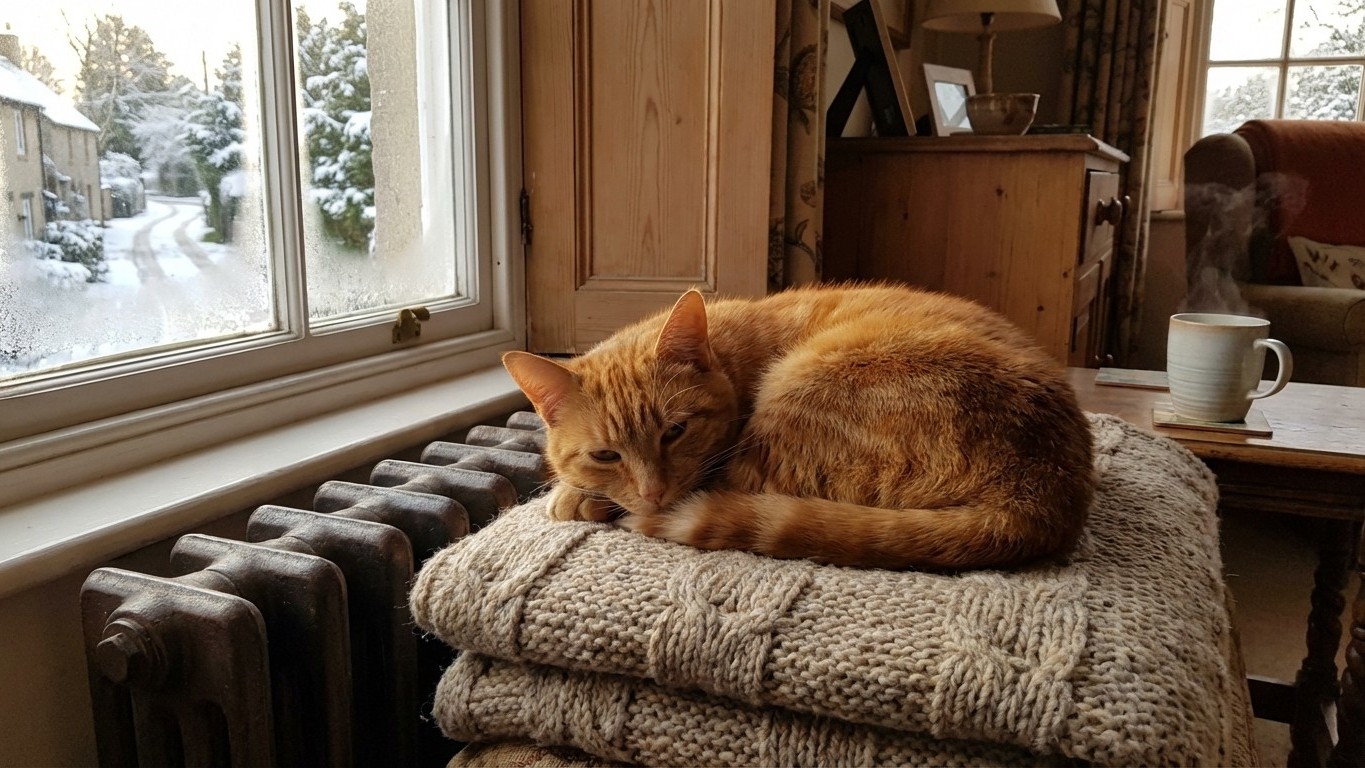
As the temperature drops and winter sets in, our feline companions may face challenges that aren’t immediately obvious. Cats are adept at masking discomfort, so it’s essential to be vigilant for subtle signs indicating they’re struggling with the cold. Recognising these cues and taking proactive steps can ensure your cat remains comfortable and healthy throughout the colder months.
Key takeaways
- Is your cat seeking warmth in unusual spots?
- Notice changes in grooming or eating habits this winter?
- Could your cat be hiding in dangerous places to stay warm?
1. Seeking Warmth in Unusual Places
If your cat is suddenly curling up near radiators, under blankets, or even attempting to snuggle into your bed more than usual, it could be a sign they’re feeling the chill. Cats naturally gravitate towards warm spots, but an increased desire for heat may indicate they’re not maintaining their body temperature effectively.
2. Reduced Activity Levels
A noticeable decrease in playfulness or reluctance to move around can suggest your cat is conserving energy to stay warm. While it’s normal for cats to be less active during colder months, a significant drop in activity might indicate discomfort due to the cold.
3. Changes in Grooming Habits
Cold Weather can lead to dry skin, causing your cat to over-groom or, conversely, neglect their grooming routine. Over-grooming may result in bald patches, while under-grooming can lead to a dull, unkempt coat. Both behaviours can be signs that the cold is affecting your cat’s skin health.
4. Altered Eating Patterns
Some cats may eat more during winter to generate extra body heat, while others might eat less due to decreased activity. Monitoring your cat’s food intake and weight is crucial, as significant changes can indicate they’re struggling to adapt to the colder environment.
5. Reluctance to Go Outdoors
If your outdoor-loving cat suddenly prefers to stay inside, it could be due to the cold, wet, or snowy conditions. While it’s safer for cats to remain indoors during harsh weather, a sudden aversion to the outdoors may signal that your cat is uncomfortable with the winter climate.
6. Seeking Shelter in Dangerous Areas
Cats may seek warmth in hazardous places, such as under car bonnets or in sheds. Before starting your car, always check under the bonnet and around the wheels to ensure a cat hasn’t taken refuge there. Similarly, check sheds and garages before locking them up to prevent trapping a cat inside.
7. Signs of Hypothermia or Frostbite
In severe cases, cats exposed to cold temperatures for extended periods can develop hypothermia or frostbite. Symptoms include shivering, lethargy, pale or blue-tinged skin, and cold extremities. If you notice any of these signs, seek veterinary attention immediately.
How to Help Your Cat Thrive During Winter
Ensuring your cat’s comfort during winter involves a combination of environmental adjustments and attentive care:
- Provide Warm, Cosy Spaces: Set up comfortable sleeping areas away from drafts, using soft bedding and blankets. Heated pet beds can offer additional warmth.
- Maintain Indoor Temperatures: Keep your home at a consistent, comfortable temperature to prevent your cat from getting too cold.
- Offer Indoor Enrichment: Engage your cat with interactive toys and activities to keep them mentally and physically stimulated, especially if they’re spending more time indoors.
- Monitor Food Intake: Adjust your cat’s diet as needed to maintain a healthy weight, considering any changes in activity levels during winter.
- Ensure Access to Fresh Water: Prevent water bowls from freezing by placing them indoors and checking them regularly.
- Check Paws After Outdoor Excursions: Wipe your cat’s paws to remove any ice, salt, or chemicals they may have picked up outside.
- Be Cautious with Antifreeze: Antifreeze is highly toxic to cats. Store it securely and clean up any spills immediately to prevent accidental ingestion.
By staying alert to these subtle signs and implementing these measures, you can help your cat navigate the winter months comfortably and safely. Remember, if you have any concerns about your cat’s health or behaviour during colder weather, consult your veterinarian for personalised advice.