
Some dogs are born to nap on the sofa. Others are born to pull sledges across frozen tundra, herd sheep across hillsides at dawn, or work alongside police officers in high-pressure situations. Working dog breeds sit firmly in that second category, and if you’re considering bringing one home, understanding what that really means for your daily life is the most important thing you can do before signing any adoption papers.
These are dogs shaped by centuries of purposeful breeding. Their bodies are capable, their minds are relentless, and their need for meaningful activity goes far beyond what most people initially expect. That’s not a criticism, it’s a reality check, and one worth having early.
What Actually Makes a Dog a “Working Dog”?
The term “working dog” gets used loosely, which creates genuine confusion. In the strictest kennel club sense, working dogs form a specific breed group, typically including breeds developed to guard, pull, rescue, or perform tasks requiring power and physical stamina. The Kennel Club in the UK places breeds like the Dobermann, Rottweiler, Siberian Husky, and Bernese Mountain Dog in its Working group. But in broader usage, the phrase covers a wider world: herding dogs, service dogs, detection dogs, police dogs, and sporting dogs all share the “working” label depending on the context.
For the purposes of this guide, we’re focusing on that broader definition, breeds purpose-built for a job, with the drives, intelligence, and physical capacity to match. If you want to explore the full taxonomy, the working dog breeds guide covering breeds by usage (work, sport, guarding, hunting, and companionship) gives you an excellent overview of how these categories fit together.
The Breeds That Define This Group
Ask ten dog trainers to name their favourite working breeds and you’ll get ten slightly different answers. But certain names appear again and again.
The Icons and What Sets Them Apart
The German Shepherd is perhaps the most recognised working dog in the world, beloved by police forces, search and rescue teams, and guide dog organisations across the UK. Intelligent, loyal, and highly trainable, they bond deeply with their handlers, which is wonderful when channelled well, and exhausting when they’re left under-stimulated. Hip and elbow dysplasia are genuine health concerns in the breed, and prospective owners should always request health screening certificates from reputable breeders.
The Belgian Malinois has become increasingly visible in the UK in recent years, partly driven by social media clips of elite military dogs performing extraordinary feats. What those clips don’t show is the sheer intensity of daily life with a Mal. These dogs require multiple hours of structured activity every single day and have a prey drive that can make living with other pets genuinely complicated. They are extraordinary animals in the right hands. In the wrong ones, they become a welfare crisis.
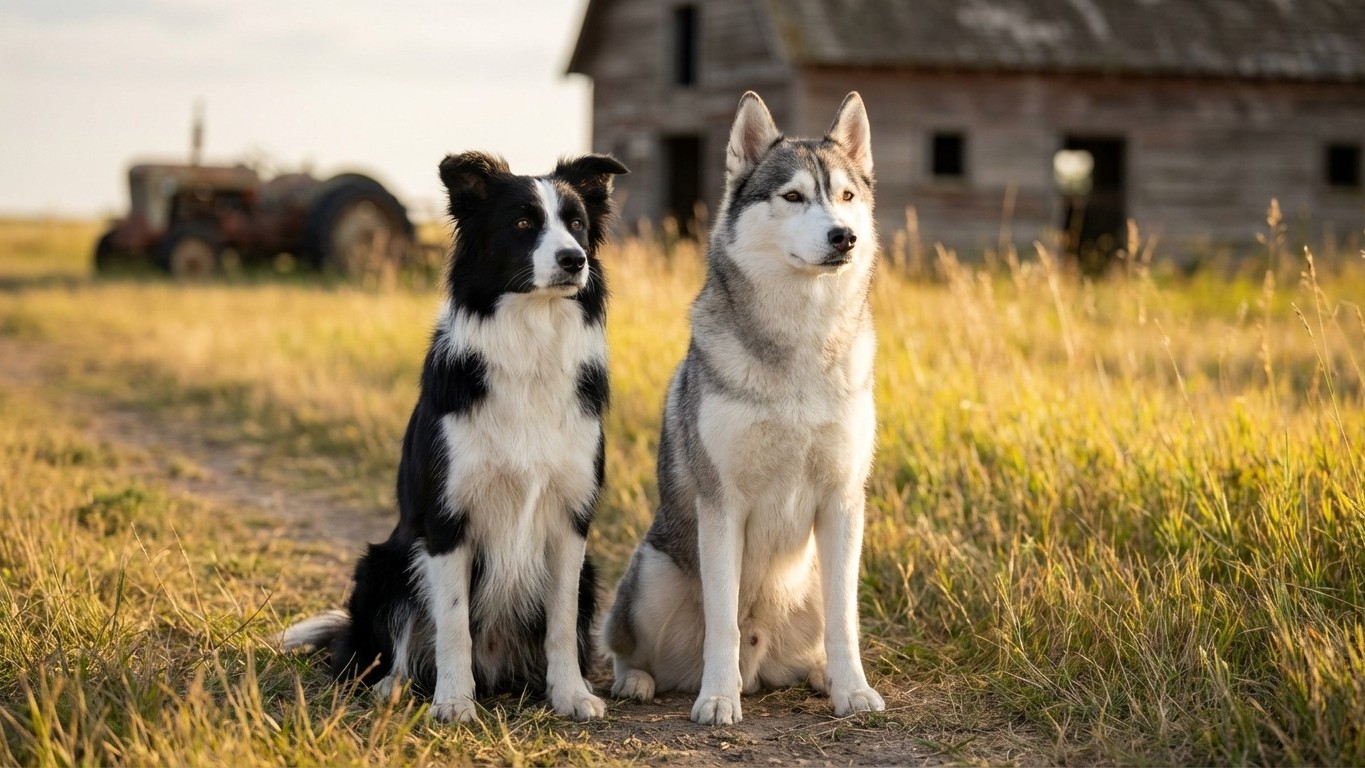
The Siberian Husky brings a different kind of challenge. Bred to run vast distances in Arctic conditions, their endurance is staggering, and their recall is notoriously unreliable. Huskies are not naturally obedient dogs; they were bred to make independent decisions on the trail, not wait for a command. They’re also escape artists of the highest order, which means secure fencing isn’t optional. For those interested in canicross, bikejoring, or sledding, they’re extraordinary partners. For someone wanting a relaxed weekend companion, they’re a mismatch.
The Rottweiler carries the weight of an undeserved reputation. Properly bred and socialised, these dogs are calm, confident, and deeply devoted to their families. They do need an owner who can provide consistent, early training and clear boundaries, not because they’re dangerous, but because they’re large, strong, and naturally protective. Responsible breeding matters enormously with this breed.
The Border Collie deserves its own category of intensity. Technically classified as a herding dog rather than a working dog in the strict Kennel Club sense, the Border Collie’s mental capacity is extraordinary, and its need for intellectual engagement is unlike almost any other domestic breed. You can read more about the herding group specifically in this herding dog breeds guide, which goes deep on breeds built for mustering and flock management.
Daily Life With a Working Dog: What You’re Actually Signing Up For
Here’s where prospective owners most frequently underestimate the commitment involved.
Physical Exercise: Beyond the Daily Walk
A 30-minute amble around the block will not satisfy a working breed. Most need between one and three hours of genuine physical activity daily, and that means purposeful movement, not just pottering around a park off-lead. Running, hiking, swimming, agility training, fetch sessions, and structured off-lead play all count. The intensity and frequency matter, too. A single long weekend walk doesn’t compensate for five sedentary weekdays.
For breeds like the Husky or the Malinois, “exercise” should really be thought of as a job in itself. Canicross, weight pulling, IPO/schutzhund training, and dock diving are all activities that give these dogs a purpose to work towards, rather than simply burning energy aimlessly.
Mental Stimulation: The Part Most People Underestimate
Physical fatigue alone won’t produce a content working dog. Mental exhaustion is equally important, and often more effective at producing calm behaviour at home. Training sessions, scent work, puzzle feeders, trick training, and structured play that requires problem-solving all contribute to a dog’s psychological wellbeing.
Think of it this way: a working dog whose body is exercised but whose mind is idle is a bit like a highly intelligent person forced to sit in a waiting room all day with nothing to read. The restlessness that follows isn’t misbehaviour, it’s an entirely rational response to deprivation. Sniffing activities, in particular, are underused by owners. A 20-minute nose work session can tire a Border Collie more effectively than an hour’s run.
Training and Education: Getting It Right From the Start
Recommended Methods
Positive reinforcement is the gold standard for working breeds, and there’s a strong scientific consensus supporting reward-based training for both effectiveness and welfare. Working dogs respond brilliantly to structured training because they genuinely enjoy learning, the challenge is keeping sessions varied enough to hold their interest. Short, frequent sessions (10-15 minutes, several times a day) tend to produce better results than single long training blocks.
Early socialisation is non-negotiable. Exposing a working dog puppy to a wide range of people, environments, sounds, and animals between three and twelve weeks of age builds the confidence and adaptability these breeds need to thrive in modern life. A poorly socialised German Shepherd or Rottweiler doesn’t become dangerous by accident, it happens when the critical socialisation window is missed.
Common Mistakes to Avoid
Adopting a working breed as a first dog without research is the most frequent error, and it’s one that affects both owner and animal. These breeds demand experience, patience, and often professional guidance, particularly during adolescence, a period when even well-trained working dogs can test boundaries intensely.
Relying on punitive training methods is another pitfall. Aversive techniques may suppress behaviour in the short term, but with high-drive, intelligent breeds they often produce dogs that become anxious, unpredictable, or reactive. The relationship between dog and owner suffers, and the dog’s welfare pays the price.
Finally, underestimating the time commitment before adoption leads to working dogs being rehomed at high rates. Breed rescues across the UK are consistently overwhelmed with Malinois, Huskies, and Border Collies surrendered by owners who didn’t anticipate the reality of daily life with these animals.
Practical Challenges: Urban Living, Family Life, and Health
Can a working dog live in a flat? Technically, yes. Practically, it requires an extraordinary level of commitment to exercise and enrichment that many urban owners struggle to sustain. A working dog in a small urban flat with limited outdoor access and a busy owner is not a welfare-positive situation. It’s not impossible, but the honest answer is that these breeds thrive with space, access to green areas, and owners whose lifestyles include significant daily outdoor time.
Families with young children can absolutely own working breeds successfully, but the combination of high energy, size (in many cases), and strong drives means supervision and training are constant priorities. Working dogs are not “set and forget” pets, they require ongoing management and engagement throughout their lives.
Health-wise, working breeds face specific risks worth knowing. Large working dogs are prone to hip and elbow dysplasia, bloat (gastric dilatation-volvulus), and in some cases heart conditions. Overworking young dogs before their growth plates have closed can cause lasting joint damage. Always consult a vet for breed-specific health advice and ensure any breeder you work with conducts health testing relevant to the breed.
How Working Dogs Differ From Other Breed Groups
The distinction matters more than many people realise. Guard dogs (like the Mastiff or Cane Corso) share working dog traits but are primarily bred for territorial protection rather than active task performance. Herding breeds (Border Collie, Australian Shepherd) are sometimes grouped with working dogs but have drives centred on movement and control rather than power or endurance. Sporting breeds, retrievers, spaniels, pointers, are high-energy working dogs in their own right, with instincts built around hunting rather than guarding or pulling. The gun dog breeds guide explores that world in depth if you’re weighing up sporting breeds specifically.
Companion breeds, by contrast, were developed to be exactly that: companions. Their exercise needs, training demands, and drives are categorically different. Comparing a Cavalier King Charles Spaniel’s daily needs to those of a Belgian Malinois is a bit like comparing a gentle stroll to a marathon, both involve walking, but the similarity ends there. The full dog breeds guide can help you assess which category genuinely suits your lifestyle.
Is a Working Dog Right for You?
The ideal working dog owner is active, consistent, and genuinely interested in training as an ongoing relationship rather than a one-off task. They have time, real time, most days, for structured exercise and mental engagement. They live in or have easy access to outdoor space. They understand that a working dog’s behaviour is communication, not defiance, and they’re prepared to seek professional guidance when needed.
If you travel frequently for work, live in a small flat, have very limited outdoor access, or are looking for a low-maintenance companion, a working breed is probably not the right match, and that’s completely fine. The dog breeds guide covers a wide range of breeds suited to different lifestyles, and there is genuinely a perfect dog for every type of owner.
Frequently Asked Questions
What are the daily needs of working dog breeds? Most need at least one to two hours of vigorous physical exercise daily, plus dedicated mental stimulation through training, scent work, or interactive play. Structure and routine are as important as the activity itself.
Can a working dog live in a flat? Possible, but genuinely challenging. It requires an exceptional commitment to daily exercise and enrichment, and many working dogs in urban environments are under-stimulated even with well-meaning owners.
What mistakes should I avoid when adopting a working dog? Underestimating the time and energy commitment, skipping early socialisation, using punitive training methods, and choosing a breed based on looks or popularity rather than genuine lifestyle compatibility.
How do I tell the difference between a working dog, a guard dog, a herding dog, and a companion? The key is understanding what the breed was originally designed to do. Working dogs were bred for endurance tasks and physical power. Herding dogs control and move livestock. Guard dogs protect territory and people. Companion breeds were developed specifically for human company, with lower drives and more moderate exercise needs.
Making It Work: A Final Thought
Working dog breeds are among the most extraordinary animals we’ve shaped over centuries of selective breeding. Their capabilities, loyalty, and intelligence are genuinely humbling. But that same selective breeding means their needs don’t evaporate just because they now live in a semi-detached in Surrey rather than on a working farm.
The question worth sitting with isn’t “Can I manage a working dog?” but rather “Will this dog thrive with me, genuinely and daily?” That shift in perspective, from owner capability to dog welfare, tends to lead to much better decisions for both ends of the lead. If the answer is yes, with eyes wide open to the commitment involved, there are few more rewarding relationships in the animal world.