
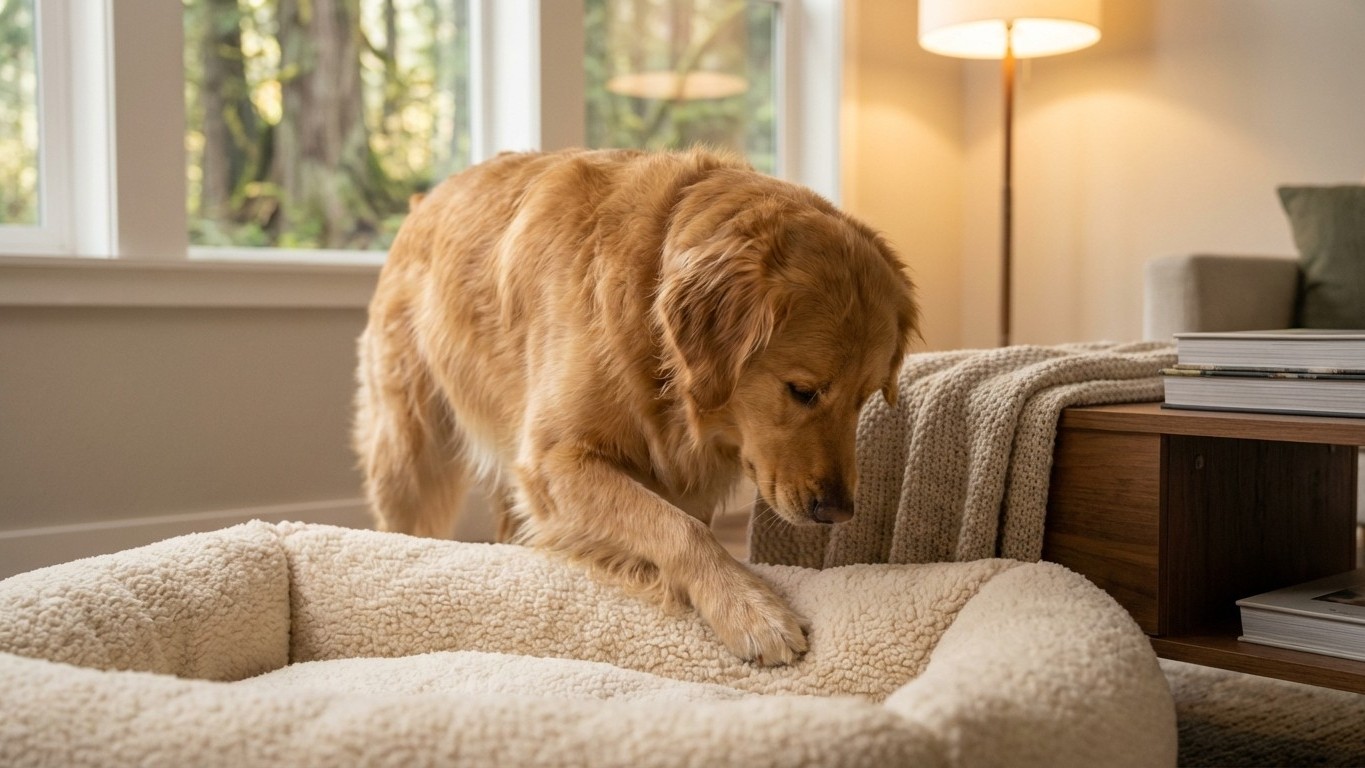
Every dog owner knows the sight: your pooch circles, sniffs, and then, usually with unbridled gusto, digs at their bed, the carpet, or even your sofa before settling in for a nap. It’s a behaviour that might look inexplicable, amusing, or even exasperating, especially when the “bed” in question is the fluffy sofa cushion you just plumped. Yet, this bedtime ritual is far richer in meaning than most of us realise. Digging before sleep reaches deep into the canine brain, echoing wild ancestry, emotion, and the bond between human and hound.
Key takeaways
- Is your dog’s digging more than just comfort-seeking?
- How ancient instincts shape modern bedtime rituals.
- What emotions and needs hide beneath those restless paws?
More Than Just a Comfort Quirk
Many people think dogs dig at their sleeping spot simply to get comfy, but scratch the surface (excuse the pun), and the truth is layered. Wild dog ancestors, from wolves to African hunting dogs, would dig at the earth or foliage to create a safe, cool, and bug-repellent nest. The soil could be softened, a spot made just the right temperature, and parasites or sharp stones banished. This behaviour didn’t vanish when canines came to share our homes. Even the fluffiest Cockapoo, having never slept outside a day in her life, still carries those wild instincts. Evolution works on timeframes much, much longer than a few thousand years of domestication.
Why does the ritual persist so stubbornly? It’s not just “mythic memory.” Dogs engage all their senses before sleep. Digging releases scents from bedding or carpet, reminders that this place is safe, personal, and familiar. Scent for dogs is like a security blanket for children: reassurance, belonging, calm. The act can also literally shape the space, nudging bedding into the Goldilocks position of “just right.”
Emotions Beneath the Surface
This behaviour doesn’t only reflect instinct; it’s deeply tied to how dogs feel. Stress, excitement, or anxiety can all flow out through those restless paws. After a day packed with new visitors or a thunderstorm, some dogs dig harder, essentially kneading away tension, making their bed a haven in a stormy world. There’s science here: repetitive actions can trigger endorphins, calming the brain and body, not unlike a stressed person tapping their foot. In more extreme cases, obsessive digging could hint that your pet is struggling with anxiety or an unmet need for exercise or stimulation. Always consult your vet if your dog’s pre-bed Routine turns frantic, relentless, or damages claws and skin.
However, for most dogs, digging means everything is in its right place. Watch how their body language softens afterward, that deep, contented sigh as they finally curl up. There’s almost a ritualistic satisfaction to it, passed down like an heirloom through canine generations. Think of it as your pup’s version of fluffing pillows, adjusting blankets, and switching off lights.
Practical Reasons and Modern Twists
Some breeds really run with this behaviour. Terriers, bred for bold earthwork, can turn a simple bed into a crater. Huskies and Malamutes, with their Arctic lineage, once dug into snow to rest, sheltering themselves and sometimes whole pups beneath. These inherited talents carry on, even on the most domestic of floors. Sometimes, the problem isn’t with your pet, but with a bed that doesn’t feel right: too small, too stiff, too hot, or too scratchy. Observe your dog’s habits, you might find you need to upgrade to a plusher or differently shaped bed. Avoid covers treated with harsh chemicals or strong detergents: dogs’ noses are hundreds of times more sensitive than ours and chemical scents can make a bed feel hostile, not homely.
Every now and then, you’ll spot the behaviour where it absolutely shouldn’t be. The edge of a treasured rug, the middle of your mattress, no textile is safe from determination. It’s no mystery why: your scent lingers there. Dogs, seeking maximum comfort, want their world saturated in familiar aromas. My own retriever turned a brand new dog bed into a crater within an hour, but barely touched her favourite old jumper thrown in her crate. Sentimentality, it seems, isn’t just a human trait.
Encouraging Healthy Bedtime Habits
If your dog’s diggings are limited to their designated sleeping spot, there’s often nothing to worry about. It’s a sign they feel safe, at home, and ready to unwind. But what if they’ve developed a destructive streak, burrowing through carpets or scattering stuffing across the sitting room? A tired dog is a happy dog, the saying goes, and sometimes bedtime antics signal a need for more daytime exercise or puzzle games. Dogs benefit from routines, just as we do: regular walks, a clear wind-down before rest, and a calm sleeping environment can all help reduce over-the-top digging.
Even beyond the practical, there’s something oddly endearing about this nightly show. It’s physical evidence that our companion animals still carry a touch of the wild and mysterious, despite (or perhaps because of) their closeness to us. A friend once told me about her Jack Russell, who, after years of nightly burrowing, finally “unearthed” a rubber ball that had vanished beneath the bed as a puppy. She paraded it around the house, proof that ritual can sometimes yield treasure.
Seldom do we appreciate just how deep our pets’ instincts go, or how much is communicated in these small, private moments before sleep. Next time you hear those soft scratches from the next room, perhaps you’ll picture not ruined upholstery, but a mythic reunion of ancestry and affection. What age-old rituals do our modern lives still carry, often quietly, almost invisibly, beneath the surface?