
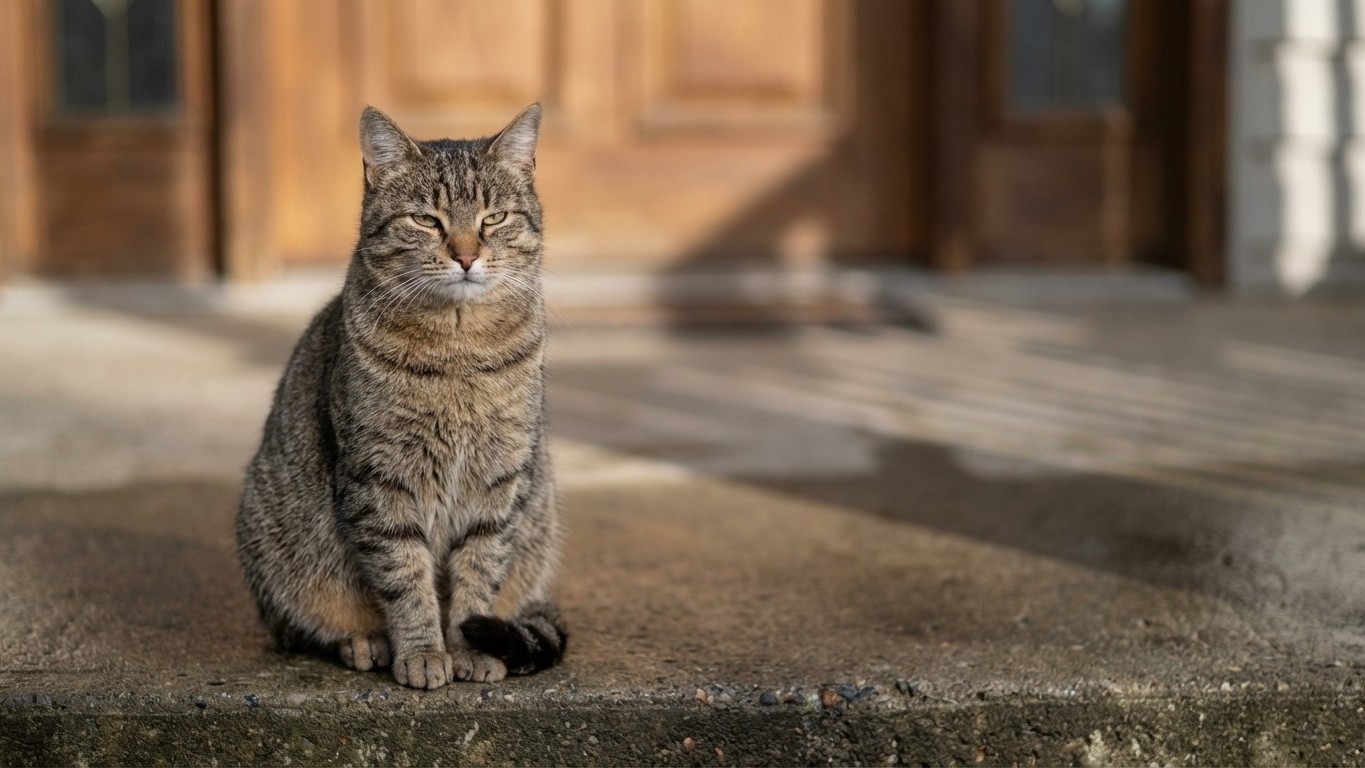
You open the back door on a drizzly Tuesday morning and there it is: a perfectly intact robin, laid out like a small offering on the doormat. Your cat sits nearby, looking immensely pleased with itself. Your instinct is horror (and, perhaps, a flash of grudging admiration). But that little corpse carries more meaning than you might think, and not quite the meaning most people assume.
Key takeaways
- Your cat’s ‘gifts’ reveal whether they’re dominant hunters or shy homebodies—personality matters more than affection
- That dead animal may actually be a sign your cat is well-fed and content, not starving
- Cats have barely changed in 10,000 years of domestication—they’re still apex hunters following primordial instincts
The “gift” theory is more complicated than it sounds
The popular explanation, that your cat is bringing you a present because it loves you, is touching, but the reality is more layered. The real reason cats bring prey home is because home is where they feel safe and secure. When cats catch prey they may not want to eat it or leave it where other animals could steal it, which is why they bring it back to their core territory, where they know they can eat or store it undisturbed. You, essentially, are part of that safe space. That’s not nothing.
There are a couple of hypotheses for why cats bring their catch home, and the main one is that this behaviour is maternal. Big cats in the wild, particularly females, naturally train up their young by hunting prey and bringing back the kill, and domesticated house cats have those very same instincts. The majority of domestic cats are neutered and so won’t provide for their young, so they may transfer these instincts to their owners instead. your cat may genuinely be trying to teach you how to survive. You’re welcome.
There’s also a third possibility that gets less airtime: your cat simply brought the prey to a spot it considers safe in order to eat later. One possibility is that cats aren’t bringing a dead animal back as a gift, but rather bringing their newly acquired food somewhere safe to consume. Many wild cats do this, think of how leopards drag a carcass up into a tree to protect their food from other animals. So if a cat catches a field mouse in the garden, it may bring the body back to the front porch, where it feels safe and secure.
What your cat’s personality has to do with it
Here’s where it gets genuinely interesting. The frequency of these deliveries turns out to be a window into your cat’s character. Research showed that dominant, Aggressive and active cats brought back more dead animals into the home, while cats that were shy and friendly with their owners tended to bring home less prey. So if your cat is a prolific hunter, it may say more about their personality type than their feelings towards you specifically.
Other research found that how much hunting a cat does depends on both its environment and how much time it spends outside. A cat that lives in a rural area may have more space to roam and access to more prey than city cats, so urban owners may get fewer dead animals than those in the countryside. Age matters too. Research suggests that younger cats exhibit more active and exploratory hunting behaviours than older cats, with the majority of actively hunting cats being kittens or young adults under six years old.
There’s also a slightly uncomfortable feedback loop that many owners accidentally create. Many owners inadvertently reward and encourage this behaviour by grabbing a treat or toy when they see their cat holding a dead animal in its mouth to get them to drop it. This trains the cat to bring even more prey items home to keep being rewarded. So if the deliveries seem to be increasing, it may be worth reconsidering that well-meaning distraction technique.
The hunting instinct: ancient, relentless, and not about hunger
Although the process of domesticating cats probably began over 10,000 years ago, their instinct to hunt remains strong. Cats have learnt to be opportunistic feeders, meaning they change their activity patterns depending on food availability, and if the opportunity to hunt presents itself, they’ll do so regardless of whether they’re hungry or not at the time. This surprises a lot of owners, who feel vaguely insulted that a cat dining on premium food twice a day still feels compelled to ambush the local wildlife.
The one area of hunting behaviour that is linked to hunger is whether a cat kills the prey they’ve caught. They’re far more likely to kill and eat prey if they’re hungry at the point of hunting. If they’ve eaten well, they may hunt but not necessarily kill or eat what they’ve caught, instead bringing it home and leaving it. That dead bird on the doorstep, may actually be a sign that your cat is well-fed and content, a morbid kind of reassurance.
Until quite recently, cats were mainly kept to control rodent populations rather than as pets, and during this time only the best hunters survived and reproduced. There’s been very little selective breeding of cats, so their instinctive need to hunt remains strong. Dogs have been reshaped by thousands of years of human-directed breeding. Cats, by contrast, have remained stubbornly themselves.
What you can actually do about it
If you’d rather not start your mornings with a small wildlife crime scene, there are genuinely effective steps you can take. Putting a bell on your cat’s collar is one of the easiest ways to prevent many successful hunts, the bell sounds the cat’s approach to wildlife and gives them time to fly or scurry to safety. Always make sure it is a quick-release collar, though, as this will undo if your cat gets stuck on something.
Avoiding letting your cat out at dusk, during the night, and in the early morning is one effective way to reduce them killing prey, as this is when small mammals and birds tend to be most active and most vulnerable. Keeping outdoor time to daylight hours can make a real difference. Giving your cat an outlet for their instinct to hunt will also help to satiate their prey drive, cats need to stalk, chase and pounce on things that move, so that means joining in with these games.
On the health side, don’t overlook the risks to your cat. Hunting is one of the most common ways for cats to catch worms, and fleas will often hop from the deceased animal onto your pet. Keeping cats indoors is also beneficial for their health, since prey may carry parasites or other diseases. Always consult your vet to make sure your cat’s flea and worming treatment is up to date, especially if they’re a dedicated hunter.
The wildlife dimension is worth sitting with honestly. Reducing the number of animals pet cats catch and kill is good for nature, cats are one of the leading causes of declines in wildlife populations, killing billions of birds and mammals every year. In the UK, the majority of cats are pets, and between 69% and 73.9% have access to outdoor space, unsupervised. That’s a lot of cats, and a lot of robins.
So next time your cat drops something at your feet, try to see it clearly: a small, ancient creature doing what small, ancient creatures do, in a world it barely recognises as different from the one its ancestors hunted in. Whether it’s maternal instinct, a territorial ritual, or a deeply misguided attempt at affection, the cat is communicating something real. The question is whether we’re paying attention to the right part of the message.
Sources : besjournals.onlinelibrary.wiley.com | researchgate.net