
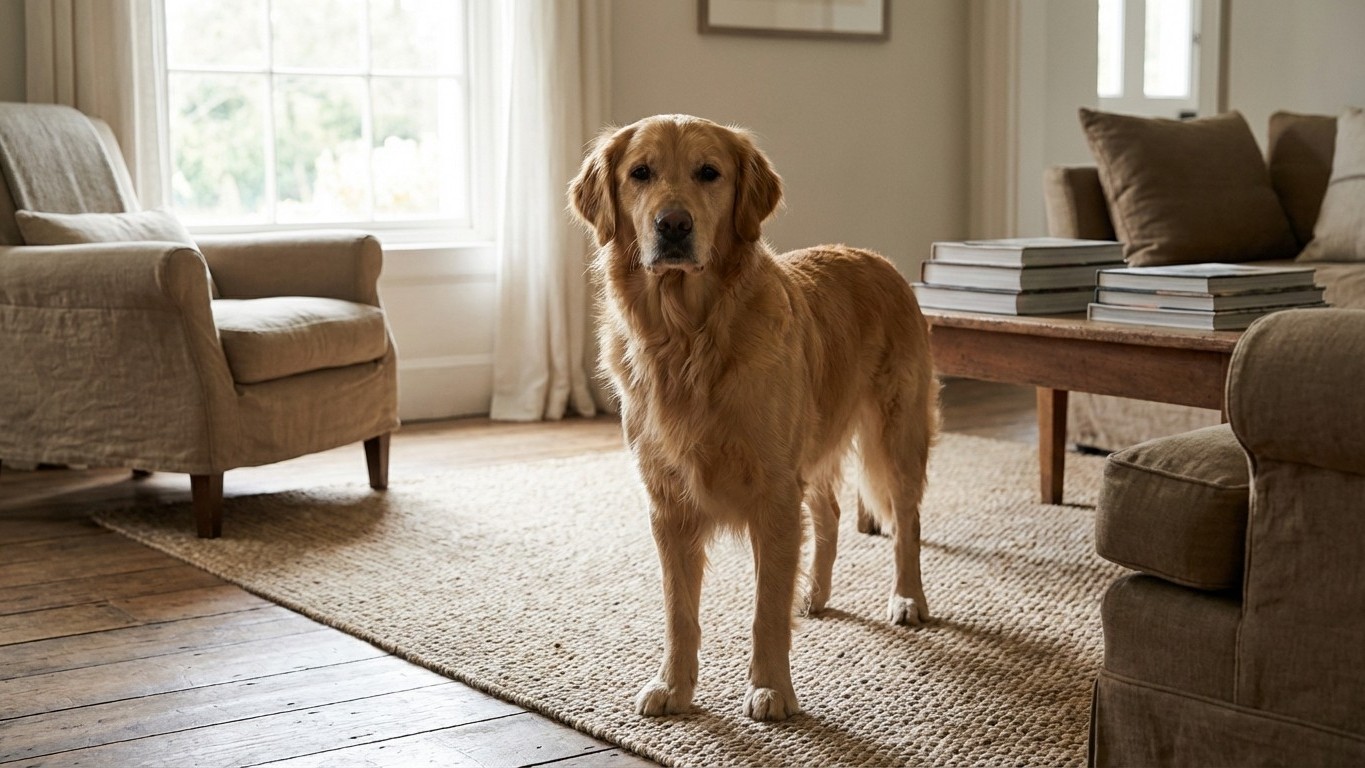
Old dogs have a way of sneaking up on us. Their muzzles frost, naps get longer, and sometimes, the sparkle goes out of simple things like climbing stairs or navigating a favourite sunbeam. Marley, my twelve-year-old Retriever, had always been the unflappable sort, bounding, waggling, chasing after the post like it was an Olympic event. Then one winter, he started bumping into things. The odd table leg. The step up into the kitchen. Clumsy, I thought. Age catching up, perhaps. It was easy to shrug off, at first.
Except, of course, Marley wasn’t just being dopey. His world was shifting under his paws, and I had missed the signals.
Key takeaways
- Is your senior dog suddenly clumsy or hesitant at home?
- How one overlooked household tweak can boost your dog’s mobility.
- The surprising reason smooth floors may be hurting your aging pet.
Realising Something Was Different
At first, the little slips: Marley snagging his paw on the edge of the doormat, hesitating before jumping onto the settee. I blamed creaky joints or a foggy old brain. But then, one night, I watched him skitter and almost fall crossing the kitchen. Eyes bright, but uncertain. His nails splayed, desperate for grip. Marley, the dog who could once spin on a sixpence, was struggling on our hardwood floors.
You never forget the first time your loyal friend looks up at you, bewildered after a tumble. In that moment, worry kicked in. Was it arthritis? Had his eyesight faded overnight? Visiting our vet put my mind a bit at ease: joints a bit worn, vision gently softening, but nothing catastrophic. Yet, what the vet said stuck with me: “For many old dogs, it’s the smooth, shiny flooring that trips them up most, not their legs.”
The Change That Flipped Our Routine
The fix, as it turned out, sounded almost absurdly simple, but it completely altered Marley’s daily life. Rugs. That’s it. Not some fancy custom footwear, not prescription pain meds (though those have their place), but the humble, grippy, washable rug.
I’d spent years admiring the sheen of my trendy floors, swept bare of mats for a minimalist look. For Marley, it became a slippery, obstacle-strewn expanse. Unlike puppies, who’ll often find traction in sheer willpower, older dogs can be genuinely frightened by loss of grip. And the consequences go beyond scraped paws or dented dignity. Slipping repeatedly can make older dogs anxious, withdrawn, or even aggressive out of frustration or pain.
So I went all out, from runner mats in the hallway to a rug series stretching from sofa to back door, even a small square by his water bowl. Looking back, I should have done it sooner. That first evening, Marley trotted from one textured island to another, tail wagging, confidence resurging with every sure-footed step. Not a stumble in sight. If he could talk, I’m sure I’d have received a well-deserved earful.
Why Traction Matters More Than You’d Think
There’s a reason older dogs become wary of open floors. As they age, muscle mass shrinks, balance falters, and the nails thicken and lose their grip. Couple that with vision fading around the edges and, suddenly, a kitchen floor resembles an ice rink. One slip can lead to real problems: torn ligaments, joint trauma, lingering fear of moving about. That fear keeps dogs immobile, which, in turn, causes their muscle tone to waste away faster, a feedback loop that can send quality of life into sharp decline.
The science behind it surprised me. Dogs distribute weight on their toes, which are flexible and adept on earth and grass but far less sturdy on synthetic surfaces. Age dulls those innate stabilisers. By adding runners, thick mats, or carpet offcuts, you break up vast slips of smooth tile or hardwood, giving your dog a pathway of “safe zones.” Think of it as installing handrails for their paws.
The Ripple Effects You May Not Expect
As soon as Marley rediscovered his balance, everything else changed too. He Stopped hesitating before getting up in the morning, began to venture back into rooms he’d been avoiding. Nothing radical, just the sort of background confidence we take for granted. The clincher? For the first time in months, Marley showed genuine interest in playing tug again. A rug gave him the grip to brace himself, and the fun crept back in.
I’ve heard similar stories from other dog owners, too. The trick is not only tactile comfort, but predictability in the surface underfoot. Unlike vision, the sense of touch through paw pads never fades entirely. That means a dog who can feel a secure footing is a dog who’s less nervous about aging. I’m convinced that regaining even a modest level of mobility does wonders for their wellbeing, appetite, and spirit. One friend compared it to getting reading glasses after years of squinting, not miraculous, but life-opening.
Small Tweaks, Big Differences
Of course, rugs don’t cure everything. I still keep a careful eye on Marley’s joints and appetite, and regular vet check-ups are now gospel in our house. But think of grippy surfaces as your secret weapon. The right rug trumps a dozen pricey gadgets; a well-placed mat beats the fanciest orthopaedic bed, at least for dogs who struggle to reach that bed in the first place.
The practical details matter. Pick rugs and mats that won’t slip: those with rubber backing are best. If you’ve got a chewer, avoid loose fibres. Washability is a blessing. And yes, sacrificing a bit of interior design pride is worth it for a wagging tail. If several rugs clutter your look, consider matching tones with the flooring, your dog won’t mind the style, so you can at least keep things coordinated for your own sanity.
If only I’d known sooner that my seasoned companion’s “clumsiness” was a conspiring of environment and time, not just inevitability. Simple, often overlooked fixes like these can outrun the slow creep of old age for a little while yet.
What else might our pets be quietly wishing we’d notice? The way they adapt to our homes, adjusting to layout changes, noises, or (yes) even the pride of polished wood floors, tells us plenty if we care to look. Maybe it’s not just about rugs, but about putting ourselves in their paws and asking, what would make getting old a bit brighter? The answer, sometimes, is underfoot.