
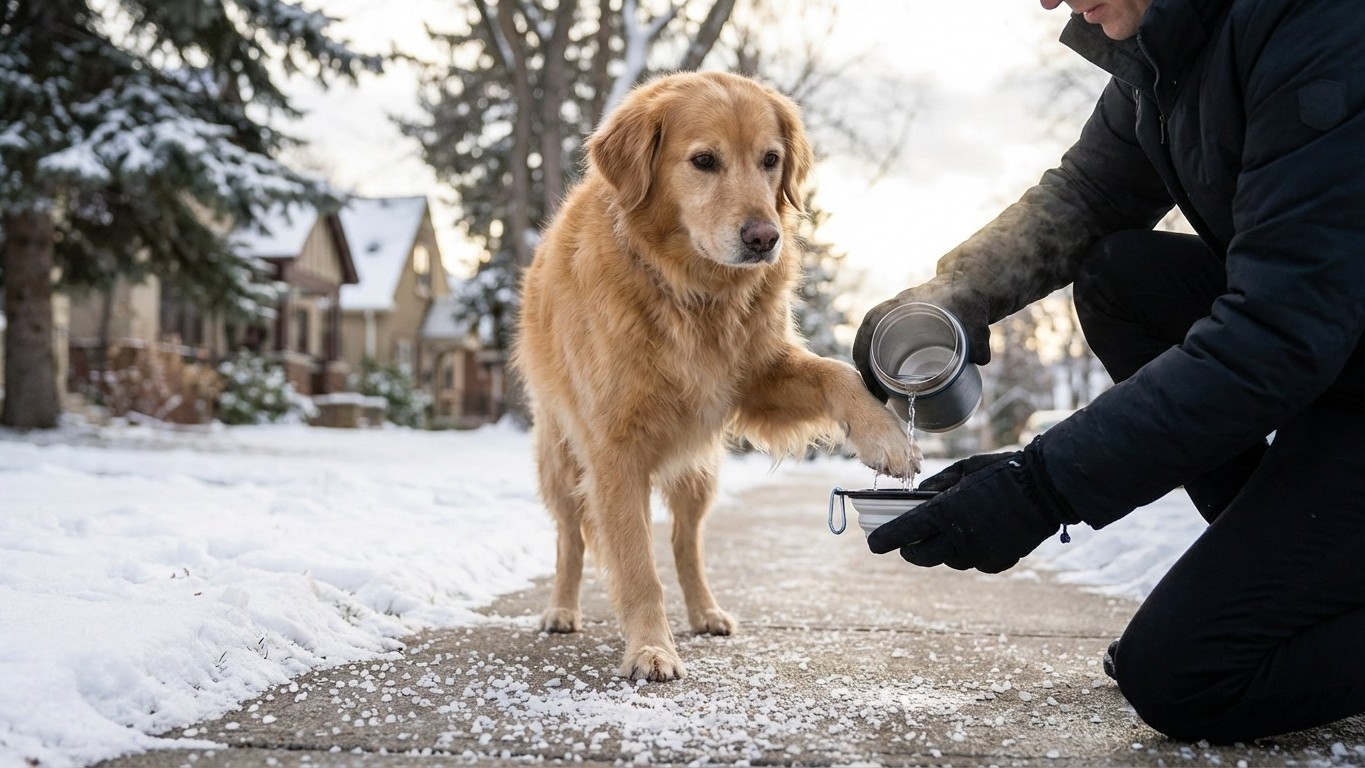
As winter sets in, many pet owners focus on keeping their furry friends warm and comfortable. However, an everyday item used to combat icy conditions, **rock salt**, poses a significant risk to pets during the colder months. Understanding the dangers of rock salt and taking preventive measures can help ensure your pet’s safety throughout winter.
Key takeaways
- Could a common ice-melting product be silently harming your pet?
- What unusual signs should you watch for after winter walks?
- Simple, vet-recommended actions might save your pet this winter.
Understanding the Risks of Rock Salt
Rock salt, a mixture of sodium chloride and grit, is commonly spread on roads and pavements to melt ice and provide traction. While effective for human safety, it can be hazardous to pets. When dogs and cats walk on treated surfaces, rock salt can adhere to their paws and fur. If ingested, either by licking their paws or fur, pets can experience a range of health issues.
Ingesting rock salt can lead to elevated blood sodium levels, resulting in symptoms such as excessive thirst, vomiting, diarrhoea, lethargy, convulsions, and, in severe cases, kidney damage. Even small amounts can be dangerous, making it crucial to prevent your pet from coming into contact with rock salt. Rock%2Bsalt%2Bpoisoning%2Bin%2Bpets%2B%28PDF%2B101KB%29
Preventive Measures to Protect Your Pet
To safeguard your pet from the dangers of rock salt, consider the following steps:
– **Paw Care:** After walks, thoroughly rinse your pet’s paws with warm water to remove any salt residues. This practice helps prevent ingestion and reduces skin irritation. advice on caring for pets in winter
– **Protective Gear:** Invest in pet-friendly boots to shield your pet’s paws from salt and cold surfaces. While some pets may need time to adjust, these boots can provide effective protection.
– **Avoid Treated Areas:** Whenever possible, choose walking routes that are less likely to be treated with rock salt. Parks or untreated paths can be safer alternatives.
– **Home Safety:** If you use rock salt on your property, opt for pet-safe de-icing products. These alternatives are designed to be less harmful to animals.
Recognising and Responding to Rock Salt Exposure
Being vigilant about your pet’s behaviour during winter walks is essential. Signs of rock salt exposure include excessive licking of paws, redness or irritation between toes, and reluctance to walk. If you notice any of these symptoms, promptly rinse your pet’s paws and monitor for further signs of distress.
In cases where ingestion is suspected, or if your pet exhibits symptoms like vomiting, diarrhoea, or lethargy, seek immediate veterinary attention. Early intervention can prevent more severe health complications.
Additional Winter Hazards to Consider
Beyond rock salt, winter introduces other household items that can be harmful to pets:
– **Antifreeze:** This common winter chemical has a sweet taste that can attract pets, but even small amounts are highly toxic and can lead to kidney failure. Always store antifreeze securely and clean up any spills immediately. advice on caring for pets in winter
– **Seasonal Plants:** Festive plants like poinsettias, holly, and mistletoe can be toxic if ingested. Keep these plants out of reach or opt for artificial versions to decorate your home safely. winter hazards what uk pet owners should watch for
– **Holiday Decorations:** Tinsel, ribbons, and small ornaments can be enticing to pets but pose choking hazards or can cause intestinal blockages if swallowed. Ensure decorations are securely placed and supervise pets around them. winter dangers for pets staying safe through the festive season
By staying informed about these potential hazards and taking proactive steps, you can create a safer environment for your pets during the winter months. Regularly inspecting your home and being mindful during walks will help keep your furry companions healthy and happy throughout the season.