
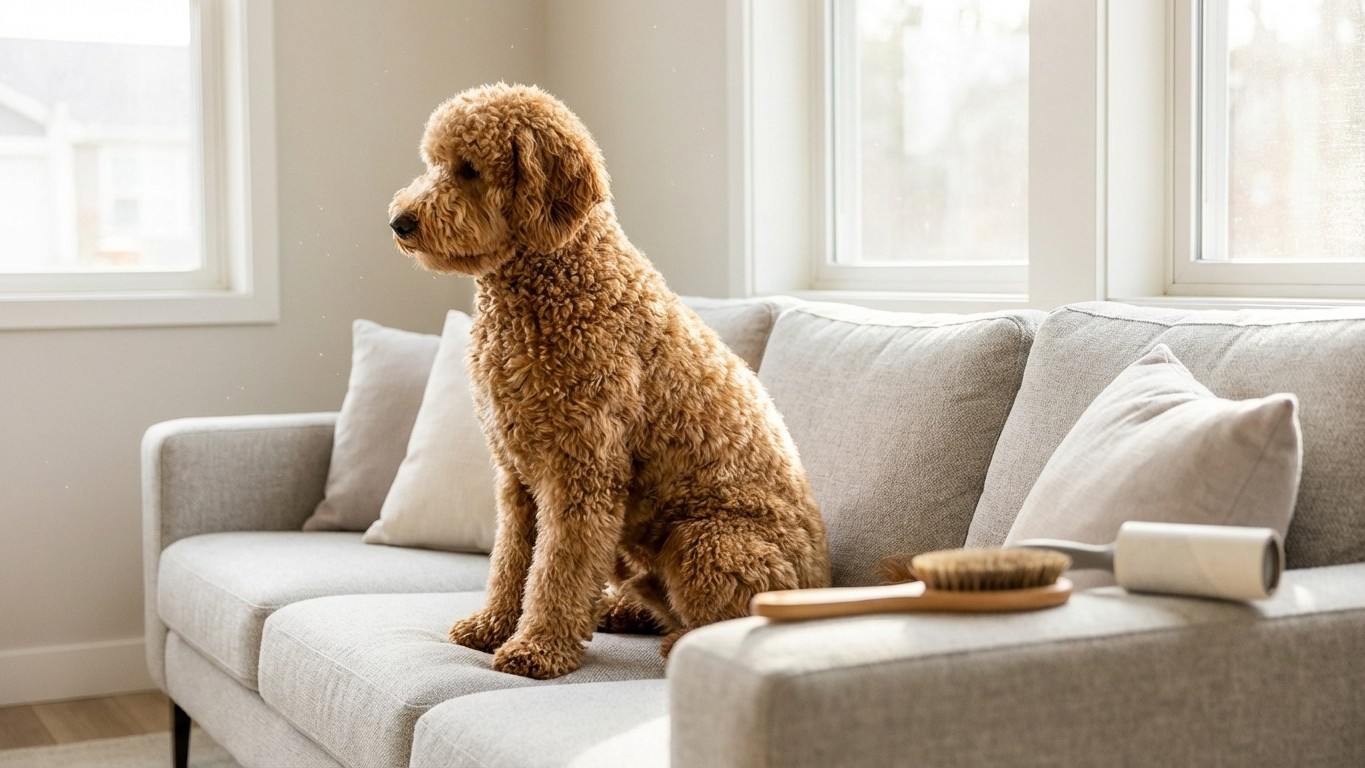
Every dog sheds. That’s the biological reality, and anyone who tells you otherwise is selling you something. But here’s what’s genuinely useful to know: some breeds shed so little that the difference in your daily life, and on your sofa, is night and day. These are the dogs loosely grouped under the label “non shedding,” and understanding what that actually means before you bring one home could save you a great deal of frustration.
What Does “Non Shedding” Actually Mean?
Definitions and the Differences That Matter
The terms “non shedding,” “low shedding,” and “hypoallergenic” get thrown around interchangeably in breed descriptions and pet shop windows, but they refer to genuinely different things. A non shedding dog is one whose coat grows continuously rather than cycling through dramatic seasonal shed phases. The hair stays in the follicle much longer before falling out naturally, which means far less of it ends up on your jumper or drifting under the radiator.
Low shedding is a softer claim: these breeds do lose hair, just less than average. The Basenji, for example, sheds minimally due to its short, fine coat and fastidious self-grooming habits (they’re often compared to cats in this respect). Hypoallergenic is a different matter entirely, and we’ll get to that in a moment. For now, the key point is that no breed produces absolutely zero loose hair. The honest version of this low shedding dog breeds guide makes that clear from the outset.
Why Some Dogs Don’t Shed Much: the Science Behind It
A dog’s coat goes through growth cycles: anagen (active growth), catagen (transition), telogen (resting), and exogen (shedding). In most breeds, large numbers of follicles enter the exogen phase simultaneously, especially in spring and autumn, releasing a wave of loose fur. In breeds like the Poodle or the Bichon Frisé, the anagen phase lasts much longer, meaning hairs stay attached to the follicle for months rather than weeks. The result is a coat that grows quite long if left untrimmed, and sheds very little in the meantime. This is not a breed characteristic anyone engineered deliberately; it emerged through centuries of selective breeding for specific working traits, particularly water-resistant or weather-hardy coats.
The Real Benefits of Owning a Non Shedding Breed
Life with a low-shed dog is measurably different from life with a Labrador or a Husky. The floors stay cleaner between hoovers. Your dark clothing survives a cuddle without looking like you’ve rolled in a haystack. For families who spend a lot of time indoors, or who simply loathe the relentless lint-rollering that comes with heavy-shedding breeds, a non shedding dog can feel like a genuine quality-of-life upgrade.
There’s also a subtler benefit that doesn’t get discussed enough: reduced dander dispersal throughout the home. When a dog sheds heavily, it deposits not just hair but skin flakes (dander) across every surface it touches. Dogs that retain their coat shed far less dander into the environment, which is why they’re sometimes better tolerated by people with mild sensitivities.
Are They the Answer to Dog Allergies?
This is where things get complicated, and where the marketing around “hypoallergenic” breeds has done a lot of damage. The primary allergen in dogs is a protein called Can f 1, produced in saliva, skin cells, and urine. Every dog produces it. Every single one. Some people with allergies find they react less severely to certain breeds, and there’s a reasonable body of anecdotal evidence suggesting Poodles and their crosses cause fewer reactions than, say, German Shepherds. But there is no breed guaranteed to be safe for allergy sufferers. If you or a family member has a dog allergy, spending time with the specific dog you’re considering adopting, ideally on multiple occasions, is the only sensible way to assess compatibility. Always speak to your GP or an allergist before making that decision.
For a thorough breakdown of what hypoallergenic really means in practice, the hypoallergenic dog breeds guide is worth reading alongside this one.
Non Shedding Breeds Worth Knowing About
Small Breeds
The Bichon Frisé is probably the most cited small non shedding breed, and for good reason. Its dense, curly coat traps loose hair rather than releasing it, and the breed has a cheerful, adaptable temperament that suits flat life well. The Toy and Miniature Poodle belong in the same conversation: sharp, trainable, and remarkably versatile despite their sometimes fussy reputation. The Shih Tzu’s long, silky coat grows continuously and sheds very little, though it demands daily attention to prevent matting. The Miniature Schnauzer rounds off this group nicely, a wiry double coat that barely sheds and a personality that is, let’s say, memorably confident.
Medium Breeds
The Standard Schnauzer shares its miniature cousin’s low-shed wiry coat, and adds a more substantial, athletic build suited to active owners. The Kerry Blue Terrier is less commonly seen in UK households but deserves far more attention: its dense, wavy blue-grey coat sheds almost nothing, and its spirited character suits owners who enjoy a dog with opinions. The Basenji, technically a low rather than non shedding breed, is included here because its coat maintenance is so minimal it rarely warrants a second thought. It compensates by being one of the few dogs that doesn’t bark (it yodels, which is either charming or alarming depending on your neighbours).
Large Breeds
The Portuguese Water Dog gained considerable public profile when one joined the Obama family in 2009, and its reputation for low shedding is well-founded. Muscular, loyal, and genuinely energetic, this is a working breed that needs real exercise. The Barbet is a French water dog with a curly, woolly coat that barely sheds; it remains relatively rare in the UK but breed numbers are growing steadily. The Irish Water Spaniel, the tallest of the spaniel family, sports a tightly curled liver-brown coat and an independent streak that makes early training rather important.
Non Shedding vs Low Shedding vs Hypoallergenic: a Practical Comparison
Rather than a long list of caveats, here’s how these three categories stack up across the criteria that actually matter when choosing a dog:
- Non shedding: Coat grows continuously, minimal loose hair in the home, requires regular professional grooming or clipping every 6-8 weeks.
- Low shedding: Some seasonal loss but significantly less than average; grooming needs vary widely by breed.
- Hypoallergenic (marketed): Lower allergen dispersal in some individuals, but no breed is truly allergen-free. Always test before adopting.
The overlap between these categories is significant. Many breeds appear in all three lists depending on the source, which is why understanding the underlying coat biology matters more than trusting any single label. Our hypoallergenic dog breeds guide on coat types and grooming goes deeper into the science behind these distinctions.
What You Need to Know Before Adopting
Zero Loose Hair Is a Myth
Even the most devoted Poodle owner will occasionally find a hair on the carpet. What changes is the volume and frequency. The coat of a non shedding breed tends to trap loose hairs within the curl or wave structure rather than dropping them, which means the hair accumulates on the dog rather than your furniture. This is actually why grooming becomes more important, not less.
Grooming Demands Are Higher Than Expected
Here’s the trade-off nobody mentions prominently enough: the coat that doesn’t fall on your floor still needs to go somewhere. Non shedding breeds typically require professional grooming every six to eight weeks, plus regular brushing at home to prevent matting. A Poodle or Bichon coat left unbrushed for a fortnight can become a densely felted nightmare that requires shaving to resolve, which is uncomfortable for the dog and expensive for you. Budget realistically. A professional groom in the UK currently runs between £40 and £90 depending on size and condition, and it’s a recurring cost for the life of the dog.
Living Day-to-Day with a Non Shedding Dog
Building a Grooming Routine
For curly and wavy-coated breeds, brushing three to four times a week with a slicker brush and a wide-toothed metal comb is a reasonable minimum. Pay particular attention to areas where friction occurs: behind the ears, under the collar, around the armpits, and between the back legs. These are the spots where matting starts quietly, long before you notice it’s become a problem. Many owners find it easiest to establish a specific grooming day rather than fitting it in opportunistically, because opportunistically rarely happens.
Skin Health: the Hidden Concern
A paradox worth flagging: breeds with continuously growing, dense coats can be more prone to certain skin conditions than their heavy-shedding counterparts. The coat can trap moisture and reduce airflow to the skin, creating conditions where yeast or bacterial overgrowth becomes more likely, especially in skin folds or around the ears. Regular checks, keeping the coat trimmed appropriately, and not over-bathing (which strips natural oils) all help. If you notice your dog scratching persistently, developing a musty smell, or showing redness around the ears or paws, a vet visit is the right move, not a new shampoo.
FAQ: Your Questions on Non Shedding Dogs
Which dogs truly lose the least hair? Breeds consistently cited for minimal shedding include the Poodle (all sizes), Bichon Frisé, Maltese, Portuguese Water Dog, Barbet, Kerry Blue Terrier, and Basenji. Individual variation exists within every breed.
Are non shedding dogs safe for allergy sufferers? They may reduce the allergen load in your home, but they cannot eliminate it. Anyone with a diagnosed dog allergy should spend time with the specific animal before committing to adoption and consult a medical professional first.
How do I maintain a non shedding dog’s coat? Consistent brushing several times a week at home, combined with professional grooming every six to eight weeks for trimming and bathing, is the standard approach for most curly and wavy-coated breeds.
Further Reading on Coat Types and Breed Choice
Coat type is just one piece of the puzzle when choosing a dog. Temperament, energy level, size, and how well a breed fits your living situation all matter just as much, sometimes more. The dog breeds guide covers the full picture, helping you match lifestyle to breed rather than just coat preference.
The question of which dog is “right” for a household with sensitivities, or simply one that values a cleaner floor, doesn’t have a single tidy answer. Non shedding breeds offer a genuine reduction in loose hair and a different kind of relationship with grooming, one that shifts effort from hoovering to brushing. Whether that trade-off suits your life depends on how you actually live in your home, and what kind of time and budget you can honestly commit to the coat care these breeds need. A dog chosen for its lack of moulting alone is still a decade-long commitment with a full personality attached.