
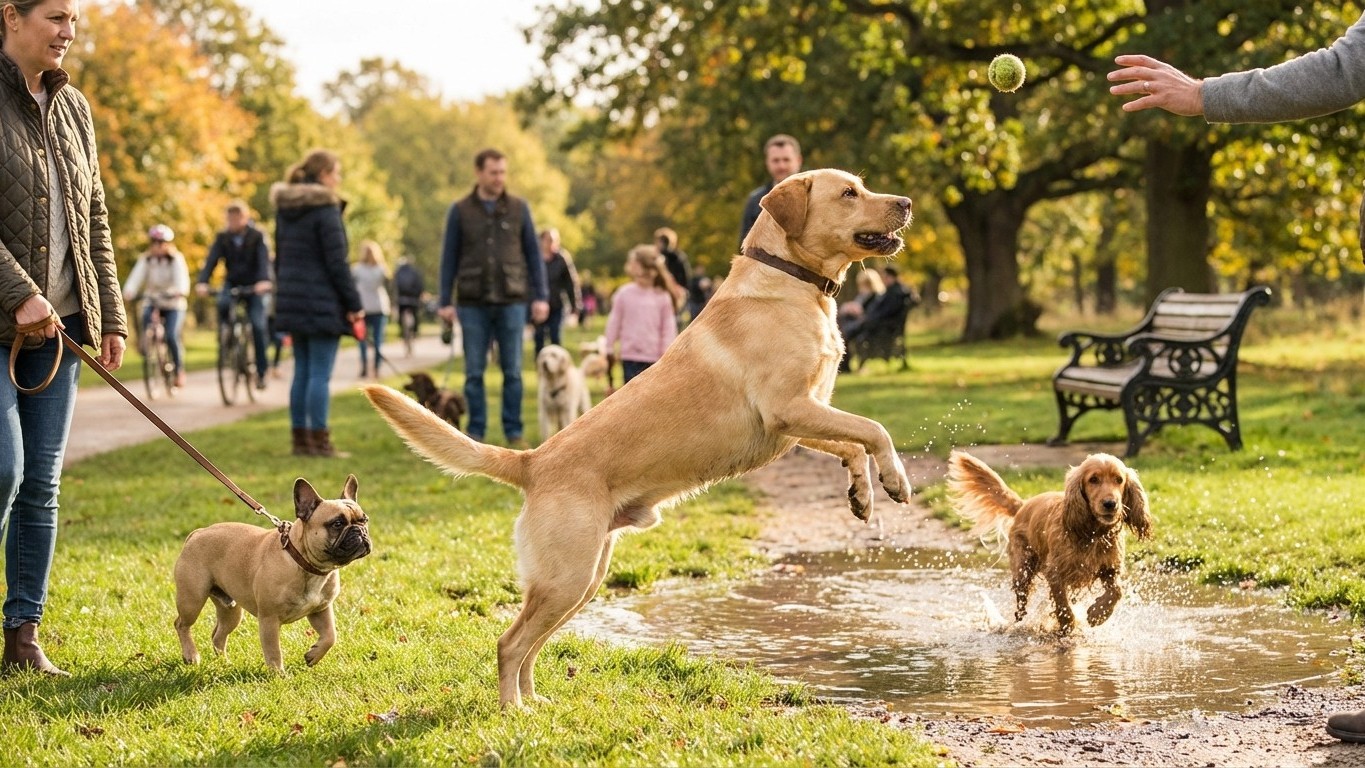
Britain has always had a complicated, passionate, and deeply affectionate relationship with dogs. Walk through any park on a drizzly Tuesday morning and you’ll see it: a Labrador bounding through puddles with absolute conviction, a French Bulldog waddling determinedly behind its owner, a Cocker Spaniel with ears flying. The UK’s favourite breeds aren’t chosen by accident. They reflect who we are, how we live, and what we want from a canine companion, and understanding that picture can make all the difference when you’re considering bringing a dog home.
How breed popularity shifts in the UK
The Kennel Club has been registering pedigree dogs in the UK since 1873, which means we have a genuinely rare thing: a long, detailed view of how British tastes in dogs have changed over generations. The top ten list from a decade ago looks noticeably different from today’s rankings, and that evolution tells a story worth paying attention to.
Labrador Retrievers have held the top spot for over three decades, an almost unthinkable run in any popularity contest. But around them, the landscape has shifted considerably. French Bulldogs surged from relative obscurity to become one of the most registered breeds in the country over the past fifteen years. Meanwhile, once-ubiquitous breeds like the German Shepherd and Golden Retriever have slipped down the rankings, not because people love them less, but because other breeds have filled specific niches more efficiently.
The Kennel Club’s registration data from 2023 and 2024 paints a picture of a nation gravitating towards smaller, lower-energy breeds suited to urban living. Miniature Dachshunds have climbed steadily. Cavalier King Charles Spaniels maintain loyal followings. Golden Retrievers still feature prominently, but French Bulldogs and Bulldogs have carved out territory that shows no sign of shrinking.
Ten years ago, the pandemic hadn’t yet happened. That matters enormously. The so-called “pandemic puppy” boom of 2020-2021 saw an extraordinary spike in dog ownership across the UK, with buyers often prioritising availability and appearance over suitability. The aftermath has been complex: rescue centres have seen returns, and some breeds acquired during lockdown have ended up with owners who weren’t fully prepared for the reality of dog ownership post-restrictions. The Kennel Club and welfare organisations have spent considerable energy trying to encourage more considered adoption decisions as a result.
Societal factors run deeper than a single health crisis, though. Urbanisation, rising flat-living rates, longer working hours (and the shift to remote work that followed), smaller family units, and a growing awareness of animal welfare have all quietly reshaped which breeds British people reach for.
The breeds that dominate, and why
Labrador Retriever
The Lab’s longevity at the top is no accident. They are, in practical terms, one of the most adaptable dogs ever bred. Originally working dogs from Newfoundland (not Labrador, despite the name, one of those wonderful historical ironies), they arrived in Britain via Poole in the early nineteenth century and never really left. Their temperament sits in a rare sweet spot: trainable enough for guide dog work, gentle enough for young children, energetic enough to satisfy active owners without being unmanageable for more sedentary ones. They do need real exercise and plenty of mental stimulation, and they’re prone to weight gain if not carefully managed, but the trade-off is a dog that fits into an enormous range of lifestyles. For a comprehensive look at how Labs compare with other breeds across different British living situations, the dog breeds guide UK covers this territory in detail.
French Bulldog
The French Bulldog’s rise is one of the more extraordinary stories in recent canine history. Twenty years ago they were a niche choice. Now they’re everywhere, coffee shops, Instagram feeds, celebrity social media profiles. Their appeal is understandable: compact, low-shedding relative to many breeds, with a personality that veers entertainingly between stubbornness and affection. For city dwellers in London flats, they tick an obvious box.
But this is where welfare conversations become uncomfortable. French Bulldogs are a brachycephalic breed, meaning their flat faces can cause breathing difficulties, overheating, and a range of secondary health issues. Reputable breeders work hard to produce healthier lines, but the demand generated by their popularity has also fuelled irresponsible breeding. Anyone considering a French Bulldog should research breeders carefully and always consult a vet before committing. The breed’s popularity has not resolved its health complexity, if anything, the surge in demand has made it harder to find responsibly bred individuals.
Cocker Spaniel
English Cocker Spaniels occupy a particular place in the British imagination, long-eared, silky, and possessed of an expression that has convinced generations of owners they are sentient puddings. They’re genuinely versatile: originally bred for flushing game, they’ve transitioned to family life with considerable ease. They need regular grooming (those ears are magnets for tangles and infection), steady exercise, and strong early socialisation, but in return they offer a joyful, affectionate temperament that suits families with children and active individuals alike.
Staffordshire Bull Terrier
The “Staffie” occupies a complicated cultural space in Britain. Frequently misrepresented in sensationalist media coverage, they are consistently one of the most registered and, according to rescue centre data, one of the most surrendered breeds. They are also one of the most loyal, playful, and physically affectionate dogs you can share your life with. Staffies are muscular, intelligent dogs that thrive on human company and can struggle badly with isolation. The gap between the breed’s reputation and the reality experienced by their owners remains frustrating to anyone who’s actually spent time around them.
Other breeds in the top tier
Beyond these four, the Kennel Club’s recent registration data consistently places Golden Retrievers, Miniature Dachshunds, Border Collies, German Shepherds, Cavalier King Charles Spaniels, and Cockapoos (though as a crossbreed, they sit outside Kennel Club pedigree registration) near the top. Each has its own specific appeal: Border Collies for owners who want a genuinely challenging, intelligent working partnership; Dachshunds for their manageable size paired with a personality far larger than their frame suggests; Cavaliers for their gentle, adaptable temperament.
Why these breeds win in British life
Climate plays a role that’s often underestimated. The UK’s temperate, damp weather suits moderate-energy breeds more than extremes. A Siberian Husky in a London garden will struggle in summer; a Chihuahua on a wet Scottish hillside in January will be miserable. Breeds that tolerate variable, mild-but-grey British weather without special accommodation do better in the long run.
Urban density matters enormously too. More than eighty percent of the UK population now lives in urban areas, and that fundamentally changes which dogs are practical. Breeds that can exercise adequately on a daily walk and settle calmly in an apartment will always have an edge over those that require acres of land and hours of daily running. This is explored in depth in the broader dog breeds guide, which connects lifestyle factors to specific breed choices.
Media and celebrity influence is real, even if we don’t always want to admit it. The rise of the French Bulldog correlates directly with its appearance in advertising campaigns, on celebrity social media accounts, and in popular culture. The same pattern appeared with Dalmatians after 101 Dalmatians, and with Rough Collies after Lassie. It’s worth remembering that media representation tends to show the photogenic highlights, not the daily reality of an anxious dog with breathing difficulties on a warm day.
Popular doesn’t mean right for you
This is the part of any popularity guide that matters most, and it’s the part most easily skipped. A breed topping the charts doesn’t mean it tops the charts for your specific life. A Labrador in a city flat without a garden and an owner who works twelve-hour days is a welfare problem waiting to happen. A Border Collie with a sedentary owner will redirect its considerable intelligence towards destructive behaviour with impressive efficiency.
Before adopting any breed, popular or otherwise, the questions worth sitting with are genuinely personal: How much time can you realistically give to exercise every single day, including rainy Sundays and busy work weeks? Do you have children, elderly relatives, or other pets whose needs intersect with a dog’s temperament? What’s your living situation, and is it likely to change in the next decade? What’s your honest tolerance for grooming, shedding, and veterinary costs?
If you’re navigating these questions in the UK specifically, the dog breeds guide UK covering the particularities of breed choice in Britain offers useful context on how local factors shape these decisions. And if you’re considering any breed that might fall under UK legislation, the UK dog breed restrictions guide (banned breeds) is essential reading before you commit.
Breeds on the rise, and those quietly fading
Post-pandemic trends have accelerated some movements that were already underway. Miniature and toy breeds have continued climbing, the practicalities of smaller dogs in smaller homes are hard to argue with. Doodle crossbreeds (Labradoodles, Goldendoodles, Cockapoos) have exploded in popularity despite sitting outside Kennel Club registration, largely on the premise of lower shedding combined with friendly temperaments. Whether that premise holds depends heavily on which generation of cross you’re dealing with, and it’s an area where buyer education remains patchy.
Some working breeds have seen softening demand as owners realise the commitment involved. Belgian Malinois, popularised partly through military and police dog media coverage, are stunning animals in the right hands and genuinely challenging in the wrong ones. Alaskan Malamutes and Huskies similarly see surges and retreats as their appeal outruns the practicalities of owning a high-drive, high-energy northern breed in a semi-detached in suburban Manchester.
The broader trend seems to point towards a more informed kind of ownership gradually emerging, partly driven by welfare campaigns, partly by the hard lessons of pandemic-era impulse adoptions. Whether that translates into lasting change in registration patterns will be something to track through the Kennel Club’s data over the next five years.
Frequently asked questions
What are the most popular dog breeds in the UK right now?
Based on Kennel Club registration data from 2023-2024, Labrador Retrievers, French Bulldogs, Cocker Spaniels, and Staffordshire Bull Terriers consistently feature at the top, alongside Golden Retrievers, Miniature Dachshunds, and Cavalier King Charles Spaniels.
Are popular breeds always the healthiest choice?
Not automatically. Some of the most popular breeds, including French Bulldogs and Bulldogs, carry inherited health risks linked to their physical conformation. Always research breed-specific health concerns and consult a vet before deciding. Popularity reflects desirability, not necessarily ease of ownership or health outcomes.
Has the pandemic changed which breeds British people choose?
Yes, in measurable ways. The 2020-2021 puppy boom accelerated demand for smaller, apartment-friendly breeds and crossbreeds. The aftermath has been a significant increase in rescue surrenders as some owners found the reality of dog ownership didn’t match their expectations.
Which breeds are gaining popularity in the UK?
Miniature Dachshunds, Cockapoos, and various toy and miniature breeds have seen consistent growth. Some working breeds have also attracted attention, though their registration numbers tend to fluctuate with media trends rather than growing steadily.
The most useful thing any popularity guide can do is redirect the question slightly. Instead of asking which breeds are most popular, the more productive question is which breed suits your specific, honest, current life, and whether that life is likely to stay the same for the next ten to fifteen years. Dogs live longer than trends. The best match isn’t always the one dominating this year’s rankings.