
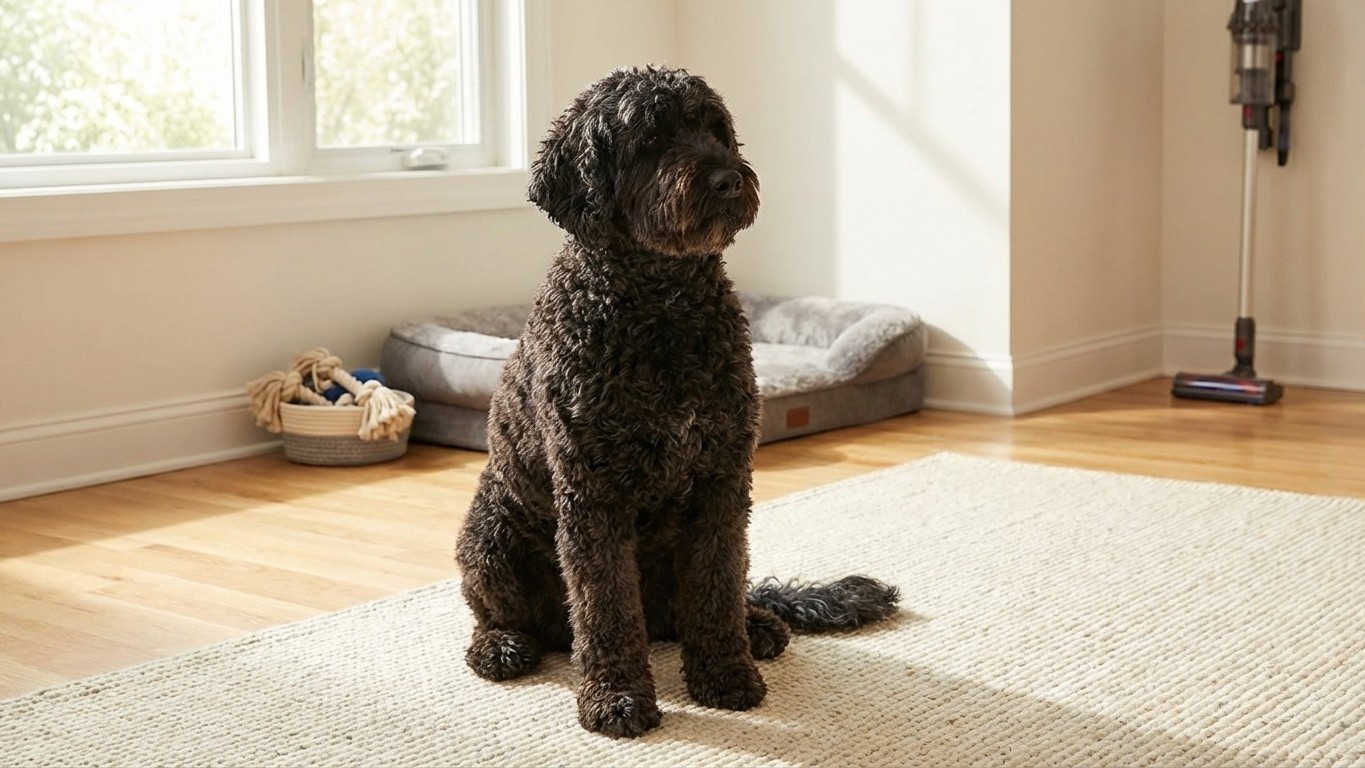
Fewer tumbleweeds of fur drifting across your kitchen floor. No more black jumpers relegated to “dog-free” occasions. If that sounds appealing, you’re probably already wondering which breeds actually deliver on that promise, and whether “low shedding” really means what you hope it does. The honest answer is: it depends, and understanding exactly what you’re signing up for will save you a lot of disappointment (and hoovering).
What Does Low Shedding Actually Mean? Understanding the Concept
Every dog sheds. Every single one. Even the breeds marketed as “non-shedding” lose some hair, it’s a biological fact, as natural as breathing. What varies enormously between breeds is the quantity of hair lost, how often it falls out, and whether it ends up scattered across every surface in your home or stays largely on the dog until you brush it away. Low shedding breeds sit in the middle ground: they shed noticeably less than, say, a German Shepherd or a Labrador in spring, but they’re not entirely hair-free companions either.
The coat type plays a huge role here. Dogs with single-layer coats (no dense undercoat) tend to shed far less than double-coated breeds, because it’s that thick, woolly undercoat that blows out seasonally and blankets your sofa. Breeds with continuously growing hair, think Poodles or Bichons, shed minimally because the hair cycle is much slower and the loose strands get caught in the surrounding coat rather than falling freely. Curly and wavy textures trap dead hair rather brilliantly, which is why they feel like the tidy option… right up until you realise they need considerably more grooming to compensate.
Low Shedding vs Hypoallergenic vs Non-Shedding: Three Different Things
These three terms get used almost interchangeably online, and it causes real confusion. A low shedding breed simply produces less loose hair than average. A non-shedding breed produces almost none, though as noted, the distinction is one of degree rather than an absolute. “Hypoallergenic” is the most misunderstood label of the three: it refers to how much allergen a dog produces, not how much hair it drops. The main canine allergen, Can f 1, is found in saliva, skin cells (dander), and urine, not the hair itself. A low-shedding dog can still produce significant allergens if it drools freely or sheds a lot of dander. For a deeper look at what that label genuinely means, the hypoallergenic dog breeds guide unpacks it thoroughly.
What Influences Shedding Beyond Breed?
Genetics set the baseline, but they’re not the whole story. Nutrition matters more than most owners realise, a diet deficient in omega fatty acids or protein can trigger excessive shedding even in breeds that normally lose very little. Hormonal changes (pregnancy, seasons, thyroid issues) affect coat cycles. Stress is a surprisingly common culprit: anxious dogs often shed more. And then there’s simple health: skin conditions, parasites, and allergies all increase hair loss. Regular vet check-ups catch these triggers early, which is why a sudden increase in shedding warrants a professional opinion rather than just a new vacuum.
Why Choose a Low Shedding Breed?
The practical benefits are obvious enough, less hair on the furniture, fewer lint rollers purchased in bulk, clothes that don’t require a de-furring ritual before every outing. But the advantages go beyond aesthetics. People with mild sensitivities to dog hair (not allergens — hair itself can irritate airways and eyes in some people) often find low-shedding breeds genuinely more comfortable to live with. Families with young children who spend time on the floor also appreciate not having hair ingested constantly.
There’s also a mental load argument that doesn’t get discussed enough. The constant management of heavy shedding, daily brushing, regular hoovering, washing dog beds twice a week, replacing sofa covers — is genuinely time-consuming. For people with busy schedules, mobility issues, or simply a low tolerance for household maintenance, choosing a breed that naturally produces less mess is a reasonable, practical decision. That said, low-shedding breeds often redirect that grooming time into professional clipping appointments, so the effort doesn’t disappear, it just changes form.
This type of dog suits flat-dwellers, people who work from home with the dog nearby all day, anyone who entertains frequently and doesn’t want their guests leaving covered in fur, and owners who prefer the grooming relationship to be a salon visit rather than a daily brush-out. If you’re still working out which lifestyle factors should drive your breed choice overall, the broader dog breeds guide is a good starting point before narrowing things down.
Low Shedding Breeds Worth Knowing, Organised by Size
Smaller Breeds
The Maltese is the classic small low-shedder, silky, single-coated, and producing very little loose hair. The Bichon Frise works similarly, with a curly coat that traps shed hairs rather than dispersing them around the home. Both require regular professional grooming to prevent matting, so while your floors stay cleaner, your grooming budget won’t. The Miniature Schnauzer has a wiry double coat that sheds surprisingly little for its density, though it benefits from hand-stripping or clipping every few months. Yorkshire Terriers, despite their luxurious long coats, shed minimally — their hair is fine and silky, closer in texture to human hair than to typical dog fur, which means it doesn’t float around in the same way. The Shih Tzu rounds out the small category well; affectionate, low-shedding, and manageable in a flat, though daily brushing prevents the coat becoming a tangled disaster.
Medium Breeds
The Standard and Miniature Poodle sit at the top of almost every low-shedding list, and deservedly so. Their curly, continuously-growing coats shed almost nothing, making them a genuinely good option for people with mild allergies (though not a guarantee, see the hypoallergenic caveat above). The Portuguese Water Dog shares many of the same coat characteristics and has become well-known partly due to high-profile ownership. Soft Coated Wheaten Terriers are another strong medium-sized option: their wavy, silky coat sheds lightly and tends to stay off furniture better than many comparable breeds. The Basenji, one of the older breeds around, with roots in central Africa, is a fascinating outlier. It has an extremely short, fine coat, sheds minimally, and barely barks. An unusual package, but a genuinely tidy one.
Larger Breeds
Large low-shedding dogs are less abundant but they exist. The Standard Poodle (which can reach a substantial size) is the most obvious. The Giant Schnauzer sheds very little despite its imposing frame, though it needs significant exercise and confident handling. The Airedale Terrier, the largest of the terrier group, has a wiry coat that sheds minimally but needs stripping or clipping to stay in good condition. The Afghan Hound is perhaps the most surprising name on this list, its extraordinarily long, fine coat sheds relatively little, but the grooming commitment is among the most demanding of any breed. Beauty has its price.
Grooming Low Shedding Breeds: What’s Actually Involved
Here’s the part that often gets glossed over in enthusiastic “low-shedding dog” content: many of these breeds need more grooming than heavy shedders, not less. The difference is that the grooming happens on a schedule you control (brushing, bathing, clipping) rather than as a constant reactive effort (hoovering, de-fuzzing furniture). For most curly and wavy-coated breeds, professional grooming every six to eight weeks is standard. Between appointments, brushing two to three times a week prevents matting, which can become painful and require shaving the coat completely if left too long.
Tools matter. A slicker brush works well for most low-shedding coats, while a metal comb with wide and narrow teeth helps detect mats before they tighten. Dematting sprays can save a session that’s heading south quickly. For wiry terrier coats, a stripping comb is the traditional choice, though clipping is far more common among pet owners who aren’t showing their dogs. The hypoallergenic dog breeds guide covers coat maintenance in more detail across different textures, which is worth reading before committing to a specific breed.
Beyond brushing, regular bathing (every three to four weeks for most of these breeds) helps remove dead hair, dander, and environmental allergens from the coat before they reach your soft furnishings. A high-quality shampoo suited to the coat type makes a real difference to how well the coat behaves between professional grooms. Air purifiers with HEPA filters are genuinely useful additions to any dog household, low-shedding or otherwise.
Low Shedding vs Truly Non-Shedding: The Fine Print
The gap between “low” and “non” shedding is meaningful if you’re making decisions based on allergies or extreme hair intolerance. Breeds genuinely at the non-shedding end of the spectrum, Chinese Crested, some Poodle crosses, the Xoloitzcuintli, produce so little hair that even sensitive households often manage well. Low-shedding breeds still produce some hair, still require some management, and may still cause issues for people with significant sensitivities. The non shedding dog breeds guide is a better resource if you’re trying to minimise hair to the absolute greatest degree rather than simply reduce it.
Common Questions and Misconceptions
A question that comes up constantly: are low-shedding dogs automatically suitable for people with dog allergies? No, and this bears repeating firmly. As covered earlier, the allergen Can f 1 lives in saliva and dander, and some low-shedding breeds produce as much of it as any heavy shedder. If allergies are the primary driver of your breed search, dander production and salivation levels matter more than coat type. Spending time with the specific breed before committing is genuinely advisable.
Another common misconception: that low-shedding dogs are lower maintenance overall. The grooming requirements of many Poodle-type or Terrier-type breeds can be substantial, and the cost of regular professional grooming adds up considerably over a dog’s lifetime. Some owners find the occasional hair explosion of a Labrador easier to live with than a standing appointment every six weeks.
One more thing worth saying: even the tidiest low-shedding breed will have off seasons. Stress, illness, or a poor diet can temporarily increase shedding in any dog. If your normally tidy Bichon suddenly starts losing more hair than usual, that’s the moment to consult your vet rather than assume it’s normal variation.
The right breed for you exists somewhere between what your home can tolerate, what your schedule allows, and what kind of relationship you want with a dog. Fewer hairs on the carpet is a reasonable thing to want, just make sure the breed you choose for that reason also fits your life in every other way.