
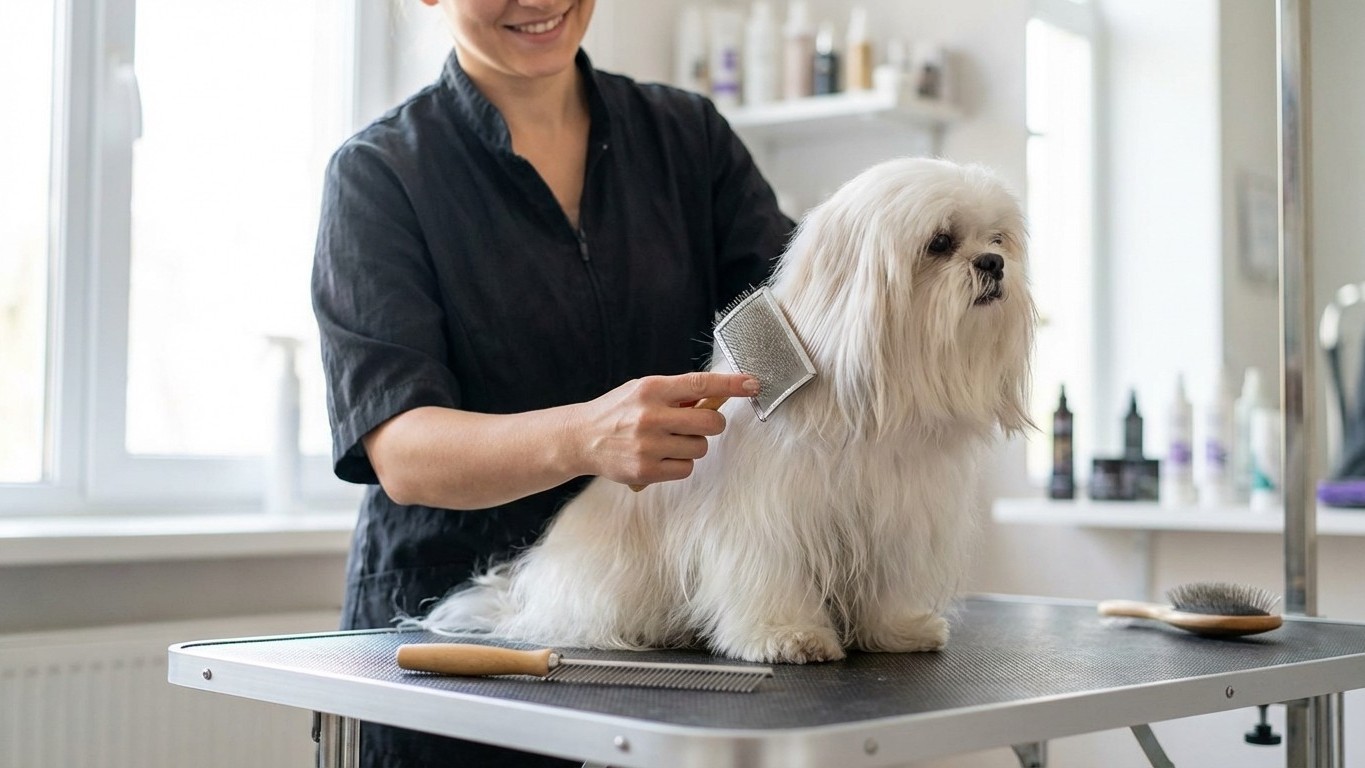
Silky, flowing coats that turn heads in the park. A Shih Tzu’s floor-length curtain of hair. The Afghan Hound’s windswept glamour. Long-haired dogs are striking, but behind every glossy coat lies a commitment that catches many new owners off guard. The matted, uncomfortable reality of neglected long coats is one of the most common reasons dogs end up at groomers in genuine distress, and sometimes in veterinary clinics with skin infections hidden underneath tangled fur. This guide is here to change that, walking you through every layer of long coat care so you and your dog can actually enjoy the experience.
Long-haired dog breeds: why do they need special attention?
What counts as a long-haired dog?
Not all fluffy dogs are the same. A “long-haired breed” typically has hair (or fur) that grows continuously past a certain length without shedding at a standard seasonal rate. Some breeds, like the Yorkshire Terrier, have a single coat of fine human-like hair that drapes to the floor if left untrimmed. Others, like the Bernese Mountain Dog or the Rough Collie, have a dense double coat where the outer guard hairs are long but the thick undercoat is what creates real grooming challenges. The distinction matters enormously when you’re choosing tools and building a routine, because what works beautifully on a Maltese will do almost nothing for a Newfoundland.
The rewards and the realities
There’s genuine joy in owning a long-coated dog. Many owners describe the meditative quality of a slow evening brush session, the closeness it builds with their dog, the theatrical beauty at dog shows or simply on a Sunday morning walk. Long coats can also offer some protection against sun exposure and minor scrapes in working breeds. That said, the honest picture includes mud that clings like velcro, grass seeds that burrow into paw fur and cause abscesses, and matting that can become so severe it restricts movement or traps moisture against the skin, creating painful hotspots. Going into ownership with open eyes makes all the difference.
Building the ideal grooming routine for a long-haired dog
Brushing: frequency and technique
Daily brushing is the gold standard for most long-coated breeds, and the honest truth is that “a quick brush three times a week” often isn’t enough once a coat reaches full length. The goal isn’t just aesthetics, regular brushing distributes natural oils, stimulates the skin, removes dead hair before it tangles, and gives you a regular health check of the entire body. Run your fingers through the coat before you reach for the brush; you’ll feel any lumps, new bumps, or early matting that your eyes might miss.
Technique matters as much as frequency. Always brush in sections, working from the ends of the hair upward toward the roots (the “line brushing” method), rather than dragging a brush from root to tip through tangled hair. That single habit prevents more painful knots than any product on the market. Use a slicker brush for general work, a wide-toothed comb to check your progress, and a pin brush for silkier single coats. For double-coated breeds, a de-shedding rake or undercoat comb reaches the dense underlayer that a slicker brush simply won’t penetrate.
Bathing and drying: protecting the coat’s structure
Bathing a long-haired dog too frequently strips the coat of its natural oils and can paradoxically make tangles worse. Most long-coated breeds do well with a bath every four to six weeks, though active dogs that love muddy fields may need more. Always brush thoroughly before bathing, wet matted hair tightens into near-concrete consistency and becomes almost impossible to remove without scissors.
Blow-drying is where many home groomers cut corners, and it costs them later. Towel-drying alone leaves moisture trapped near the skin, which encourages bacterial and fungal growth. A low-heat dryer (purpose-made pet dryers are worth the investment if you have a large breed) used while brushing simultaneously straightens the coat as it dries, preventing the hair from drying in a tangled state. Keep the heat setting low, the skin of dogs is more sensitive than ours and burns are a real risk.
Sensitive areas: ears, paws, eyes, and the rear end
These four zones are where long coats cause the most practical trouble and where many owners focus the least attention. Ear canals on breeds like Spaniels or Lhasa Apsos can grow internal hair that traps wax and moisture, raising infection risk, your vet or groomer can advise whether plucking is appropriate for your specific dog. Paw pads accumulate fur between the toes that becomes matted and slippery on hard floors; trim this carefully with rounded-tip scissors every two to three weeks. Around the eyes, long fringes can irritate the cornea and harbour discharge — a gentle daily wipe with damp cotton wool and a careful trim keeps this in check. The rear end, particularly on dogs with long, dense fur, needs regular attention to prevent hygiene issues that can become genuinely painful.
Preventing and managing knots: practical strategies
Why do mats form?
Matting happens when shed hairs (even in low-shedding breeds, some hair falls) become trapped in the surrounding coat rather than falling away freely. Friction spots are the worst culprits: under the collar, behind the ears, in the armpits, at the base of the tail, and between the hind legs. A collar rubbing against a Maltese’s neck for just a few days can create a mat that takes an hour to remove. Puppies transitioning from their soft puppy coat to their adult coat go through a particularly mat-prone phase that surprises many first-time owners.
How to detangle a knot without causing pain
Small knots caught early are a five-minute job. Large, tight mats against the skin are a different matter entirely, attempting to force a brush through them causes real pain and can damage the trust you’ve built with your dog during grooming. For a fresh, loose knot: apply a detangling spray, hold the base of the mat with your fingers (to prevent pulling at the skin), and work from the outside edges inward with a wide comb. For a tight mat: use a mat splitter or seam ripper to carefully divide it into smaller sections before attempting to brush. If a mat is tight against the skin, flat, and extensive — stop. This is a job for a professional groomer, and trying to cut it out without proper technique risks cutting the dog’s skin, which is looser than you expect and can fold into the mat.
Tools and products worth investing in
A quality grooming toolkit makes the whole process faster and more comfortable for your dog. The essentials for long-coated breeds include a slicker brush with flexible pins, a metal comb with both wide and narrow spacing, a de-matting rake or mat splitter, detangling spray (leave-in formulas are convenient for daily use), and rounded-tip safety scissors for trimming sensitive areas. For double-coated breeds, an undercoat rake or de-shedding tool like a Furminator-style comb is genuinely transformative during shedding season. Avoid plastic combs, they generate static and break hair. For more detail on managing shedding across different coat types, the low shedding dog breeds guide covers the science behind why some coats shed more than others.
Eight long-haired breeds and what their coats actually need
Lhasa Apso and Shih Tzu: small dogs, serious coats
Both breeds have long, dense coats that reach the floor when fully grown, and both are relatively low-shedding, which sounds like a bonus until you realise the shed hair stays in the coat and creates mats instead of falling on your sofa. Daily brushing is non-negotiable. Many owners of these breeds opt for a “puppy cut” that keeps the coat at a manageable few centimetres, visiting a groomer every six to eight weeks. The facial hair on Shih Tzus needs particular attention around the eyes; many owners use a small topknot to keep fringe clear of the corneas. If you’re drawn to these breeds partly for allergy reasons, our hypoallergenic dog breeds guide has a thorough breakdown of what “hypoallergenic” actually means in practice.
Rough Collie and Old English Sheepdog: large breeds, larger responsibility
The Rough Collie (think Lassie) has a profuse double coat that sheds heavily twice a year, these seasonal “coat blows” can be dramatic, with clumps of undercoat releasing over several weeks. Weekly brushing during quieter periods and near-daily brushing during shedding season keeps the situation manageable. The Old English Sheepdog (Bobtail) has one of the most demanding coats in dogdom: a dense, shaggy double coat that mats at speed and requires two to three hours of thorough grooming per week at minimum. This is a breed where many owners budget regularly for professional grooming — not as a luxury, but as a welfare necessity.
Afghan Hound, Yorkshire Terrier, and Newfoundland
The Afghan Hound’s legendary silky coat requires almost obsessive care to maintain in show condition, but even pet Afghans need bathing every week or two and daily brushing to prevent their fine hair from tangling. The Yorkshire Terrier, with its fine human-like single coat, escapes the heavy shedding but needs daily attention and regular trims around the face and feet. The Newfoundland is a gentle giant whose thick, water-resistant double coat requires weekly deep grooming and a particularly robust approach during the twice-yearly moult. Skin problems can hide easily under a Newfoundland’s dense fur, so running your hands thoroughly through the coat during every session is as much a health check as a beauty regime.
For a broader comparison of long-coated and other breeds when making your initial choice, the dog breeds guide looks at matching breeds to lifestyle in a way that goes well beyond coat type. And if you’re considering breeds specifically because of allergy concerns in your household, our hypoallergenic dog breeds guide covers grooming and coat maintenance across the full spectrum of coat types.
Your grooming questions answered
Can you groom a long-haired dog at home, or is a professional essential?
Plenty of owners successfully manage their long-haired dog’s coat entirely at home, particularly for breeds like Yorkies or Lhasa Apsos kept in a shorter trim. The honest answer depends on three things: your dog’s temperament during grooming, the complexity of the coat, and your own patience and technique. Home grooming works best when started young (puppies should be introduced to brushes and tools from their first weeks home) and done consistently. Large double-coated breeds like the Old English Sheepdog genuinely benefit from a professional groomer’s expertise every six to eight weeks, even if you’re brushing daily at home. A groomer also spots things owners miss, skin irritation, ear infections starting, unusual lumps, making regular professional visits a welfare investment.
How often should a long-haired dog visit a grooming salon?
For most long-coated breeds maintained in a full coat, every six to eight weeks is a sensible baseline. Some owners of high-maintenance breeds go every four weeks. If your dog is kept in a shorter trim (a “pet clip” rather than a show coat), the interval can stretch to ten or twelve weeks. Factor in the seasons, pre-summer clips help dogs cope with heat, and a thorough post-winter de-shed appointment after the spring moult is genuinely worthwhile for double-coated breeds.
What are the health risks of poor coat management?
This is where the welfare argument becomes urgent. Severe matting creates a warm, damp environment against the skin that breeds bacteria and fungi, leading to painful skin infections (pyoderma) and conditions like “coat rot.” Mats can tighten to the point of restricting circulation in limbs or compressing the skin painfully. Grass seeds and other foreign bodies become trapped in paw fur and between toes and can migrate subcutaneously, sometimes requiring surgical removal. Eye irritation from unchecked facial hair can progress to corneal damage. None of these are rare or theoretical, groomers and vets see them regularly. If you ever suspect a health issue is developing under your dog’s coat, a vet visit comes before any grooming appointment.
A dog with a well-maintained long coat is a genuinely wonderful thing, not just visually, but in terms of the bond the grooming process builds over years. The question worth sitting with, if you’re considering a long-haired breed, is less “do I have time to brush?” and more “will I actually enjoy this ritual?” Because at its best, it really can become one.