
The flickering screen of your work computer dims as you realise it’s already past 7 PM, and your tabby has been home alone since morning. That familiar pang of cat parent guilt strikes – how long is too long to leave your feline friend flying solo?
Modern life demands flexibility from both pets and their humans. Yet whilst cats pride themselves on independence (ask any cat owner about their pet’s superiority complex), they’re not quite the self-sufficient hermits popular culture makes them out to be. Professional veterinary guidance has evolved significantly, particularly as remote work patterns shifted dramatically between 2024 and 2025, leaving many pet owners questioning optimal care routines.
Key takeaways
- Your cat’s safe alone time depends on age, breed, and personality—not just species instinct
- Environmental setup matters more than you think: water, food, litter, and mental stimulation are non-negotiable
- Subtle behavioral changes reveal stress before major problems develop—are you catching the warning signs?
The Science Behind Feline Solitude Tolerance
Adult cats can typically manage 12 to 24 hours alone without major welfare concerns, according to current veterinary consensus. This isn’t arbitrary timing. Cats naturally evolved as crepuscular hunters, meaning their activity peaks during dawn and dusk rather than throughout the day. During daylight hours, healthy adult cats spend 12 to 16 hours sleeping anyway.
However, this baseline assumes your cat enjoys good health, adequate environmental enrichment, and established routines. Age dramatically alters these parameters. Kittens under four months should never be alone longer than four hours – their tiny bladders, developing immune systems, and social needs demand regular check-ins. Senior cats (typically 11 years and older) may develop separation anxiety, cognitive changes, or medical conditions requiring more frequent monitoring.
The breed factor adds another layer of complexity. Siamese, Burmese, and other vocal breeds often form intensely strong human bonds, making them less tolerant of extended solitude. Conversely, breeds like British Shorthairs and Russian Blues tend toward greater independence. Personality trumps pedigree though – some Persians crave constant attention whilst certain rescue moggies prefer minimal human interference.
Environmental Factors That Make or Break Solo Time
Your cat’s environment determines whether those hours alone feel manageable or stressful. Fresh water availability tops the priority list. Cats need access to clean water constantly, as they’re prone to urinary tract issues when dehydrated. Multiple water sources reduce anxiety about resource scarcity.
Food scheduling requires strategic thinking. Free-feeding (leaving food available all day) works for some cats but creates obesity risks for others. Timed feeders, increasingly popular since remote work normalised tech solutions for pet care, can deliver meals at consistent intervals even during 10-hour absences.
Litter box mathematics matter more than many owners realise. The golden rule remains one box per cat plus one extra, but for extended alone time, cleanliness becomes critical. Cats may refuse soiled boxes, leading to inappropriate elimination – a stress response that compounds quickly.
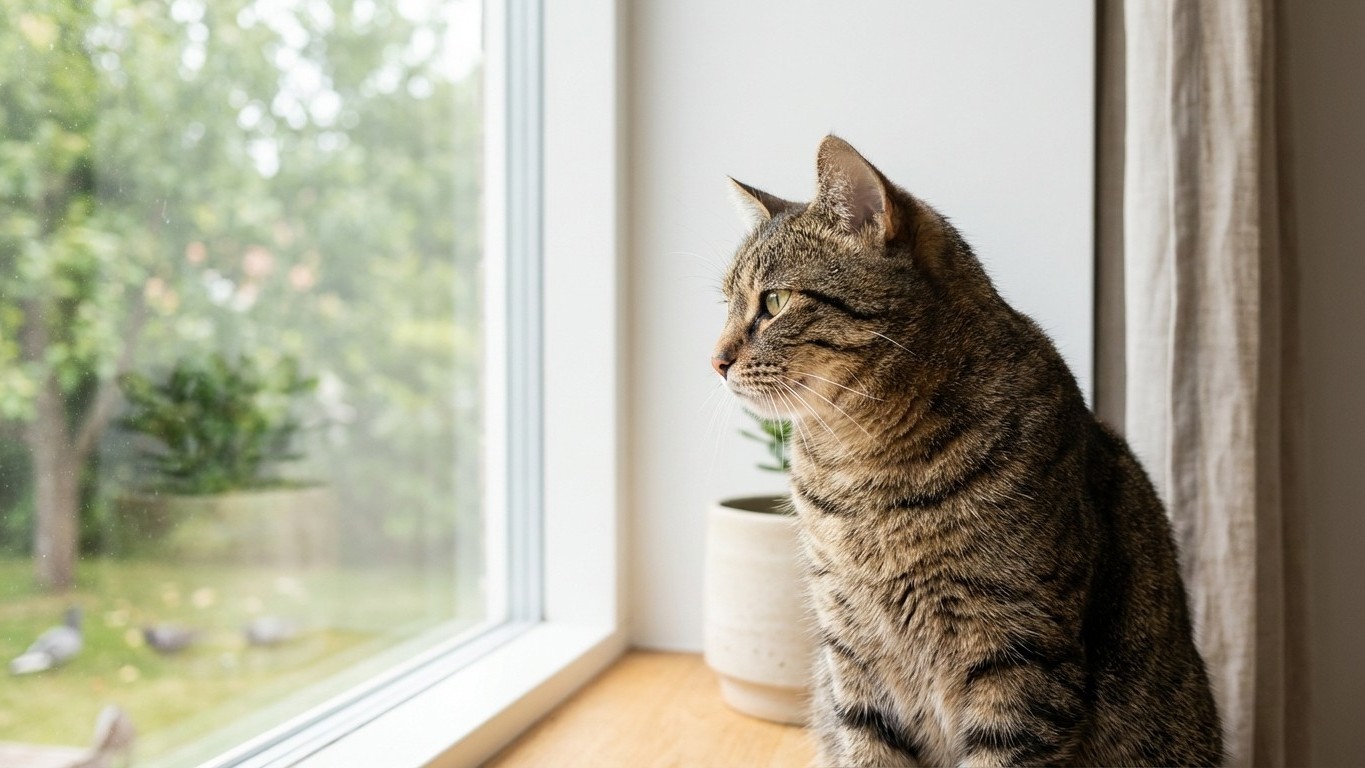
Mental stimulation prevents destructive boredom. Puzzle feeders, rotating toys, and even leaving wildlife documentaries playing (yes, seriously – many cats find bird footage mesmerising) can occupy curious minds. Window perches with bird feeder views outside create Natural entertainment centres.
Warning Signs Your Cat Isn’t Coping
Cats mask distress remarkably well, making subtle behavioural changes easy to miss. Excessive vocalisation upon your return might indicate anxiety rather than mere excitement. Some cats develop what veterinary behaviourists term “reunion aggression” – seemingly attacking owners who’ve been away, which actually signals relief and overstimulation rather than anger.
Destructive behaviour often emerges gradually. Scratching furniture excessively, knocking items off surfaces, or eliminating Outside the litter box can indicate stress-related acting out. Changes in eating patterns – either gorging immediately when you return or showing decreased appetite – suggest your cat struggled during your absence.
Sleep pattern disruptions offer valuable insights too. Cats who typically nap peacefully may become restless, pacing or vocalising during previously quiet periods. Conversely, some stressed cats withdraw entirely, hiding in unusual locations and showing reduced interest in normal activities.
If you notice these patterns, consult your veterinary practice promptly. Modern vets increasingly recognise behavioural issues as genuine medical concerns requiring intervention, not character flaws to endure.
Building Your Cat’s Confidence for Alone Time
Gradual conditioning works better than sudden schedule changes. Start with short absences, gradually extending duration whilst monitoring your cat’s response. This approach particularly benefits cats who experienced abandonment or rehoming trauma.
Establishing departure and return routines reduces anxiety. Avoid dramatic goodbyes or overly enthusiastic homecomings, which can heighten emotional intensity around your schedule. Instead, maintain calm, consistent energy that communicates your comings and goings are normal, unremarkable events.
Consider companion animals carefully. Whilst some cats thrive with feline friends, others view additional pets as resource competition rather than companionship. Introducing a second cat solely to address separation concerns often backfires spectacularly, creating territorial stress instead of comfort.
Technology increasingly offers monitoring solutions. Pet cameras allow real-time checking without disturbing your cat’s routine. Some models include treat dispensers or laser pointers for remote interaction, though these work better for dogs than cats, who often ignore digital stimulation.
The 24-hour mark represents most veterinary professionals’ upper limit recommendation for routine alone time, but individual circumstances vary enormously. Your 3-year-old indoor Bengal with separation anxiety needs vastly different consideration than a 7-year-old farm cat accustomed to independence. Trust your instincts about your particular cat’s needs, and remember that professional pet sitters or trusted neighbours can bridge longer absences when life demands flexibility.