
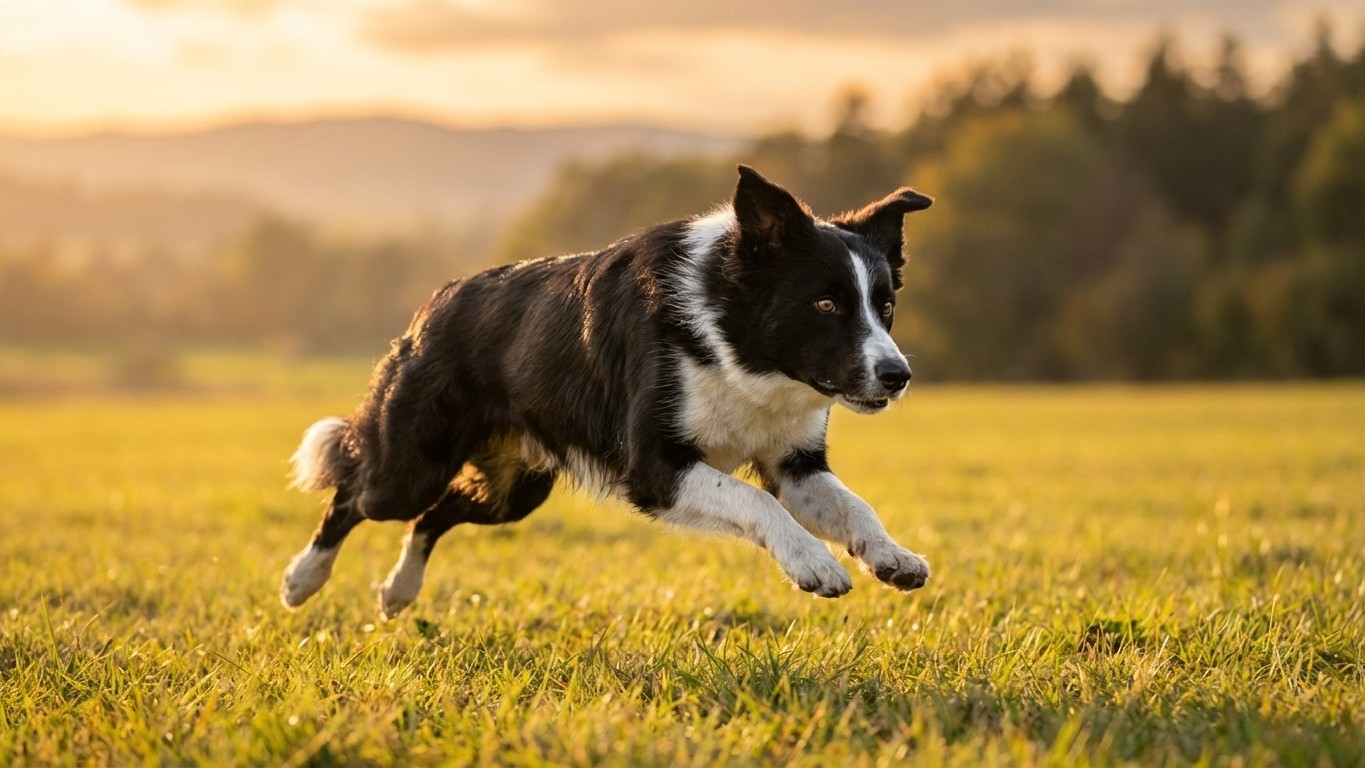
Some dogs are born to run. Not metaphorically, not occasionally, constantly, joyfully, almost compulsively. If you’ve ever watched a Border Collie work a flock of sheep or seen a Malinois clear an agility course, you’ll understand what genuine canine athleticism looks like. Choosing one of these breeds means signing a contract with an animal whose physical and mental needs are non-negotiable. Get it right, and you’ll gain a remarkable companion for every adventure. Get it wrong, and you’ll spend your weekends redecorating your home — involuntarily.
What Exactly Makes a Dog Breed “High Energy”?
The phrase gets thrown around loosely, but high energy in dogs is a specific, measurable quality. It refers to a breed’s baseline drive to be active, its stamina during exercise, and, this part often gets overlooked, its need for mental stimulation alongside physical activity. A Labrador might enjoy a good run but settle happily for an afternoon on the sofa. A Border Collie will not. The difference isn’t just temperament; it’s genetics.
Most high energy breeds were selectively bred for demanding working roles: herding livestock across miles of hillside, hunting game for hours, pulling sleds in Arctic conditions, or tracking quarry through dense woodland. The instincts and physical capacity developed over generations don’t simply switch off because the dog now lives in a terraced house in Bristol. These dogs need an outlet. The criteria that define a truly high energy breed include exceptional stamina (sustained activity for two hours or more without tiring), a strong working drive, a tendency toward restlessness when inactive, and a high threshold for boredom.
Choosing such a dog can be one of the most rewarding decisions an owner makes, but only when the match between lifestyle and breed is honest. For a broader view of how energy levels interact with other personality traits, the dog breeds temperament guide offers a thorough breakdown of how character varies across breeds.
Why Choose a High Energy Dog?
Beyond the obvious appeal of a running partner or an agility star, high energy dogs tend to be intensely loyal, quick to learn, and deeply engaged with their owners. They’re not passive companions, they participate. Many owners describe the bond formed with a working-type dog as unlike anything they’ve experienced with other pets. These breeds have also been shown to encourage more active lifestyles in their owners, which is no bad thing. If you’ve been looking for motivation to run three miles before breakfast, a Border Collie is considerably more persuasive than any fitness app.
Who Should Actually Own a High Energy Dog?
This is where honesty matters more than enthusiasm. High energy breeds thrive with owners who have time, and that means real, daily, non-negotiable time. An active single person, a couple who hikes at weekends, a family with older children who love outdoor sports, or someone who competes in dog sports: these are the natural fits. People who work long hours, live in small flats without nearby green space, or prefer quiet evenings without much physical activity should think carefully before choosing a Border Collie or a Jack Russell Terrier.
Sporting families particularly benefit from these breeds. Children who grow up with a Weimaraner or a Vizsla learn about commitment, routine, and the genuine joy of a dog that is always, always ready to play. Agility clubs across the UK have seen a steady rise in participation over recent years, and the dogs leading those courses are almost always from high drive, working-origin breeds. The lifestyle these dogs require isn’t a burden for the right owner, it’s the point.
The Most Energetic Dog Breeds: A Practical Overview
The breeds consistently recognised by kennel clubs and veterinary professionals as high energy share a few common threads: working origins, athletic build, and a sharp intellect that demands engagement. Here’s a look at the breeds that come up most often in this conversation.
The Border Collie is, by most assessments, the most intensely driven of all domestic breeds. Originally bred to herd sheep across the Scottish and Welsh hills, these dogs can work for eight hours straight without flagging. They need a minimum of two hours of vigorous exercise daily, and crucially, they need mental challenges. A Border Collie that has run five miles but hasn’t had to think will still redecorate your living room by 3pm.
The Belgian Malinois has become increasingly popular beyond its traditional role in police and military work, which is both understandable and slightly alarming. These are exceptional animals in the right hands, agile, fearless, and extraordinarily trainable, but they require experienced ownership and near-constant engagement. They are emphatically not beginner dogs.
The Jack Russell Terrier surprises people. Small in stature, enormous in drive. Originally bred to flush foxes from their burrows, Jack Russells have a tenacity and energy output that rivals breeds three times their size. They’re scrappy, clever, and require far more exercise than their compact frame might suggest. Two hours a day is a reasonable baseline.
Other breeds that consistently appear on any credible high energy list include the Siberian Husky (bred to run 100 miles a day, that’s not a typo), the Dalmatian (a carriage dog by origin, designed to run alongside horses for hours), the Australian Shepherd, the Weimaraner, the Vizsla, the Springer Spaniel, and the Rhodesian Ridgeback. Each has distinct characteristics, but all share that same restless, forward-driving energy that defines the category. For a fuller comparison of how these breeds differ in sociability and trainability alongside their energy levels, the dog breeds temperament guide is worth exploring.
Exercise Requirements at a Glance
As a general guide rather than a strict prescription, the following gives a sense of scale. Border Collies and Malinois typically need upwards of two hours of vigorous activity daily, alongside mental stimulation. Springer Spaniels, Weimaraners, and Vizslas generally require 90 minutes to two hours. Jack Russells, Australian Shepherds, and Dalmatians sit in a similar range. Siberian Huskies, if not working in sled teams, need the equivalent exercise spread across multiple sessions. These are minimums, not maximums.
What Happens When a High Energy Dog Isn’t Stimulated Enough
Under-exercised high drive dogs don’t simply become lazy. They become anxious, frustrated, and often destructive. Behaviours that owners frequently attribute to naughtiness, chewing furniture, excessive barking, digging, hyperactivity indoors, snapping — are almost always symptoms of unmet needs. A Border Collie that herds children obsessively, or a Husky that howls for hours, is communicating something specific: I have capacity that isn’t being used.
Separation anxiety is disproportionately common in working-type breeds left alone without adequate pre-exercise or environmental enrichment. Some dogs develop repetitive behaviours (circling, tail-chasing, obsessive ball fixation) that can become compulsive over time. These aren’t character flaws, they’re the predictable result of genetics meeting inadequate opportunity. The good news is that most of these issues resolve or dramatically improve when exercise and mental stimulation are properly addressed.
Activities That Actually Work for High Drive Dogs
Standard walking, honestly, isn’t enough for most breeds on this list. The goal isn’t just physical exhaustion, it’s satisfying the dog’s need to use its brain and its instincts. Agility training is one of the most effective outlets, combining physical exertion with constant decision-making and a strong handler-dog communication component. The UK has hundreds of agility clubs, and most welcome complete beginners. Canicross (cross-country running with the dog harnessed to the runner) has grown enormously in popularity, with organised events now taking place across the country throughout the year.
Scentwork and nose games are perhaps the most underrated tool in the high energy owner’s kit. A 20-minute scentwork session can tire a Border Collie more effectively than an hour’s run, because it engages the cognitive and olfactory systems simultaneously. Hiding treats, teaching “find it” games, or joining a formal scentwork class are all accessible starting points. Flyball, tracking, herding trials, and even swimming (particularly effective for joint-friendly exercise in older dogs) all have their place depending on the individual breed and dog.
Age matters, and this is worth stressing. Puppies of high energy breeds should not be over-exercised before their growth plates close (usually somewhere between 12 and 18 months depending on breed size). Excessive high-impact exercise in young dogs can cause lasting joint damage. Building up gradually, combining play-based activity with short structured sessions, and always consulting a vet about appropriate exercise levels for a young dog is the responsible approach.
Common Mistakes and Persistent Myths
The most common mistake is treating high energy as a problem to be solved rather than a characteristic to be accommodated. These dogs aren’t broken, they’re exactly what generations of selective breeding produced. Trying to suppress their energy through punishment or restriction creates worse problems than it solves.
The flat question gets asked constantly: can you keep a high energy dog in a flat? The honest answer is: sometimes, with significant caveats. Access to outdoor space multiple times daily, a committed exercise routine, and plenty of indoor enrichment can make apartment life workable for some energetic breeds. But a Malinois in a first-floor flat in central London with an owner who works nine hours a day is a welfare concern, not a lifestyle choice. Proximity to parks matters, but commitment matters more.
Education and consistency are non-negotiable. High drive dogs that lack clear structure often redirect their energy in ways owners find difficult to manage. Positive reinforcement training, started early and maintained throughout the dog’s life, gives these animals the mental engagement they crave while building a cooperative relationship. If temperament and trainability are factors in your decision, the detailed calm dog breeds guide offers a useful counterpoint for those uncertain whether a high energy breed is genuinely the right fit.
Choosing the Right Breed for Your Life
Before committing to any high energy breed, a few questions are worth sitting with honestly. How many hours per day can you genuinely dedicate to exercise and engagement? Do you have access to off-lead walking space? Are you willing to invest in training classes? Do you have the experience to manage a strong-willed, high drive dog, or would a slightly less demanding breed be a better starting point?
Rescue organisations across the UK are full of Border Collies, Huskies, and Malinois that were adopted by people who underestimated the commitment. That’s not a moral judgement, it’s a practical warning. The dog breeds guide can help you map your lifestyle honestly against the full range of options before you decide.
FAQ: High Energy Dog Breeds
Which dog breeds are the most energetic? Border Collies, Belgian Malinois, Siberian Huskies, Weimaraners, Vizslas, and Jack Russell Terriers consistently rank among the highest energy breeds, though individual variation within any breed always exists.
How much exercise does a very active dog need per day? Most high energy breeds need a minimum of 90 minutes to two hours of vigorous exercise daily, spread across multiple sessions, alongside mental stimulation through training or enrichment activities.
Can a high energy dog live in a flat? With considerable dedication, multiple daily outings, rigorous training, and consistent enrichment — some active breeds can adapt to flat living, but it requires honest commitment and ideally access to green space nearby.
What happens if a sporting dog isn’t stimulated enough? Understimulation typically leads to destructive behaviour, anxiety, excessive barking, and sometimes compulsive behaviours. These are symptoms of unmet needs, not character defects, and usually respond well to appropriate activity.
What sports can I do with a high energy dog? Agility, canicross, flyball, scentwork, tracking, swimming, and herding trials are all well-suited to high drive dogs, with many accessible through clubs and community groups across the UK.
The relationship between a committed owner and a truly athletic dog is something that’s genuinely hard to describe to someone who hasn’t experienced it. There’s a quality of mutual respect that develops, a sense that you’re both choosing to show up every day. Whether that future involves agility courses at dawn or canicross through muddy woodland, it starts with one honest conversation with yourself about what you’re really ready for.