
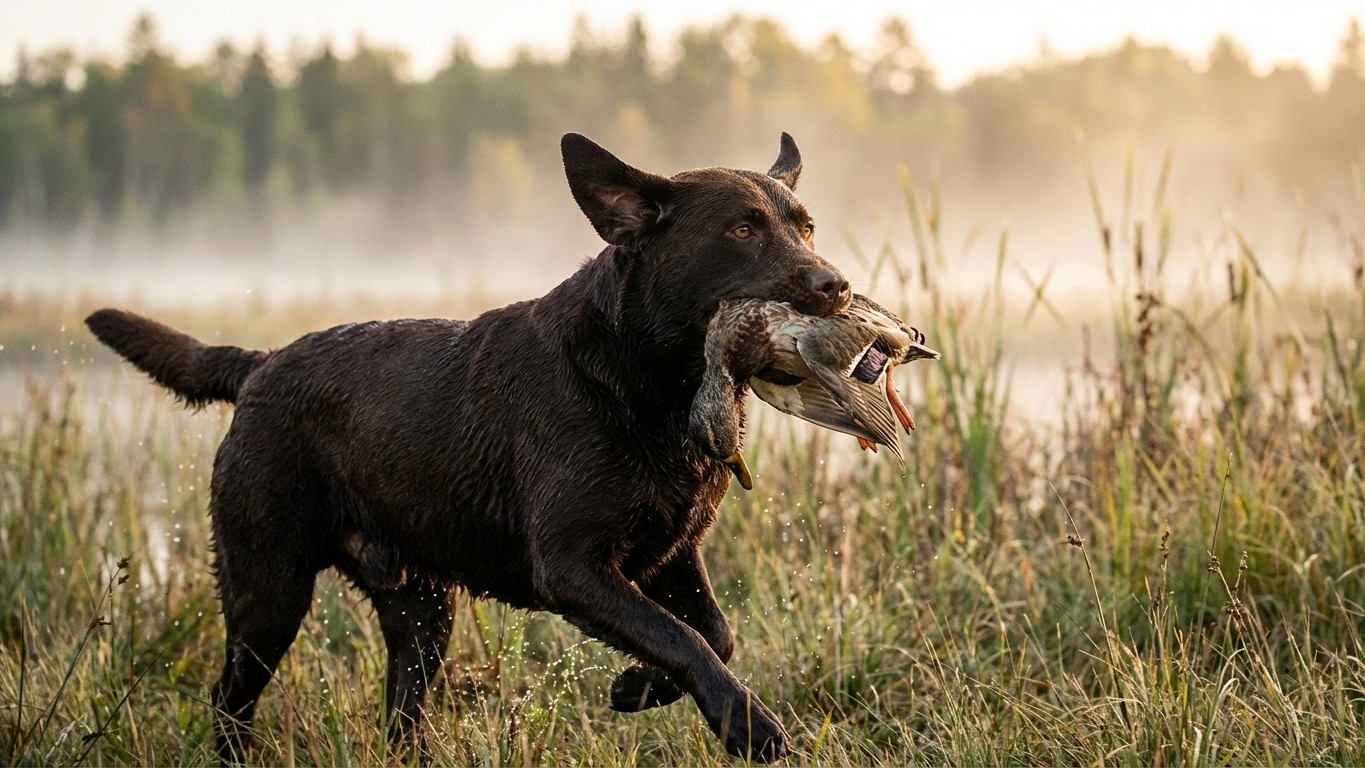
Point a gun dog at a field and something ancient switches on behind those eyes. These breeds were shaped over centuries to work alongside hunters armed with firearms, reading wind, quartering ground, freezing on scent, or splashing headlong into icy rivers to retrieve a fallen bird. They are, in a very real sense, working athletes who happen to live in our homes. And whether you’ve never fired a shotgun in your life or you’re a seasoned wildfowler, understanding what separates a retriever from a pointer from a spaniel will help you choose a dog whose instincts actually match your lifestyle.
What Exactly Is a Gun Dog? History and Definitions
The term “gun dog” emerged as a specific category once firearms replaced falcons and nets as the primary hunting tools, broadly from the 17th century onwards in Britain. Before that, dogs helped drive, flush, or hold game for other means. The introduction of the flintlock and later the percussion cap changed everything: hunters now needed dogs that worked at a closer range, stayed steady to the shot, and could retrieve cleanly without damaging the quarry. That very specific job description is what carved out the gun dog group as we know it today.
British breeders were especially influential. The English countryside, its estates, its driven shoots, and its wildfowl marshes created a demand for highly specialised workers. Breeds like the English Springer Spaniel and the Labrador Retriever carry the fingerprints of those estates all over their DNA. Today, the Kennel Club groups them under the Gundog category, which covers roughly 30 recognised breeds divided into four working roles: retrievers, pointers, spaniels, and the so-called HPR breeds (Hunt, Point, Retrieve). This guide focuses on the three most commonly encountered families.
The Three Core Roles
Each group was developed for a distinct job. Retrievers, as the name makes plain, were built to find and bring back shot game, often from water, using an exceptionally soft mouth. Pointers and setters locate game by scent, then “point” or freeze, indicating the bird’s position to the hunter before the flush. Spaniels work noisily through dense cover, flushing game forward into the line of fire, and many are also capable retrievers. In practice, the boundaries blur, but the distinction in instinct remains real and matters enormously when you’re choosing a pet.
Retrievers: Gentle Giants with a Work Ethic
The Labrador Retriever is, for the third decade running, one of the most registered breeds in the UK. That popularity is not accidental. Labs combine an almost absurd willingness to please with a physical resilience that makes them adaptable to almost any household. The Golden Retriever runs close behind, softer in temperament and coat alike. Less common but equally deserving of attention are the Flat-Coated Retriever (still working its show-ring smile on shoots in the UK) and the Curly-Coated Retriever, the oldest of the retriever breeds, whose tight curls shed water like a duck’s back.
What unites this group is an extraordinary nose and a mouth that can carry an egg without breaking it. The “soft mouth” trait was carefully selected over generations and it shows up in daily life as a dog that mouths rather than bites, carries items around the house, and absolutely cannot resist picking up a tennis ball. Their temperament is generally warm, sociable, and forgiving, which makes them strong contenders as family dogs. The trade-off is exercise: a retriever needs at least 90 minutes of genuine physical activity daily, and a bored Lab is capable of extraordinary acts of kitchen destruction. Mental work matters just as much as distance. Scent games, retrieving drills, and swimming sessions will keep a retriever genuinely satisfied in a way that a long lead walk simply cannot.
Pointers: Intensity, Elegance, and Open Spaces
If retrievers are the warm-hearted labourers of the gun dog world, pointers are the specialists who thrive under pressure. The English Pointer is a lean, aristocratic breed with a hunting instinct so strong that puppies have been observed pointing at birds and insects before they’ve had a single day’s formal training. That instinct is built in at a level that even experienced dog trainers find humbling.
The German Shorthaired Pointer (GSP) has become something of a cult breed in the UK over the past decade, and it’s easy to see why. Versatile, athletic, and genuinely multifunctional, the GSP can point, flush, and retrieve across almost any terrain. Its cousin, the German Wirehaired Pointer, adds weather-resistant furnishings to that same all-terrain ability. The Hungarian Vizsla, affectionate and lean, occupies a slightly softer space in temperament while still being a legitimate high-drive working dog.
Living with a pointer demands honesty about your own activity levels. These dogs were designed to quarter fields for hours at a trot. An under-exercised GSP in a small flat is not a welfare issue waiting to happen, it’s one already happening. They respond beautifully to consistent training and thrive with owners who enjoy dog sports like canicross, agility, or tracking. One thing worth knowing before you commit: many pointer breeds form extremely strong bonds with their primary person and can be prone to separation anxiety if left alone for long periods.
Spaniels: The Busiest Dogs in the Room
The Main Breeds
The spaniel family in Britain is rich and varied. The English Springer Spaniel is the workhorse of the shooting field, tireless, focused, and capable of working dense bramble that would stop most other dogs cold. The Cocker Spaniel, both English and American varieties, carries similar drive in a more compact frame. The Clumber Spaniel is the heavyweight outlier: slower, calmer, and heavier-set than its relatives, originally bred for dense woodland shooting on aristocratic estates. Field Spaniels and Sussex Spaniels round out a group that, taken together, represents some of the most characterful dogs in British breeds.
Energy, Trainability, and Family Life
Spaniels are widely regarded as some of the most trainable gun dogs, and working cockers in particular have carved out a second career as detection dogs for police forces and customs services. That intelligence is a double-edged thing. A spaniel that gets adequate mental and physical stimulation is a joyful, affectionate companion. One that doesn’t will find its own entertainment, usually involving your garden, your shoes, or your sofa cushions.
Show-line and working-line spaniels can differ dramatically in drive and intensity. A show-bred Cocker Spaniel may need around 60 to 90 minutes of daily exercise and will be relatively content with calm household routines. A working-bred Springer from field trial stock is a different proposition entirely and genuinely belongs with someone who can provide structured work or sport. Always ask the breeder about the lineage.
Choosing Between the Three: A Practical Comparison
The question most people actually want answered is which one fits their life. Retrievers generally suit families with children, owners who enjoy swimming and outdoor activities, and people who want an emotionally accessible, forgiving dog. Pointers suit active single owners or couples who run, cycle, or live rurally. Spaniels sit somewhere in the middle: adaptable, trainable, and compact enough for a decent-sized suburban garden, but still demanding of daily exercise and engagement.
Health considerations vary by breed. Labradors carry a well-documented genetic predisposition to obesity and hip dysplasia. Golden Retrievers have a higher than average rate of certain cancers. GSPs and Vizslas are generally robust but can carry hereditary conditions in eye health. Spaniels, particularly Cavalier King Charles Spaniels (technically a toy breed, but related), are associated with serious cardiac and neurological conditions. Before purchasing any pedigree dog, ask to see health test certificates from both parents, and always consult a vet when evaluating a breeder’s health claims.
Coat maintenance is another real-world factor. The Flat-Coated Retriever’s glossy coat needs regular brushing. Working Cockers develop feathering that collects mud, burrs, and assorted countryside debris with impressive efficiency. Pointers, by contrast, are among the lowest-maintenance breeds for grooming, with short coats that need little beyond a wipe-down after a walk.
For a broader picture of how gun dogs fit into the wider landscape of working and sporting dogs, the dog breeds guide offers a thorough overview of choosing the right breed for your lifestyle. If you’re curious about how gun dogs compare with other working roles, the working dog breeds guide covers the full spectrum of dogs bred for specific tasks. And if herding dogs have caught your attention, the herding dog breeds guide explores how border collies, sheepdogs, and their relatives are built for a completely different kind of mental intensity.
Gun Dogs in Modern Life: Field Instincts, City Schedules
The honest answer to “can a gun dog thrive without hunting?” is yes, with conditions. These breeds were not designed for sofas and short walks, but they are adaptable animals with generations of close human partnership in their history. What they cannot do is simply switch off their instincts. A pointer will still freeze and stare at pigeons. A spaniel will still quarter the park, nose down, oblivious to your calls. A Labrador will still plunge into any available body of water without notice.
The key is channelling those instincts rather than suppressing them. Gundog training classes, which exist across the UK and don’t require you to own a shotgun, give these dogs structured scent work and retrieving drills that satisfy their working drive. Organisations like the Gundog Club offer graded training tests accessible to pet owners. Canicross, agility, and tracking sports all give high-drive breeds the mental and physical outlet they genuinely need.
For those thinking about adopting rather than buying, several breed-specific rescues operate across the UK for Labradors, Golden Retrievers, spaniels, and pointers. An adult rescue dog often arrives already house-trained and with a known temperament, which removes some of the uncertainty of puppy ownership. The working dog breeds guide covers the full range of usage-based breed categories if you’re still exploring your options.
Before committing to any gun dog breed, ask yourself a few honest questions. How much daily exercise can you realistically provide, not on your best days, but on your worst? Do you have the space, financial resources, and time for professional training support? Are you prepared to actively engage with a breed that will bring energy, noise, and genuine personality into your home every single day for the next decade and more? The breeds covered here are not decorative objects. They are working animals with complex inner lives, and the ones that thrive are almost always the ones whose owners understood that before they got the dog home.