
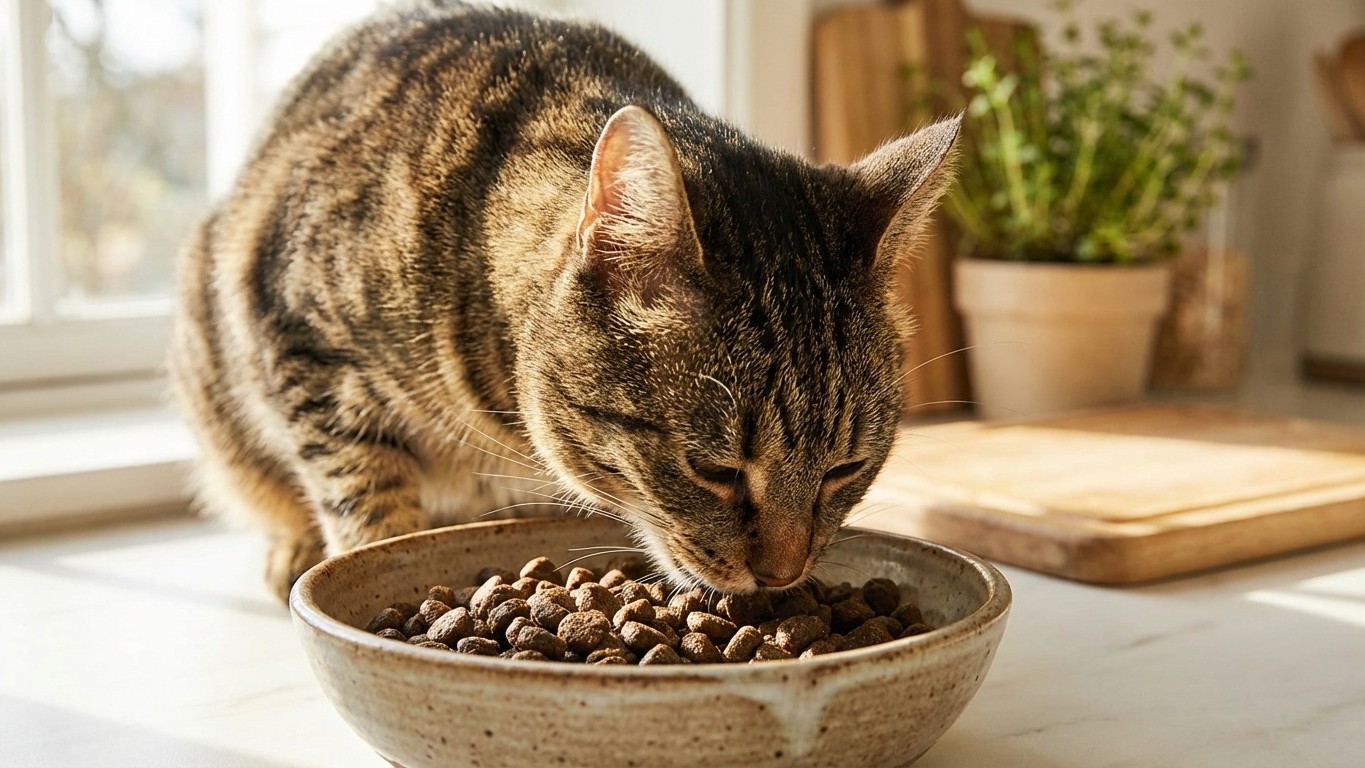
Grain-free cat food has been one of the most hotly debated topics in feline nutrition over the past decade, and the argument is far from settled. Some owners swear by it, pointing to shinier coats and calmer digestion. Others have been warned off by their vets. The latest research adds nuance to a conversation that has too often been reduced to slogans on packaging.
Key takeaways
- The grain-free alarm originated from dog food concerns, but cats metabolize nutrients in fundamentally different ways
- Legume-based grain replacements may interfere with taurine absorption—a critical amino acid for cat heart health
- What matters most isn’t what’s absent from the bowl, but what’s actually inside it
Where the controversy actually comes from
The grain-free movement largely arrived in cat food riding on the coattails of the dog food industry, where the concerns were more clearly defined. In 2018, the US Food and Drug Administration began investigating a potential link between grain-free diets and dilated cardiomyopathy (DCM) in dogs, a serious heart condition. The alarm spread quickly, and many cat owners began asking whether the same risk applied to their pets. The short answer, as far as current research can tell us, is that the situation for cats is considerably more complicated.
Cats are obligate carnivores. Their bodies are genuinely built differently from dogs or humans, with very limited ability to digest plant-based starches and essentially no biological requirement for carbohydrates. So the premise of grain-free feeding, that grains are unnatural for cats, has some genuine scientific grounding, even if the marketing often overstates it wildly. Wild cats don’t seek out wheat. They eat prey. That said, domestic cats have lived alongside humans and their grain-heavy agricultural scraps for thousands of years, and many have adapted reasonably well to processing modest amounts of starch.
The real controversy isn’t whether grains are natural. It’s whether removing them from commercial food Actually improves a cat’s health, and whether what replaces them matters.
What the latest research actually says
The ingredient that tends to fill the gap left by grains in many commercial recipes is legumes, peas, lentils, chickpeas, and their various derivatives. This is where things get interesting, and where feline Nutritionists are genuinely cautious. Some researchers have suggested that high levels of legume-based ingredients may interfere with taurine absorption or metabolism. Taurine is an amino acid that cats cannot produce in sufficient quantities themselves, and a deficiency causes serious problems including retinal degeneration and, yes, heart disease.
A study published in the Journal of Animal Science found that certain grain-free diets with high legume content were associated with lower whole blood taurine concentrations in dogs. Whether the same mechanism operates in cats is still being studied, and the picture is murkier because cats require and metabolise taurine differently. Reputable commercial cat foods are required to meet minimum taurine standards, but some nutritionists argue that meeting a minimum threshold isn’t the same as optimising for long-term heart health.
The honest position, and one that many veterinary nutritionists have landed on, is that the quality of the protein source matters far more than the presence or absence of grains. A grain-free food built around high-quality named meat proteins, with appropriate taurine levels, is likely to serve most cats well. A grain-free food that replaces wheat with pea starch and uses vague “animal derivatives” as its protein base? That’s a different matter entirely.
Reading the label without losing your mind
This is where the practical reality hits, because cat food labelling in the UK can be genuinely bewildering. Ingredients are listed by weight before processing, which means a food listing “fresh chicken” prominently may Actually contain far less chicken protein than one listing “dried chicken meal” lower down the list, dried meal is far more concentrated. Grain-free labels tell you what’s absent, which is much less useful than understanding what’s actually present.
A few things worth checking when you’re standing in the pet food aisle, slightly overwhelmed:
- Named meat or fish as the first ingredient (chicken, salmon, rabbit, not just “meat”)
- Taurine listed explicitly in the ingredients or guaranteed analysis
- The food meets FEDIAF (European pet food industry) nutritional guidelines
- Legumes appearing low on the ingredient list rather than dominating it
If your cat has a specific health condition, kidney disease, diabetes, inflammatory bowel disease, the grain versus no-grain question becomes almost secondary to getting the protein, phosphorus, and fibre balance right for that individual animal. This is precisely the territory where a vet or a qualified veterinary nutritionist earns their keep, and a conversation with your practice is genuinely worth having before making a switch.
The cat in the middle of all this
There’s a temptation, when reading about any pet food debate, to treat all cats as interchangeable. They’re not. A ten-year-old indoor cat with a sensitive stomach and a young outdoor cat who hunts regularly have quite different caloric and nutritional needs. Some cats with genuine food intolerances do seem to improve on grain-free diets, possibly because the reformulation also happens to remove a protein they were reacting to, or simply because the overall ingredient quality is higher.
The anecdotal evidence from cat owners is real, even if it’s not controlled research. Equally real is the fact that the majority of cats eating conventional grain-inclusive foods live long, healthy lives Without incident. The most expensive, most elaborately marketed grain-free pouches are not automatically superior to a well-formulated mainstream food, and the assumption that “natural” equals “better” deserves a healthy dose of scepticism.
Perhaps the more interesting question isn’t grain-free versus grain-inclusive at all, but whether we’ve spent so long debating what to remove from cat food that we haven’t asked nearly enough about what we should be Putting in. Fresh food diets, raw feeding, and insect protein are all gaining ground as alternatives, each with their own complex evidence base and their own passionate advocates. The next chapter of this conversation is already being written, and your cat, blissfully unaware, is probably napping through most of it.