
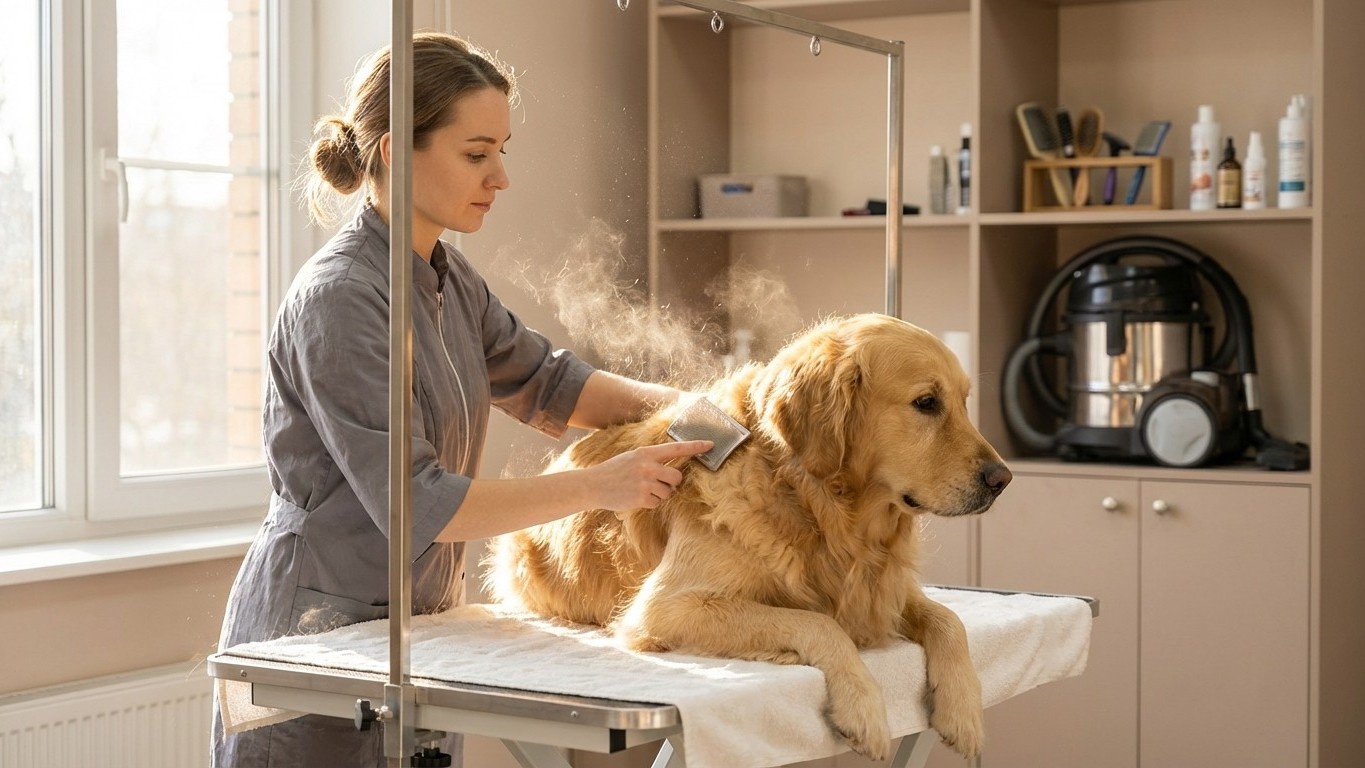
Every dog owner knows the feeling: you’ve just vacuumed, and within ten minutes there’s a fresh layer of fur across the sofa. For the millions of people in the UK who share their homes with dogs while managing allergies, that scene carries extra weight. Choosing the right breed, understanding how coats actually work, and knowing what “hypoallergenic” genuinely means can transform the experience of dog ownership from a daily battle into a genuine joy.
This guide ties together three things that are rarely discussed in the same breath: coat types and shedding biology, practical grooming routines, and the science behind allergic reactions to dogs. Whether you’re researching breeds before bringing a puppy home (our hypoallergenic dog breeds guide is an excellent starting point), or you’re already sneezing your way through life with a beloved dog, you’ll find honest, usable answers here.
Comprendre le pelage et l’entretien des chiens
Types de pelages : courts, longs, bouclés et double couche
A dog’s coat is far more varied than most people realise. Short-coated breeds like Beagles and Boxers have a single, dense layer that feels smooth to the touch and seems easy to maintain, yet they can shed prodigiously (for a comprehensive overview of these breeds, see our short haired dog breeds guide). Long-coated breeds such as Afghan Hounds or Yorkshire Terriers carry flowing hair that grows continuously rather than cycling through seasonal shedding, which changes the grooming equation entirely (explore our long haired dog breeds guide for detailed information on these breeds). Curly or wavy coats, typical of Poodles and Lagotto Romagnolos, trap loose hairs within the curl rather than releasing them into the environment – which is why these breeds often feature in our low shedding dog breeds guide. Double-coated breeds, think Huskies, German Shepherds, Golden Retrievers, have a dense undercoat beneath a weather-resistant topcoat, and when that undercoat blows twice a year, no amount of lint rolling prepares you for the volume.
Understanding which category your dog falls into shapes every grooming decision you make, from the brush you buy to how often you book a professional appointment. Our dog breeds grooming guide by coat type breaks this down in far more detail, but the short version is this: coat structure determines both the effort required and the quantity of allergens circulating in your home.
Pourquoi certains chiens perdent-ils davantage leurs poils ?
Hair follicle biology is the starting point. Each follicle passes through a growth phase (anagen), a transitional phase (catagen), and a resting phase (telogen), after which the hair is shed and the cycle restarts. Breeds with a long anagen phase, Poodles being the classic example, hold onto their hair for months or years before releasing it – these are often featured in our non shedding dog breeds guide. Breeds with a short anagen phase cycle through quickly, shedding continuously. Hormonal fluctuations, nutritional deficiencies, and stress can also push follicles into the telogen phase prematurely, which is why a dog going through a significant life change (rehoming, illness, whelping) may suddenly lose more coat than usual.
Le shedding : comprendre la mue canine
Facteurs influençant la perte de poils
Season plays a starring role. The two major shedding periods, typically spring and autumn, are triggered by changes in daylight hours rather than temperature, which is why indoor dogs living under artificial light sometimes shed more consistently throughout the year. Diet matters too: a coat that lacks sufficient omega-3 fatty acids, zinc, and quality protein will be brittle, dull, and prone to excessive loss. This is one of those areas where a conversation with your vet about nutrition can produce visible results within weeks.
Breed genetics, age, and health status all contribute as well. A young adult dog in peak health with a species-appropriate diet will generally shed less than the same dog under stress or battling an underlying skin condition. If you notice sudden, patchy hair loss or skin inflammation alongside shedding, that’s a signal to seek veterinary advice rather than reaching for the deshedding brush.
Mue forte vs. mue faible : quelles races sont concernées ?
Heavy shedders tend to cluster among working and herding breeds that were historically kept outdoors: Labrador Retrievers, German Shepherds, Chow Chows, Saint Bernards, Bernese Mountain Dogs. Their undercoats were built for weatherproofing, not for life on a beige carpet. At the other end of the spectrum, breeds like the Bichon Frisé, Maltese, Poodle, and Basenji shed minimally. The Basenji is an interesting case, it grooms itself like a cat and produces remarkably little dander, making it a favourite among allergy-aware owners who want a short-coated option.
For a curated breakdown of which breeds shed the least and what that means day-to-day, the low shedding dog breeds guide and the non shedding dog breeds guide offer thorough comparisons worth bookmarking.
Guide du toilettage selon le type de poil
Brossage : méthodes, outils et fréquence
The right brush for the wrong coat type can be useless at best and damaging at worst. Slicker brushes work brilliantly on medium and long coats to remove tangles and surface debris. Bristle brushes suit short, smooth coats and add a pleasant shine. Undercoat rakes and deshedding tools (those wide-toothed metal combs designed to penetrate the topcoat) are made specifically for double-coated breeds during heavy moult periods, used correctly, they remove loose undercoat before it migrates to your furniture. For curly and wavy coats, a wide-toothed comb followed by a slicker brush prevents the mats that form when shed hair gets trapped in the curl.
Frequency depends on coat type. Short-coated dogs benefit from a weekly once-over. Long-coated breeds ideally need daily attention to prevent tangles turning into painful mats close to the skin. Double-coated breeds can manage on a two-to-three-times-weekly schedule outside shedding season, but daily brushing during the moult is the only way to stay on top of the volume. Starting grooming early in a dog’s life, making it a calm and positive experience, saves considerable stress for both of you down the line.
Quand et comment donner un bain à son chien
Over-bathing strips the skin’s natural oils, leading to dryness, irritation, and paradoxically more dander production. Most dogs do well with a bath every four to eight weeks, though working dogs who roll in everything outdoors may need more frequent washing, and dogs with skin conditions might be on a specific veterinary schedule. Always use a shampoo formulated for dogs, human products have the wrong pH balance for canine skin. Rinsing thoroughly is more important than people realise; shampoo residue left near the skin is a common cause of itching and flaking.
For allergy-conscious households, bathing reduces the Canis familiaris allergen 1 (Can f 1) protein present on the coat and skin surface. The effect is temporary, protein levels rebuild within days, but regular bathing is one of the few interventions with reasonable evidence behind it for reducing airborne allergen load.
Toilettage professionnel : pour qui, pourquoi, à quel coût ?
Breeds with continuously growing hair : Poodles, Cocker Spaniels, Bichons, Schnauzers, Portuguese Water Dogs — genuinely require professional grooming every six to eight weeks. Without it, coats mat painfully and hygiene suffers. A full groom in the UK typically runs between £35 and £80 depending on breed size, coat complexity, and location, though prices have risen noticeably since 2023. Breeds that don’t require clipping can often get away with owner grooming supplemented by the occasional professional bath and tidy.
One thing worth knowing: a good groomer will notice skin issues, lumps, or ear problems you might have missed at home. They’re not a substitute for a vet, but they’re often the first to flag something worth investigating.
Races de chiens hypoallergéniques : mythe ou réalité ?
Définir l’hypoallergénicité chez le chien
Here’s where we need to be honest about a widely repeated misconception. No dog breed is truly hypoallergenic. The proteins that trigger allergic reactions in humans, primarily Can f 1 and Can f 2, found in dog saliva, skin cells (dander), and urine — are produced by every single dog, regardless of breed or coat type. Studies measuring allergen levels in homes with supposedly hypoallergenic breeds have found no consistent difference compared to homes with heavy-shedding breeds.
What does differ between breeds is the quantity of dander released into the environment, and this is where the practical distinction lies. Dogs with curly, low-shedding coats trap more dander within the coat rather than dispersing it into the air and onto surfaces. Less airborne dander means lower exposure for sensitive individuals, which can make a real difference in symptom management, even if it doesn’t eliminate the risk entirely. The hypoallergenic dog breeds guide explores this nuance at length, and it’s essential reading before making a breed decision based on allergy concerns.
Exemples de races réputées : avantages et limites
The term “hypoallergenic breed” is really shorthand for “lower-allergen-shedding breed,” and understanding that distinction prevents disappointment. Someone with severe dog allergies may still react strongly to a Poodle; someone with mild sensitivities might live comfortably with a well-groomed, frequently bathed Labrador. Individual dogs also vary, research has found that allergen levels differ between individual animals of the same breed, which suggests genetics and individual biology matter as much as breed classification.
Best hypoallergenic dog breeds : notre sélection
Tableau comparatif : tailles, caractères et besoins d’entretien
Rather than a rigid table (which flattens nuance), here’s a practical overview of the breeds most consistently recommended for allergy-aware households, with honest notes on what living with them actually involves.
- Poodle (toy, miniature, standard), minimal shedding, high intelligence, requires professional grooming every 6-8 weeks
- Bichon Frisé — gentle, sociable, very low shedding, needs regular brushing to prevent matting
- Schnauzer (miniature, standard, giant), wiry double coat, low-shedding when hand-stripped, spirited temperament
- Portuguese Water Dog — athletic, curly or wavy coat, highly trainable, needs significant exercise
- Maltese — silky single coat, minimal shedding, small size suits flat living
Portraits détaillés
The Poodle deserves its reputation as the gold standard for allergy-conscious owners, but the reason goes beyond coat type. Poodles are among the most trainable breeds in existence, adaptable to city or country living depending on size, and tend to form strong bonds with their families. The grooming commitment is real and ongoing, a neglected Poodle coat mats badly and becomes uncomfortable for the dog — but owners who establish a regular grooming routine generally find it manageable.
Bichons are a different proposition. Compact, cheerful, and built for companionship rather than work, they suit households looking for a gentle, relatively low-maintenance personality. Their coat does need brushing several times a week to prevent the fine hair from tangling at the skin, and professional trimming every couple of months keeps them comfortable. One underappreciated fact about Bichons: they can be prone to tear staining around the eyes, which requires gentle daily cleaning and doesn’t disappear because a breed is labelled hypoallergenic.
Schnauzers come in three sizes, all with the same characteristic wiry coat that, when properly hand-stripped by a groomer (rather than clipped), produces minimal shedding. Clipping a Schnauzer is faster and cheaper, but over time it softens the coat texture and increases shedding, a trade-off worth knowing about before you book your first appointment. Their personalities lean bold and confident; the Miniature Schnauzer in particular has a devoted following among flat-dwellers who want a dog with genuine character in a convenient size.
For something a bit different, the Portuguese Water Dog offers the low-allergen coat combination with the energy and enthusiasm of a sporting breed. Originally bred to work alongside fishermen on the Atlantic coast, they swim, retrieve, and need proper physical exercise daily. Not right for every household, but for active owners with allergy concerns, they’re an option worth serious consideration.
Conseils pratiques pour vivre avec un chien hypoallergénique
Réduire allergènes et poils à la maison
Even with a low-shedding breed, allergen management in the home requires some deliberate habits. HEPA air purifiers in rooms where the dog spends most time have good evidence behind them for reducing airborne particles. Vacuuming with a HEPA-filter vacuum two to three times a week (daily during shedding peaks) makes a measurable difference. Washing the dog’s bedding weekly removes accumulated dander at source. Hard floors are easier to keep allergen-low than carpet, which traps particles effectively, if a full flooring change isn’t realistic, keeping the bedroom a dog-free zone gives allergic family members a low-exposure refuge.
Washing your hands after petting, and avoiding touching your face before doing so, reduces the most direct allergen exposure route. Obvious perhaps, but it’s the kind of habit that takes deliberate practice before it becomes automatic.
Hygiène du chien et des personnes allergiques
Regular bathing of the dog, as mentioned earlier, reduces surface allergen levels temporarily. Some allergy specialists suggest bathing twice weekly for dogs in households with severely sensitive individuals, though this requires careful attention to skin health, always use a gentle, moisturising shampoo and monitor for any signs of dryness or irritation. Wiping the dog down with a damp cloth between baths can help maintain lower allergen levels without the full bathing process.
For the allergic person, antihistamines and nasal corticosteroids remain the most commonly used management tools, and allergen immunotherapy (desensitisation) is an option some people pursue over the long term. Any decision about medical management of dog allergies should involve a conversation with an allergy specialist or GP, the right approach varies considerably depending on the severity of symptoms and the individual’s overall health picture.
FAQ : Entretien, pelage et allergies canines
Quels sont les chiens qui perdent le moins leurs poils ? Breeds with curly, continuously growing coats shed the least in terms of hair visible in the environment. Poodles, Bichons, Portuguese Water Dogs, and Maltese are consistently at the low end. The non shedding dog breeds guide provides a full comparison if you want to dig into specific breed profiles.
Peut-on vraiment parler de races de chiens hypoallergéniques ? Technically, no. All dogs produce the proteins that cause allergic reactions. In practice, lower-shedding, lower-dander breeds reduce the allergen load in the home, which helps many people with mild to moderate sensitivities live more comfortably. “Lower-allergen” is more accurate than “hypoallergenic,” but both terms refer to the same group of breeds.
Quelle différence entre la mue et le simple renouvellement du poil ? All dogs experience continuous hair renewal as individual follicles cycle through growth and rest phases. “Shedding” or mue refers to the accelerated, large-scale coat loss that double-coated breeds experience seasonally, when the entire undercoat is shed within a few weeks. Single-coated and curly-coated breeds renew their hair gradually, which is why it appears they don’t shed, the loose hairs stay trapped in the coat until brushed out.
Comment entretenir simplement le pelage d’un chien hypoallergénique ? The core routine for most low-shedding breeds is: brush two to three times weekly with the appropriate tool for the coat type, bathe every four to six weeks with a gentle dog shampoo, and book a professional groomer every six to eight weeks for breeds with continuously growing hair. Daily eye and ear checks take thirty seconds and catch small issues before they become problems.
Quelles précautions prendre pour limiter les allergies à un chien ? Choose a low-shedding breed, maintain rigorous grooming and bathing routines, use HEPA filtration in the home, keep the dog out of bedrooms, and wash hands after contact. If symptoms remain problematic despite these measures, speaking with an allergy specialist is the sensible next step.
Choosing a dog is one of the more consequential decisions a household makes, and allergy concerns deserve to sit alongside temperament, size, and lifestyle compatibility, not as an afterthought. The dog breeds guide offers a broader framework for matching breed characteristics to your actual life, which is where any sensible search for the right dog should begin. Whether you end up with a curly-coated Poodle or a wiry Schnauzer, the honest truth is that no breed eliminates the need for management, but the right combination of breed choice, grooming habits, and home hygiene can make dog ownership genuinely comfortable, even for sensitive households.