
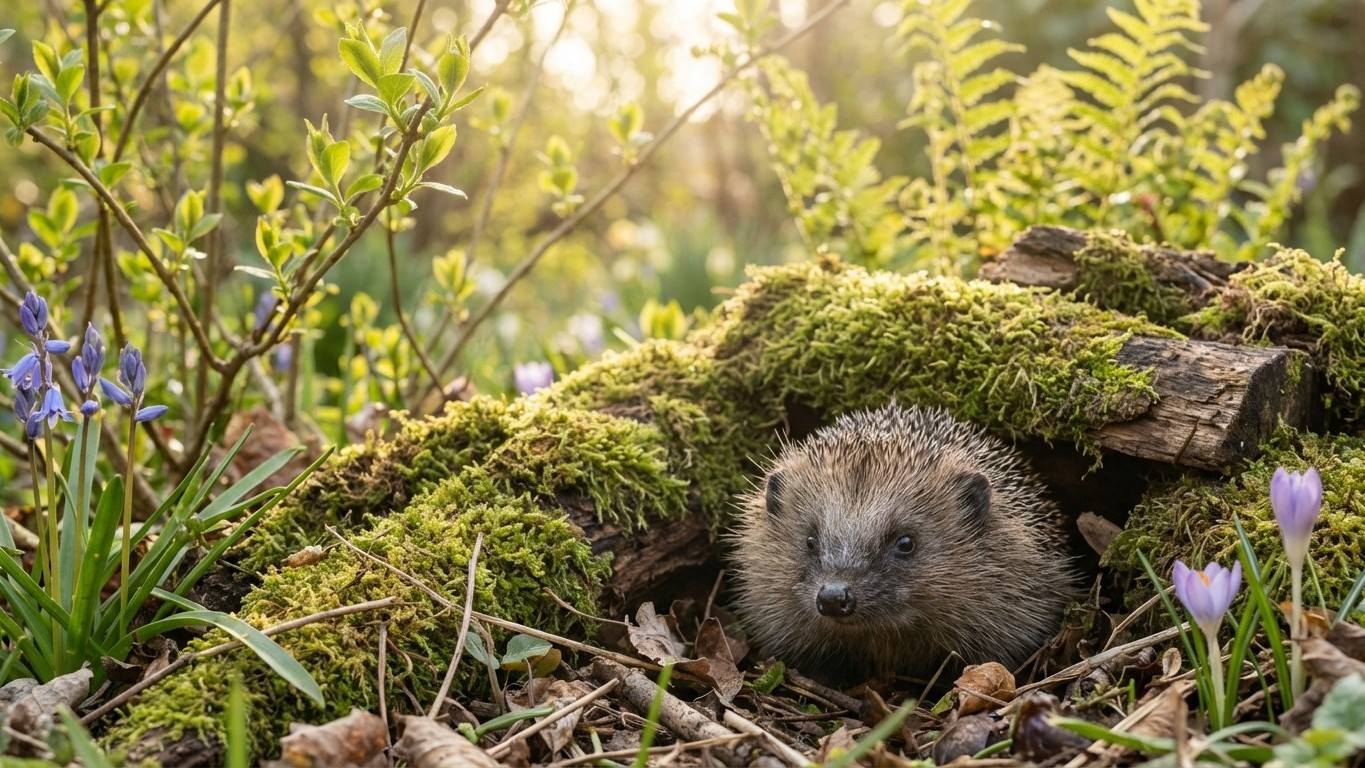
As the chill of winter recedes and early spring unfolds, the UK’s wildlife, including our beloved hedgehogs, begins to stir. This period is crucial for these creatures as they emerge from hibernation, seeking food and safe habitats. By adopting mindful practices, we can play a significant role in supporting and protecting them during this vulnerable time.
Key takeaways
- Why hedgehogs need special care right after hibernation.
- Common gardening mistakes that unknowingly harm wildlife.
- How to recognize when and how to intervene to save animals.
Understanding Hedgehog Behaviour in Early Spring
Hedgehogs hibernate from around October to March, relying on fat reserves accumulated during the warmer months. As they awaken in early spring, they are often underweight and in urgent need of nourishment. Providing supplementary food can be immensely beneficial. Offering meaty cat or dog food and a shallow dish of fresh water can help hedgehogs regain their strength. It’s essential to avoid giving them milk, as they are lactose intolerant, and bread, which lacks nutritional value. rspca.org.uk
Creating a hedgehog-friendly garden is another effective way to support these creatures. Leaving areas of your garden wild, with log piles and dense shrubbery, provides shelter and attracts the insects hedgehogs feed on. Additionally, ensuring your garden is accessible by creating small holes (approximately 13cm x 13cm) in fences allows hedgehogs to roam freely in search of food and mates. rhs.org.uk
Garden Practices to Support Wildlife
Early spring is a time when many gardeners are eager to tidy up their outdoor spaces. However, certain practices can inadvertently harm wildlife. For instance, pruning trees and shrubs should be completed before March 1st to avoid disturbing nesting birds. The Wildlife & Countryside Act 1981 protects nesting birds, and disturbing them can lead to legal consequences. idealhome.co.uk
Moreover, the use of pesticides and slug pellets can be detrimental to hedgehogs and other wildlife. These chemicals not only reduce the availability of natural prey but can also poison hedgehogs if ingested indirectly. Opting for natural pest control methods and encouraging a balanced ecosystem in your garden can mitigate these risks. scottishwildlifetrust.org.uk
Another simple yet effective measure is to mow your lawn less frequently. Allowing grass to grow longer provides habitat for insects, which in turn serve as food for birds and hedgehogs. Participating in initiatives like “No Mow May” can significantly benefit local wildlife. woodlandtrust.org.uk
When to Intervene: Recognising Wildlife in Distress
While it’s natural to want to help wildlife, it’s crucial to know when intervention is necessary. Hedgehogs are nocturnal creatures, so spotting one during the day can be a sign of distress. If you encounter a hedgehog out in daylight, especially if it appears lethargic or injured, it’s advisable to contact a local wildlife rescue centre or the British Hedgehog Preservation Society for guidance. rhs.org.uk
Similarly, if you find a baby bird out of its nest, it’s often best to leave it be, as its parents are likely nearby. However, if the bird is in immediate danger or appears injured, seeking advice from wildlife experts is recommended. rspca.org.uk
Creating Safe Havens: Building Wildlife-Friendly Features
In addition to maintaining a wildlife-friendly garden, constructing specific features can provide safe havens for various species. Building a hedgehog house offers a secure place for hedgehogs to rest and hibernate. These can be made from wood and placed in a quiet, sheltered part of your garden. scottishwildlifetrust.org.uk
Similarly, installing bird boxes can encourage nesting and provide shelter for birds returning in the spring. Ensuring these boxes are placed away from direct sunlight and predators will increase their attractiveness to potential avian residents.
By adopting these practices, we can create environments that support hedgehogs. Also, a diverse range of wildlife. Our gardens can become sanctuaries, offering food, shelter, and safe passage for creatures emerging in early spring. Through mindful actions and a commitment to coexisting with nature, we can make a tangible difference in the preservation and flourishing of the UK’s wildlife.