
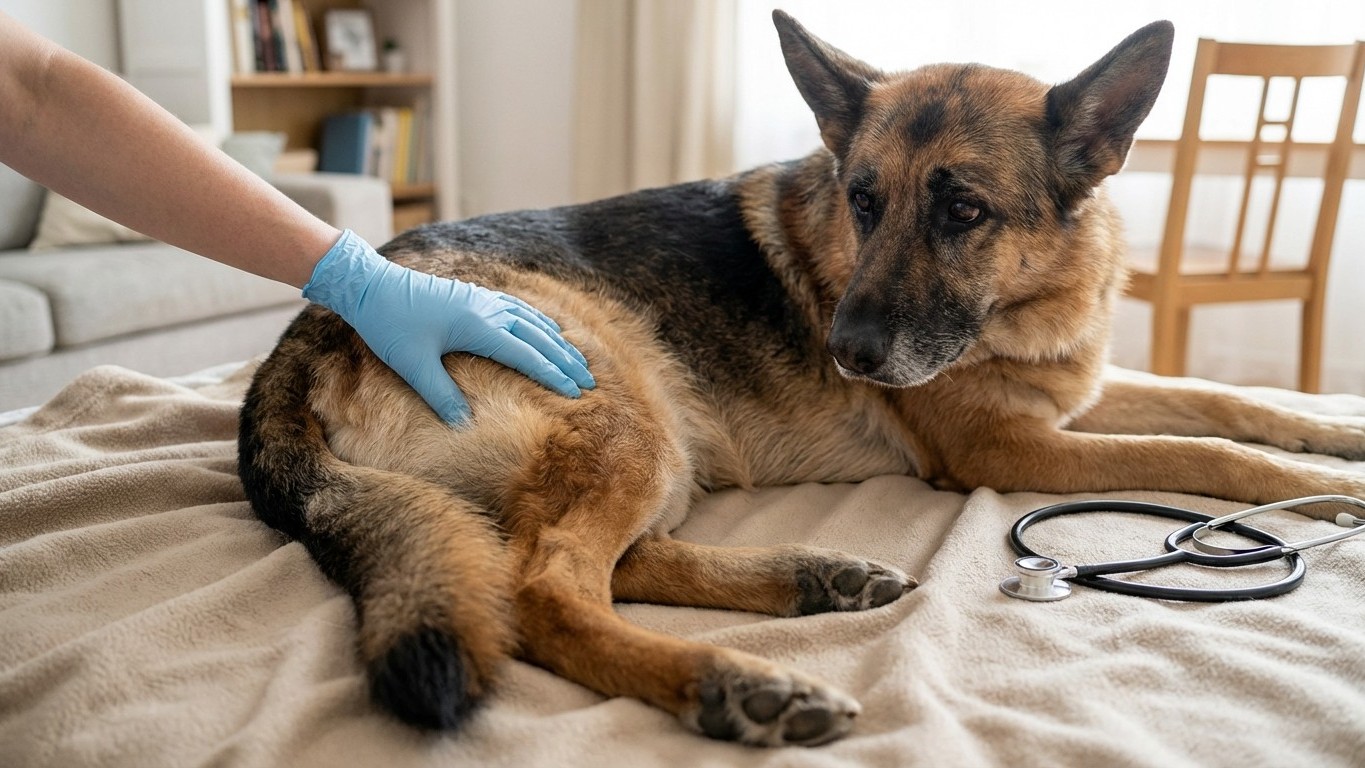
Hip dysplasia is one of the most talked-about health conditions in the dog world, and for good reason. Certain breeds carry a significantly higher genetic risk, and the consequences for an affected dog’s quality of life can be profound. Understanding which dogs are most vulnerable, and what you can actually do about it, is one of the most practical things any owner or prospective adopter can take on board.
What Is Hip Dysplasia in Dogs?
Definition and How It Develops
The hip joint is a ball-and-socket structure: the head of the femur (the “ball”) sits inside the acetabulum (the “socket”) of the pelvis. In a healthy joint, these two surfaces fit snugly together, allowing smooth, pain-free movement. Hip dysplasia occurs when this fit is abnormal. The joint develops loosely, and over time the resulting instability causes cartilage wear, bone remodelling, and eventually osteoarthritis. It is a developmental condition, meaning it begins during the growth phase of a dog’s life, even if the symptoms only become obvious months or years later.
The condition is polygenic, which means multiple genes are involved in its expression. This makes it tricky to eradicate from a breed, because even two apparently healthy parents can produce affected offspring. Environmental factors then act on top of that genetic foundation, either accelerating or moderating how severe the dysplasia becomes.
Symptoms and Warning Signs to Watch For
Early signs are easy to miss, and that’s what makes vigilance so important. A young dog might show a slight “bunny-hopping” gait when running, seem reluctant to climb stairs, or struggle to rise after rest. You might notice they sit with their hips slightly skewed, or that they tire more quickly on walks than you’d expect. Some puppies show a swaying back end that owners initially mistake for clumsiness.
As the condition progresses, signs become harder to ignore: muscle wastage in the hindquarters, obvious lameness, and visible discomfort when the hip area is touched. A dog in chronic pain may also become withdrawn, less playful, or uncharacteristically irritable. Any of these signs warrant a prompt veterinary appointment, never attempt to diagnose or manage hip pain at home based on guesswork.
Which Dog Breeds Are Most at Risk?
Why Large Breeds Bear the Brunt
Large and giant breeds are disproportionately affected because rapid bone growth puts enormous mechanical stress on developing joints. The faster a puppy grows, the less time the bones have to form correctly around the joint. Breeds that can reach 30+ kilograms in under a year are working against a tight developmental timeline, and any genetic tendency toward joint laxity is amplified by that sheer size and speed of growth.
This doesn’t mean small breeds are entirely exempt. The French Bulldog and English Bulldog, for example, carry meaningful hip dysplasia risk despite their compact frames, largely because selective breeding for extreme body shapes has introduced significant skeletal abnormalities. The dog breeds guide explores how physical conformation choices affect long-term health across different breed types.
The Breeds Most Commonly Predisposed
The German Shepherd is probably the breed most strongly associated with hip dysplasia in the public consciousness, and the data backs that up. Labrador Retrievers and Golden Retrievers are also consistently flagged in veterinary literature, both popular family dogs whose friendly temperaments sometimes distract prospective owners from doing thorough health checks. Rottweilers, Saint Bernards, Bernese Mountain Dogs, and Great Danes face similarly elevated risks due to their size and genetic heritage.
Among working and sporting breeds, the Mastiff, Bloodhound, and Cane Corso also appear regularly in dysplasia statistics. On the smaller end of the scale, the Bulldog breeds, French and English, have become a significant concern as their popularity has surged. If you are considering any of these breeds, reviewing a dog breeds health guide before committing is time well spent.
What Makes Hip Dysplasia Better or Worse?
Genetics and Heredity
Because the condition is polygenic, responsible breeding relies on hip-scoring schemes rather than simply avoiding dogs that display symptoms. In the UK, the British Veterinary Association (BVA) and the Kennel Club run an official Hip Dysplasia Scheme, where breeding dogs are radiographed and scored. Each hip receives a score from 0 (excellent) to 53 (severely dysplastic), giving a total out of 106. The lower, the better. Breed-specific average scores are published, and responsible breeders should only use dogs that score below the breed median.
Prospective owners should always ask to see hip scores for both parents. A breeder who can’t or won’t provide this information is a red flag, regardless of how charming the puppies are. Genetics isn’t destiny, a puppy from well-scored parents can still develop mild dysplasia — but it substantially shifts the odds in your favour.
Growth, Diet, and Exercise During Development
Even a genetically predisposed puppy has a much better chance of a healthy outcome if the environment during its growth phase is managed carefully. Overfeeding is one of the most common and most preventable aggravating factors. Puppies of large breeds should grow at a steady, controlled rate, not be rushed to their adult weight as quickly as possible. Large-breed puppy food formulas are specifically designed to moderate growth speed, with adjusted calcium-to-phosphorus ratios to support skeletal development without overloading it.
Exercise deserves equal care. Repetitive high-impact activities, long runs on hard surfaces, jumping, aggressive rough-and-tumble play — put unnecessary strain on joints that are still forming. The old “rule of five minutes per month of age, twice a day” for puppy walks isn’t a rigid law, but it captures the right spirit: less is more until the growth plates close, typically around 12-18 months depending on breed size. Swimming is often recommended as a gentle alternative, providing muscle-building with minimal joint stress.
Prevention Strategies for At-Risk Breeds
The single most impactful prevention step happens before you even bring a puppy home: choose a breeder who participates in health screening programmes and can show you documented hip scores. From there, the work is ongoing. Keeping your dog lean throughout their life is one of the most consistent protective factors in the veterinary literature. Excess body weight doesn’t cause dysplasia, but it accelerates joint deterioration in dogs who already have some degree of laxity. Your vet can help you assess your dog’s body condition score at routine check-ups.
Supplementation with omega-3 fatty acids (from fish oil) has evidence behind it for supporting joint health, though it’s best discussed with a vet before adding anything to your dog’s routine. Joint supplements containing glucosamine and chondroitin are widely used, though the research on their efficacy is more mixed. Physiotherapy and hydrotherapy, increasingly available through specialist veterinary practices in the UK, can be genuinely valuable for maintaining muscle mass and joint mobility in at-risk dogs as they age.
Screening, Diagnosis, and When to Act
Radiographs and Genetic Testing
The gold standard for diagnosing hip dysplasia remains radiography. X-rays taken under sedation or anaesthesia allow a vet to assess joint conformation and any early arthritic changes. For breeding purposes, these are usually done at 12-24 months. For individual dogs showing symptoms, earlier imaging may be recommended to guide treatment decisions.
Genetic tests for hip dysplasia exist for some breeds, though they cannot definitively predict whether a dog will develop the condition. They can flag dogs carrying certain risk variants and are most useful as one tool among several in a responsible breeding programme, not as a standalone guarantee of health. The dog breeds health guide covers genetic screening in broader context across multiple conditions.
When a Vet Visit Can’t Wait
If your dog is limping, reluctant to exercise, showing stiffness after rest, or you notice any asymmetry in their hindquarters, book an appointment promptly. Catching hip dysplasia early expands the treatment options available and can meaningfully slow progression. Waiting until a dog is in obvious, constant pain narrows the window for more conservative management.
Treatment and Living Well With Hip Dysplasia
Diagnosis is not a catastrophe. Many dogs with mild to moderate hip dysplasia live full, comfortable lives with appropriate management. The approach depends on severity, age, and the individual dog’s response. Conservative management typically involves anti-inflammatory medication, weight control, physiotherapy, and modified exercise. For younger dogs with significant joint laxity, surgical options including triple pelvic osteotomy (TPO) or juvenile pubic symphysiodesis (JPS) can correct joint alignment before arthritis sets in. Total hip replacement, while expensive, offers excellent outcomes for suitable candidates and is increasingly accessible through referral centres across the UK.
At home, simple environmental adjustments make a real difference: non-slip rugs on hard floors, ramps instead of stairs, an orthopaedic dog bed, and avoiding activities that seem to cause discomfort. A dog with hip dysplasia still wants to live, play, and connect with you, the goal is managing their condition so they can do exactly that.
Choosing and Supporting an At-Risk Breed
Going into ownership of a German Shepherd, Labrador, or Bulldog with eyes open to the health landscape is an act of genuine responsibility. The healthiest dog breeds guide is a useful reference point, but “healthiest” is rarely the whole picture: every breed has its vulnerabilities, and the breeds most prone to hip dysplasia also tend to be among the most loyal, trainable, and rewarding to live with. The question is whether you are prepared to invest in prevention, screening, and care if needed.
Hip dysplasia doesn’t exist in isolation. It often intersects with elbow dysplasia, cruciate ligament disease, and the broader musculoskeletal challenges of large-breed life. Exploring the full dog breeds health guide before choosing a breed helps you understand the complete picture rather than focusing on a single condition. A dog’s longevity and quality of life are shaped by dozens of factors, and hip health is just one of them, but it’s one where informed owners genuinely can make a difference.
The next time someone tells you that hip dysplasia is just the price you pay for owning certain breeds, that’s worth challenging. Genetics sets the stage, but management, early screening, and responsible breeding choices are the script you get to write.