
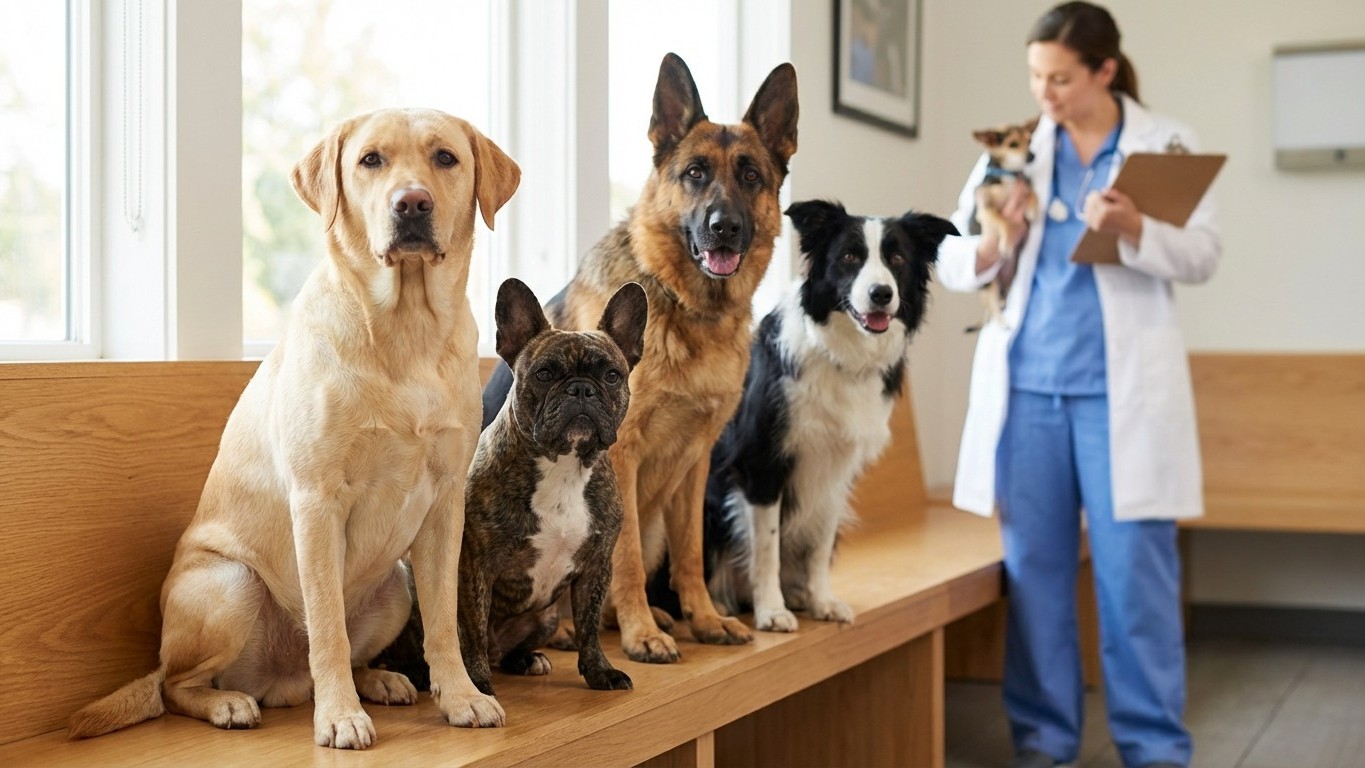
Your dog’s breed is not just a personality blueprint. It’s a health roadmap too. Whether you’ve just welcomed a French Bulldog puppy or you’re still weighing up whether to adopt a Labrador or a Border Collie, understanding the specific health risks tied to each breed could make a genuine difference to your dog’s quality of life and how long you get to share it together.
This guide pulls together the most important things to know about breed-specific health risks, the screenings that can catch problems early, and the prevention strategies that actually work in everyday life. Think of it as your practical companion alongside any conversations you have with your vet.
Why health varies so dramatically between breeds
Genetics, history, and what breeders have shaped over centuries
Dogs are one of the most genetically diverse species on earth, and that diversity cuts both ways. The selective breeding that gave us the Greyhound’s speed, the Dachshund’s low-slung body, and the German Shepherd’s working drive also concentrated certain genetic mutations within bloodlines. When a population of animals is bred repeatedly for specific traits, any inherited health vulnerabilities get passed along with those traits.
Some of this is ancient history. The Cavalier King Charles Spaniel, for instance, was selectively bred for a rounded skull that gives it that distinctively sweet expression, but that same skull shape is strongly associated with a condition called syringomyelia, where the brain doesn’t quite fit the skull cavity. The connection between appearance and health risk runs deep in many breeds, and it’s worth understanding before you fall in love with a particular look.
The role of breeding standards and responsible breeders
Breed standards set by kennel clubs describe the ideal physical characteristics of each breed. These standards have historically prioritised appearance over health in some cases, though that’s gradually changing as welfare concerns gain more traction. A responsible breeder will screen their breeding dogs for known hereditary conditions and share those results openly. A pet shop or unscrupulous online seller almost certainly won’t.
The difference matters enormously. A Labrador Retriever from health-tested parents, where both dam and sire have been screened for hip dysplasia and progressive retinal atrophy, has a meaningfully different risk profile from one bred without those checks. If you’re choosing a breed, our dog breeds guide covers how to evaluate breeders alongside lifestyle fit, which is the combination that sets you up for success from the start.
The main health risks by breed type and profile
Hereditary conditions: what turns up most often
Hip and elbow dysplasia affect a wide range of breeds, particularly medium to large dogs bred for physical work. Labradors, Golden Retrievers, German Shepherds, Rottweilers and Bernese Mountain Dogs all carry elevated risk. These are conditions where the joint doesn’t develop correctly, leading to pain and progressive mobility loss. They’re not inevitable, but genetic predisposition combined with rapid growth and excess weight can make them far more likely.
Heart conditions represent another significant category. Dilated cardiomyopathy (DCM) is associated with large and giant breeds including Dobermanns, Irish Wolfhounds and Great Danes. Mitral valve disease, conversely, shows up heavily in smaller breeds, most the Cavalier King Charles Spaniel, where it affects the vast majority of individuals by the time they reach middle age. Eye conditions including hereditary cataracts and progressive retinal atrophy (PRA) appear across dozens of breeds, from Border Collies to Miniature Schnauzers.
Morphology-related risks: brachycephalics and beyond
Flat-faced breeds deserve their own conversation. French Bulldogs, English Bulldogs, Pugs and Shih Tzus are collectively described as brachycephalic, and that compressed facial anatomy creates real daily difficulty. Brachycephalic obstructive airway syndrome (BOAS) means these dogs are fighting for breath in ways their owners don’t always notice until the condition becomes severe. Overheating is a serious risk, anaesthesia carries higher complications, and many cannot exercise freely on warm days.
Giant breeds face a different set of pressures. Their sheer size puts extraordinary strain on joints and organs, their growth periods need careful management, and they’re at significantly higher risk of bloat (gastric dilatation-volvulus), a life-threatening emergency that can develop within hours. Chondrodystrophic breeds like Dachshunds and Basset Hounds are prone to intervertebral disc disease (IVDD) because of the way their long backs and short legs interact.
How age and energy levels factor in
High-energy working breeds like Border Collies and Belgian Malinois aren’t necessarily fragile, but they develop stress-related behaviours and compulsive disorders when their mental and physical needs go unmet. This is a welfare concern that often becomes a health concern over time. Senior dogs of any breed, but especially giant breeds (who can be considered senior from around six or seven years), need more frequent health monitoring even when they appear outwardly well. For a nuanced picture of how size and age interact with longevity, the dog breeds lifespan guide is worth reading alongside this one.
Recommended screenings by breed type
Genetic tests and what they’re actually telling you
Genetic testing has become far more accessible over the past decade. Tests can identify whether a dog carries mutations associated with specific conditions, which matters both for breeding decisions and for owners who want to understand their dog’s individual risk profile. A Collie-type dog can be tested for the MDR1 gene mutation, which affects how certain common drugs are processed and can make standard treatments dangerous. Border Collies should be checked for Collie Eye Anomaly (CEA). Many Spaniels benefit from hereditary cataract screening.
It’s worth being clear about what these tests do and don’t tell you. A negative result doesn’t guarantee a healthy dog, and a positive result for a mutation doesn’t mean your dog will develop the condition. They’re tools for informed decision-making, not crystal balls. Talk to your vet about which tests are genuinely useful for your dog’s breed and background.
Annual health checks tailored to specific breeds
Routine annual check-ups serve every dog, but certain breeds benefit from more targeted monitoring within those visits. Cavalier King Charles Spaniels should have cardiac auscultation (listening to the heart) from an early age, ideally annually. German Shepherds and Labradors should have hip assessments factored into their care from puppyhood. Brachycephalic dogs need airway assessments, and any signs of breathing difficulty warrant prompt attention rather than “wait and see”. Dobermanns are commonly recommended to have cardiac screening, including Holter monitoring, from around two years of age given their DCM risk.
Your vet is the right person to build a breed-specific screening calendar with you. The guidance available through the dog breeds health guide on understanding race-specific risks offers useful context you can bring into that conversation.
Prevention strategies that genuinely make a difference
Nutrition is a bigger lever than most owners realise. Large and giant breed puppies need food formulated specifically for their growth rate, because overfeeding calcium and calories during development actively contributes to joint problems. Obesity, across all breeds, accelerates joint deterioration, stresses the heart and shortens life. A Labrador (a breed with a documented genetic predisposition to overeating) who maintains a healthy weight throughout their life has a demonstrably better health trajectory than one allowed to become overweight.
Exercise needs to be calibrated to breed, age and individual temperament. A Dachshund puppy shouldn’t be jumping on and off furniture or tackling stairs repeatedly before their spine is fully developed. A Greyhound doesn’t need marathon daily runs but thrives on short, fast bursts. A Border Collie without sufficient mental stimulation will find its own entertainment, and that entertainment is rarely good for household harmony or the dog’s stress levels.
Vaccination and parasite control protocols are genuinely non-negotiable basics, but they’re not entirely one-size-fits-all either. Your vet may recommend a titre testing approach for certain breeds or individuals rather than automatic annual boosters. Breeds with immunological sensitivities may benefit from a more considered vaccination schedule. These are conversations worth having rather than assuming the default protocol fits every dog perfectly.
Knowing when to call the vet
Some warning signs are universal: sudden changes in appetite, unexplained weight loss or gain, limping, laboured breathing, excessive drinking or urination, lumps that appear quickly or change shape. Others are breed-specific. A Dachshund who starts dragging their back legs or seems reluctant to use stairs needs same-day veterinary attention given IVDD risk. A Dobermann who collapses briefly, even if they seem to recover immediately, should be seen urgently. A brachycephalic dog whose breathing seems more laboured than usual in cool weather should not have that dismissed as “normal for the breed”.
How often you visit the vet beyond annual check-ups should reflect your dog’s age and breed. Senior dogs of giant breeds, or any breed with a known health predisposition, often benefit from six-monthly rather than annual check-ups. Many conditions are far more manageable when caught early, and the financial and emotional cost of crisis intervention almost always dwarfs the cost of regular monitoring.
Frequently asked questions
What are the most common health problems by breed? The most prevalent issues include hip and elbow dysplasia in large working breeds, cardiac conditions in Cavaliers and Dobermanns, airway problems in flat-faced breeds, and spinal issues in long-backed dogs like Dachshunds. Our healthiest dog breeds guide explores which breeds statistically carry fewer of these predispositions, with useful caveats about how to interpret those rankings.
How do I know if my breed carries a specific risk? Start with your vet, who can direct you to breed-specific health schemes run by kennel clubs and breed societies. Responsible breeders in the UK often participate in formal health testing programmes, and those results are sometimes publicly searchable through Kennel Club databases.
Which screenings are right for my dog’s breed? There’s no single answer, but your vet should be your first port of call. Breed societies often publish recommended testing protocols that your vet can incorporate into your dog’s care plan.
How do I adapt prevention to my specific dog? Beyond breed, your dog’s individual weight, lifestyle, environment and age all shape their risk profile. Prevention is most effective when it’s personalised rather than generic.
Making health part of the breed choice from the start
Health considerations belong in the very first conversation about which dog to welcome into your life, not as an afterthought once you’re already attached to a photograph. Understanding what you’re signing up for, medically and practically, is part of being a genuinely responsible owner rather than just an enthusiastic one.
Breeds that suit your lifestyle and your preparedness for their specific health needs will generally lead to better outcomes for both of you. If you’re still at the research stage, the broader dog breeds guide is designed exactly for that moment of decision, covering temperament, care needs and health profile together.
The deeper question, perhaps, is what we want from the future of dog breeding itself. As welfare science advances and genetic tools become more sophisticated, there’s real momentum behind breeding programmes that prioritise health alongside the traits we love. Whether that shift happens fast enough is something every prospective dog owner has some small influence over, simply through where they choose to buy or adopt, and what questions they’re willing to ask.