
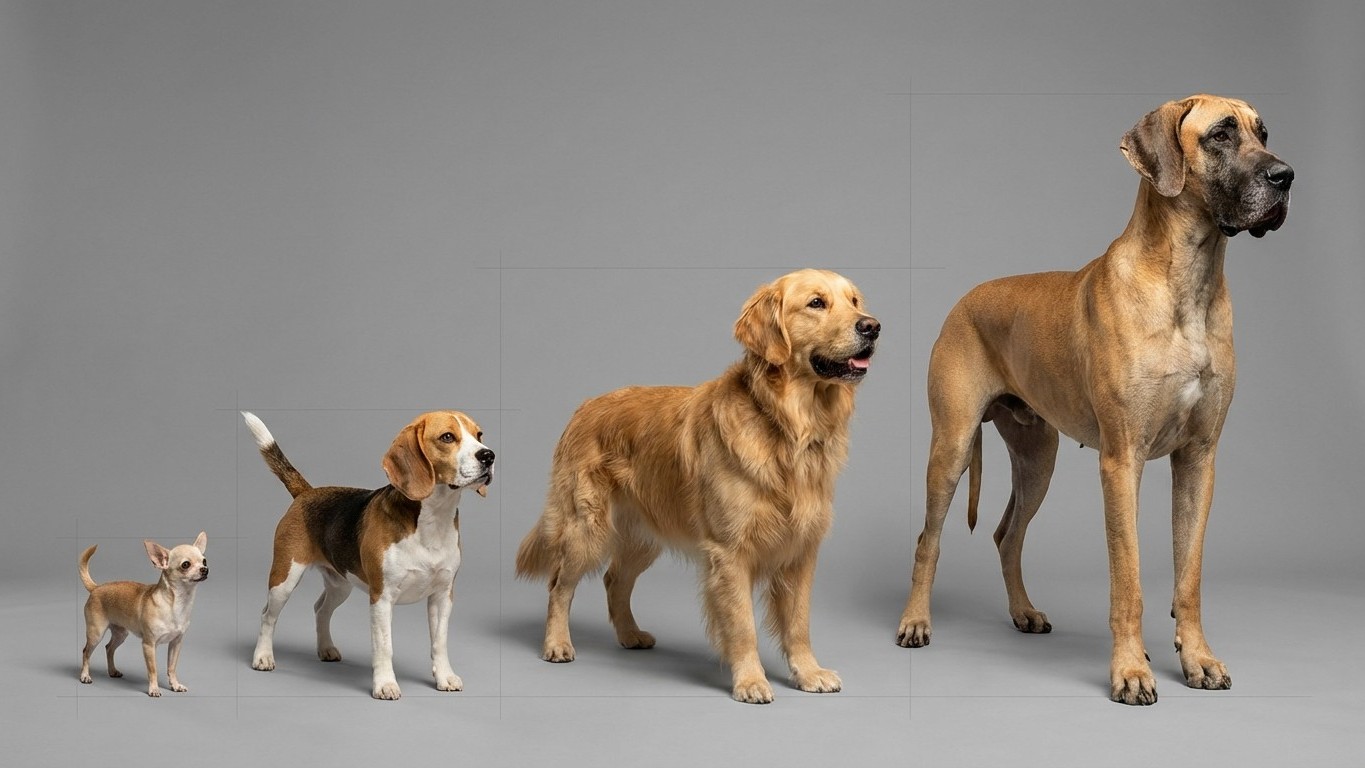
Choosing a dog is one of those decisions that sounds straightforward until you’re standing in front of a litter of Labrador puppies or scrolling through rescue listings at midnight, suddenly overwhelmed by the sheer variety of shapes, sizes, and temperaments on offer. Size is often the first filter people apply, and honestly, it’s a reasonable starting point. A Great Dane and a Chihuahua don’t just look different; they require fundamentally different homes, budgets, and lifestyles. Having a clear dog breeds guide by size chart gives you that essential first layer of information before diving deeper into temperament, grooming, and training needs.
Why Size Matters More Than You Might Think
Most people instinctively know that a Saint Bernard won’t thrive in a studio flat, but the practical implications of dog size go well beyond floor space. Weight determines food quantities, medication dosages, equipment costs, and even the physical effort involved in everyday care. A dog that weighs 5kg versus one that weighs 50kg will shape your life in ways that aren’t immediately obvious when you first fall in love with a photo online.
Breed classifications vary slightly depending on the kennel club or country you consult, but the categories most commonly used in the UK break down into four broad groups: small (under 10kg), medium (10–25kg), large (25–45kg), and giant (above 45kg). Some guides add a “toy” subcategory for dogs under 5kg, though these are generally grouped within the small category for practical purposes. The Kennel Club uses slightly different terminology, and individual breeds can sit right on the boundary between categories depending on the specific line or gender of the dog.
A Comparative Size and Weight Chart for Dog Breeds
Understanding the Categories
The four-tier system gives you a workable framework, but the numbers alone don’t tell the whole story. A Border Collie and a Bulldog both sit comfortably in the medium category by weight, yet their energy levels, exercise demands, and even vet bills couldn’t be more different. Think of the chart below as a starting map, not a destination.
- Small breeds (up to 10kg): Chihuahua, Shih Tzu, Cavalier King Charles Spaniel, Pomeranian, Dachshund
- Medium breeds (10–25kg): Border Collie, Cocker Spaniel, French Bulldog, Beagle, Whippet
- Large breeds (25–45kg): Labrador Retriever, Golden Retriever, German Shepherd, Boxer, Siberian Husky
- Giant breeds (45kg+): Great Dane, Saint Bernard, Newfoundland, Mastiff, Irish Wolfhound
Iconic Breeds Across Each Category
The Cavalier King Charles Spaniel sits at the top of the small category, typically weighing between 5.4 and 8kg, and has become one of the most popular companion dogs in the UK precisely because of its adaptable nature. At the other extreme, the Great Dane can reach 90kg in some males, making it one of the heaviest breeds recognised by the Kennel Club. The Labrador Retriever, consistently one of Britain’s favourite dogs, typically sits between 25 and 36kg, placing it firmly in the large category despite its reputation as an easygoing family pet.
What surprises many first-time owners is how energy level and size don’t always correlate. A Jack Russell Terrier, weighing barely 6kg, can outpace and out-demand a laid-back Basset Hound that weighs four times as much. For a more comprehensive breakdown of how specific breeds compare within each size group, the dog breeds guide goes well beyond the numbers to match breeds with real lifestyles.
Daily Life Impacts by Dog Size
Living Space and Indoor Adaptability
The assumption that small dogs are always better suited to flats and large dogs need gardens is partially true but not the whole picture. A Greyhound, despite being a large breed, spends the majority of its day sleeping and adapts well to smaller homes provided it gets a couple of good runs each week. A Jack Russell in the same flat might redecorate your furniture out of frustration by lunchtime.
That said, giant breeds genuinely do need space, not just for exercise but for basic comfort. A Newfoundland sprawled across the hallway is a genuine obstacle. These dogs also need larger beds, crates, and car boots, which adds up both practically and financially. If your home has limited square footage, a small dog breeds guide can help you identify which compact breeds actually suit indoor living rather than just technically fitting inside.
Costs: Food, Vet Bills, and Equipment
Here’s a figure that tends to shock people: a large breed dog can eat two to three times as much as a small breed dog, meaning annual food costs alone can be three to four times higher. A 30kg Labrador eating quality dry food might cost £600–£900 per year in food alone, while a 5kg Shih Tzu might come in under £200. These are rough estimates and vary enormously by brand and dietary needs, but the general pattern is consistent.
Veterinary costs follow a similar logic. Anaesthetic doses, surgical time, and medication quantities are all weight-based. Routine procedures like neutering or dental cleaning cost more for larger dogs simply because more drug is needed and procedures take longer. Pet insurance premiums also rise with size and breed. Equipment costs follow suit: leads, harnesses, beds, crates, grooming tools, and even boarding kennels often charge by size.
Exercise Requirements and Energy Levels
Size is a rough proxy for exercise needs, but breed group matters just as much. Working and herding breeds, regardless of size, tend to have higher exercise and mental stimulation requirements than companion or toy breeds. A Border Collie needs a job to do; a Maltese mostly wants to sit on your lap. Getting this wrong is one of the most common causes of behavioural problems in dogs.
Giant breeds are often described as gentle giants for good reason: many are surprisingly calm and don’t require excessive daily exercise once mature. However, their puppyhood is a different story, and over-exercising large breed puppies before their joints are fully developed can cause lasting damage. The medium dog breeds guide explores breeds that often strike the ideal balance between manageable size and energy, which is why medium dogs are so consistently popular across all types of UK households.
Health, Longevity, and Size-Related Conditions
One of the more striking patterns in canine biology is the inverse relationship between body size and lifespan. Small dogs routinely live 14–16 years, sometimes longer, while giant breeds often live just 7–9 years. A Great Dane reaching 10 years old is genuinely exceptional. The reasons aren’t entirely understood, but rapid growth rates in large breeds appear to accelerate cellular ageing in ways not seen in smaller dogs.
Beyond lifespan, certain health conditions are size-specific. Giant breeds are disproportionately affected by bloat (gastric dilatation-volvulus), a life-threatening condition that requires emergency surgery. Large and giant breeds carry a higher risk of hip and elbow dysplasia. Small breeds, on the other hand, are more prone to dental overcrowding, patellar luxation, and tracheal collapse. The message here isn’t to avoid any particular size category, but to research breed-specific health risks before committing, and to budget for preventative care accordingly. Always consult your vet for personalised health guidance specific to your dog’s breed and size.
Practical Guidance for Choosing the Right Size of Dog
Questions Worth Asking Yourself First
Before size even enters the equation, your lifestyle deserves honest scrutiny. How many hours per day will the dog be alone? Do you rent your home, and if so, does your tenancy permit dogs of all sizes? Can you physically manage a large dog if it decides to pull on the lead? Do you have young children or elderly relatives who interact with the dog regularly? These questions don’t always point to one obvious answer, but they tend to rule out certain categories quickly.
Budget is equally worth confronting early. The ongoing costs of a large or giant breed over a 10-year lifespan can be substantial: food, insurance, vet care, boarding, and equipment combined can run into tens of thousands of pounds. That’s not an argument against large dogs, but it is an argument for going in with clear eyes. The small dog breeds guide offers a useful comparative overview if you’re trying to weigh up the practical realities across the full size spectrum.
Going Deeper: Guides for Every Size Category
A size chart is the starting point, not the finish line. Once you’ve identified which weight category broadly suits your home and lifestyle, the real work of breed selection begins. Temperament, trainability, grooming demands, and compatibility with children or other pets all matter enormously, and none of them appear in a weight table.
For anyone seriously researching their options, the small dog breeds guide covers the nuances of compact companion breeds in real depth, while the broader dog breeds guide helps you match breed characteristics to your specific way of life rather than just your floor plan.
FAQ: Should Size Be the Deciding Factor When Choosing a Dog?
The short answer is no, but it’s a useful filter. Size tells you about space requirements, likely costs, and some health considerations, but it says very little about personality, trainability, or whether a particular dog will actually suit your household. A small dog with high prey drive and stubborn streak can be far more challenging to live with than a calm, biddable large breed.
The real question is whether a dog’s full profile, size, energy, temperament, grooming needs, and health predispositions, fits the life you actually live rather than the life you imagine having. Size just happens to be the most visible attribute, which is why it tends to dominate early decision-making. Used thoughtfully, a dog breeds guide by size chart gives you a clear framework to begin from, but the depth of that decision deserves more than a glance at a weight column.
If you’re still weighing up whether a small, medium, or large dog belongs in your home, the honest answer is that the breed matters as much as the body weight. What kind of companion are you really looking for?