
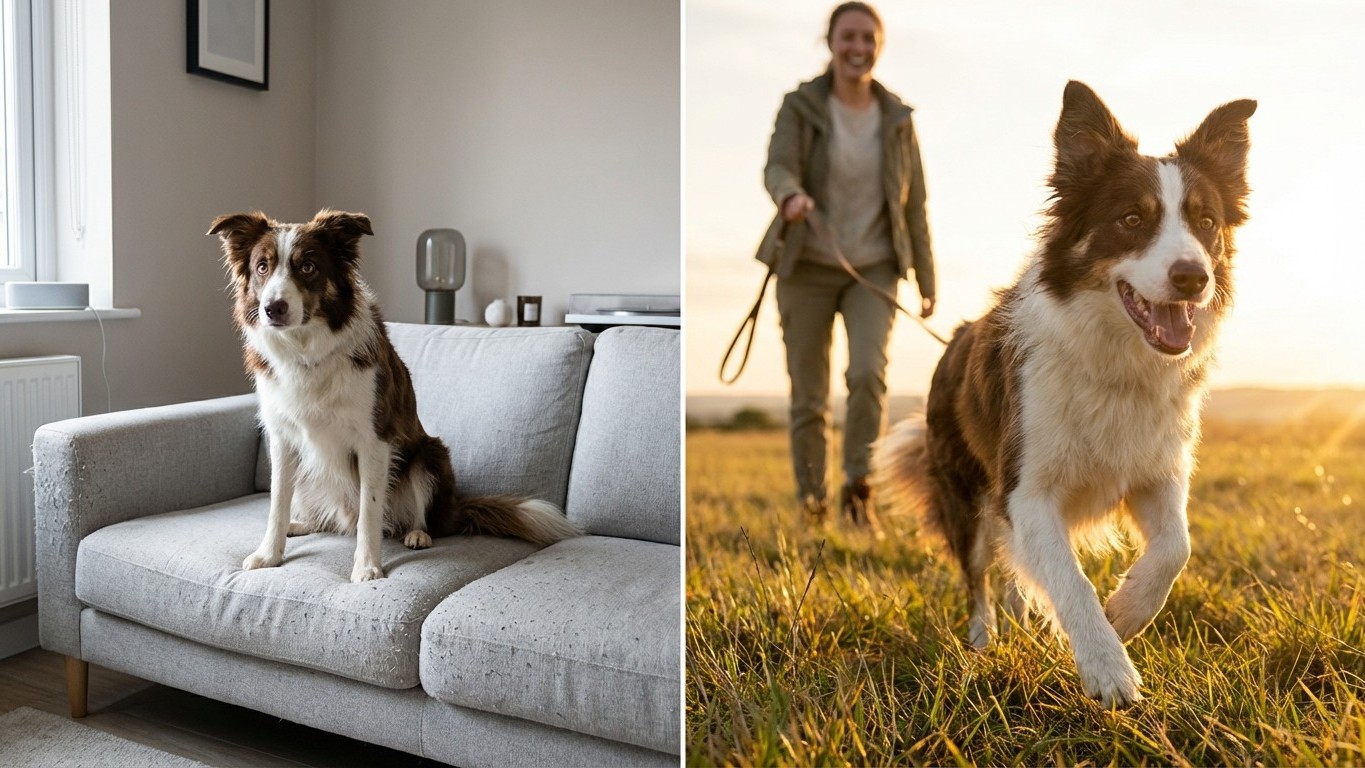
The dog you choose should fit your life, not the other way round. That sounds obvious, yet thousands of dogs end up in rescue centres every year precisely because their owners fell in love with a face rather than a temperament. A Border Collie in a one-bedroom flat with an owner who works nine-to-five. A Siberian Husky adopted by someone who considers a Sunday stroll to the end of the road an adventure. The mismatch is rarely malicious; it is almost always a failure of self-awareness combined with a lack of honest, practical guidance. This article aims to fix that.
Why Your Lifestyle Should Drive the Decision
What happens when the match goes wrong
A dog’s daily experience is shaped almost entirely by the rhythm of the household it lives in. An energetic breed left under-stimulated will not simply accept its fate quietly; it will redecorate your sofa, develop anxiety, bark incessantly, or redirect its energy into behaviours that vets and behaviourists describe as frustration-driven. Conversely, a calm, low-energy breed pushed into a training regime it finds exhausting can become stressed, shut down, or physically unwell. The welfare cost runs in both directions.
What tends to get overlooked is that this is not just about exercise time. A high-drive working breed needs mental engagement, a sense of purpose, and a consistent structure that mirrors the job it was originally bred to do. Ticking the “one hour of exercise per day” box is not enough if the dog spends the remaining twenty-three hours in a state of bored frustration.
Honestly assessing your own profile
Before looking at a single breed, sit down and answer three questions about your actual life, not your aspirational one. How many hours per week do you genuinely spend outdoors and moving? What does your living space look like, and does it have outdoor access? And perhaps most importantly, how do you expect your lifestyle to evolve over the next ten to fifteen years?
People consistently overestimate their activity levels when imagining life with a dog. Research in human behaviour suggests we are rather poor at predicting our future habits, especially around exercise. A useful trick: track your actual steps or outdoor time for two weeks before making any decision. The number might surprise you. If you want a broader framework for thinking through all the variables, the how to choose a dog breed guide breaks this down into a structured seven-step method that complements what we cover here.
Active Breeds vs Calm Breeds: What the Difference Actually Means
The anatomy of an active dog
Active breeds, sometimes called high-energy or working breeds, were developed over generations to perform physically and mentally demanding tasks. Border Collies were bred to herd sheep across miles of Scottish hillside. Vizslas were expected to work all day as versatile gun dogs. Jack Russell Terriers were designed to bolt foxes from their earths, which required explosive energy in a compact body. The instincts behind those behaviours do not disappear in a domestic setting; they simply find different outlets.
As a rough guide, truly active breeds typically need between one and a half and three hours of purposeful activity daily, and that activity needs to include mental stimulation, not just physical movement. Think scent work, agility, obedience training, fetch games with problem-solving elements. A tired active dog is a happy dog; an active dog that is merely bored is a destructive one.
The reality of a calm breed
Calm breeds are not lazy or dull. A Basset Hound has a nose of staggering sophistication. A Cavalier King Charles Spaniel is affectionate, perceptive, and surprisingly adaptable. A Shih Tzu was bred to be a companion, and it excels at exactly that. These dogs were shaped by different human needs: companionship, lap warmth, gentle alertness rather than relentless drive.
Lower exercise needs do not mean zero needs. Most calm breeds still benefit from two or three shorter walks daily, some play, and consistent mental engagement through training. The difference is tolerance: a Greyhound who misses a long run one afternoon will shrug it off; a Belgian Malinois who misses its morning session will let you know about it in elaborate and unhelpful ways.
Matching Breeds to Lifestyles: A Practical Comparison
Five active breeds worth knowing
The Border Collie is probably the most intelligent domestic dog breed, which is both its greatest asset and its most demanding trait. These dogs thrive with owners who are serious about training, dog sports, or countryside life. An under-stimulated Border Collie can develop compulsive behaviours including obsessive chasing of shadows or lights.
The Vizsla deserves more attention in the UK than it typically receives. Hungarian in origin, velcro in personality, these dogs bond intensely with their owners and combine athleticism with genuine affection. Runners, cyclists, and active families tend to adore them.
The Siberian Husky is built for endurance in ways that most owners genuinely underestimate. Bred to run up to a hundred miles a day in sled teams, a Husky with a sedentary owner is a recipe for chaos. That said, in the right hands, they are extraordinary companions.
The Springer Spaniel (English) is one of Britain’s best-loved working breeds for good reason. Enthusiastic, biddable, and perpetually cheerful, Springers suit active families and people who enjoy countryside activities. They also do well in dog sports like flyball and agility.
The Jack Russell Terrier is proof that energy comes in small packages. These tenacious little dogs need far more stimulation than their size implies. Brilliant for active people who want a compact, portable companion; challenging for anyone expecting a lapdog.
Five calm breeds that suit quieter lives
The Cavalier King Charles Spaniel was essentially purpose-built for domestic companionship. Gentle, affectionate, and low-drama, they suit flats, houses, elderly owners, and families alike. Do bear in mind that the breed has known health vulnerabilities, so choosing a responsible breeder and keeping up with vet checks is non-negotiable.
The Greyhound surprises people. Despite being the fastest breed in the world, Greyhounds are famously lazy at home. Two twenty-minute walks a day often satisfies them completely, and they spend much of their remaining time asleep with impressive commitment. Retired racing Greyhounds make wonderful pets.
The Basset Hound ambles through life with a philosophical calm that some owners find deeply comforting. They enjoy gentle walks and are content in smaller homes, though their noses can lead them into mischief if left unsupervised outdoors.
The Shih Tzu was bred for centuries as a palace companion in China and Tibet. Happy in flats, good with older owners, and perfectly comfortable with a less active routine. Grooming demands are high, but exercise demands are low.
The Bichon Frise rounds off this list with its cheerful disposition and adaptable nature. These dogs tend to suit urban environments well, enjoy moderate daily walks, and are known for getting along with children and other pets.
For a fuller exploration of these and other breeds, the dog breeds guide offers a comprehensive lifestyle-based breakdown that pairs well with the breed comparisons above.
Life Scenarios and How They Map to Breed Choices
Real situations, honest answers
A twenty-something runner who covers thirty miles a week, lives in a house with a garden, and works from home three days a week has significant flexibility. Almost any active breed could work, and the physical output would be channelled productively. A Vizsla, a Springer, or even a young Labrador would flourish in that context.
A couple in their sixties living in a flat near green spaces, who take a gentle hour-long walk each morning and enjoy quiet evenings, would be far better matched with a Cavalier, a Greyhound, or a Maltese. Not because older owners cannot care for active dogs, but because the honest day-to-day rhythm simply does not suit a breed that needs intensive stimulation.
Remote workers, interestingly, often make excellent dog owners for breeds with moderate needs, provided they avoid breeds that become overly dependent on constant human presence. A working-from-home owner can offer frequent short interactions throughout the day, which suits many companion breeds beautifully. The trap is breeds prone to separation anxiety who then struggle enormously the moment the owner goes back into an office.
Families with children aged under ten should think carefully about energy levels on both sides. A very high-drive working breed in a chaotic household can become overstimulated and difficult to manage. Medium-energy, biddable breeds like the Golden Retriever or the Cocker Spaniel tend to strike a better balance between robustness and trainability.
Questions worth sitting with before you adopt
Rather than a checklist, think of these as honest conversations to have with yourself. Can you maintain this dog’s exercise routine during winter, illness, or a demanding work period? Who looks after the dog when you travel? Does everyone in the household agree on the choice, and do they understand the commitment involved? And if your life changes significantly in five years, through a move, a new job, or a new family member, how does the breed you are considering fit that future?
The dog breeds guide for beginners is a good place to dig into the common mistakes people make at this stage, particularly the tendency to prioritise appearance over temperament compatibility.
Adapting Your Daily Life to Your Dog’s Needs
Choosing the right breed is the foundation, but it is not the end of the conversation. Even a well-matched pairing needs structure. Active breeds benefit from a predictable daily routine that includes at least one session of focused training or enrichment in addition to physical exercise. Puzzle feeders, scent games, and short obedience sessions cost almost no money and make a disproportionate difference to a working dog’s contentment.
Calm breeds need routine too, just of a different flavour. Consistency in walk times, predictable social interactions, and a settled home environment help lower-energy dogs thrive. They can be more sensitive to disruption than their placid expressions suggest.
What happens if your lifestyle shifts after adoption? This is more common than people admit. A job change, a health issue, a relationship change: life moves. The honest answer is that most dogs can adapt to moderate shifts in routine with time and good management, but significant mismatches, such as an active breed suddenly moved to a sedentary household, require real intervention. Professional behaviourists, doggy daycare, dog walkers, and structured enrichment programmes all have a role to play. Rehoming, while sometimes the kindest option, should be a genuine last resort reached after proper professional guidance.
FAQ: Common Questions About Choosing Active vs Calm Breeds
What criteria determine whether a breed suits an active or calm lifestyle? Breed group is the starting point: herding, working, and sporting dogs tend toward high energy; toy breeds, hounds used for companionship, and some terriers tend toward lower energy. Within any breed, individual temperament, age, and health status matter enormously. A senior Labrador and a six-month-old Labrador are very different propositions.
Breeds that typically need the least exercise include the Basset Hound, the Bulldog, the Pekingese, the Shih Tzu, and the Greyhound. All still need daily movement; none need intense athletic engagement.
Can education make an active breed calmer? To a degree, yes. Consistent training, structured mental stimulation, and calm handling can take the edge off an energetic dog’s behaviour. But training works with a dog’s nature, not against it. You can channel a Border Collie’s drive into productive outlets, but you cannot fundamentally reduce the drive itself. Anyone promising otherwise is selling something. For deeper reading on matching your approach to the right breed profile from the start, the dog breeds guide for beginners offers a thorough lifestyle-first framework worth bookmarking.
The best match between a person and a dog is never really about the dog’s breed alone. It is about an honest reckoning with who you are, how you actually live, and what kind of daily relationship you are genuinely prepared to build. Get that right, and the breed choice tends to follow naturally.