
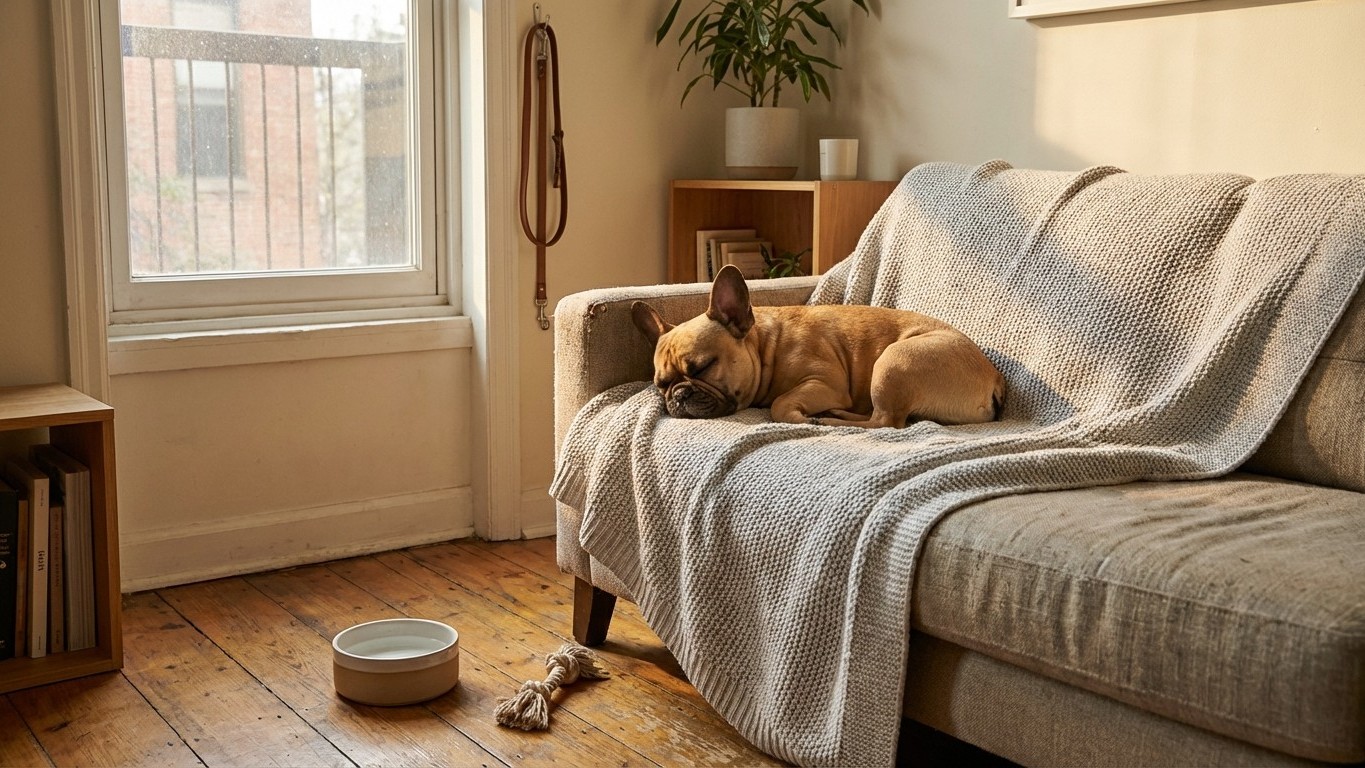
Sharing a one-bedroom flat with a dog is entirely possible, and millions of people across the UK do it brilliantly every day. The secret isn’t having a garden or a sprawling Victorian terrace, it’s choosing the right breed for your living situation and building a routine that genuinely meets your dog’s needs. Get that combination right, and flat life can be just as fulfilling for a dog as any suburban setup.
That said, not every breed takes to apartment living with equal grace. Some will pace, bark, and redecorate your sofa out of sheer frustration. Others will curl up on the windowsill like they were born to watch the world from the third floor. This guide will help you tell the difference, and make a choice you won’t regret.
Why Breed Choice Matters So Much in a Small Space
The real constraints of flat life for a dog
An apartment imposes specific limits that a garden house simply doesn’t. There’s no option to nip outside for a quick sniff when boredom strikes. Every toilet trip requires leads, lifts, and sometimes a queue for the street. Noise carries through walls in ways that affect your neighbours and your tenancy. And physical space for zoomies, play and general canine chaos is genuinely restricted.
These constraints don’t make flat life cruel, they just mean your dog’s needs have to be met more deliberately. The breeds that thrive here tend to be lower-energy, less vocal, relatively independent between walks, and content to rest for long stretches without growing anxious or destructive.
Warning signs that a breed won’t cope
A dog who was bred to run across moorland for eight hours probably isn’t going to be satisfied with two twenty-minute urban walks. High-drive working breeds, Border Collies, Huskies, Vizslas, Jack Russell Terriers, often struggle in apartments not because they’re badly behaved, but because their behavioural needs simply can’t be met without serious space and stimulation. Persistent barking, separation anxiety, destructive chewing, and repetitive pacing are all signs that a dog is coping poorly with its environment. If you’re seeing these in a dog you’ve already adopted, consult your vet before anything else, as some of these behaviours can have underlying medical causes.
Key Criteria for Choosing an Apartment-Friendly Breed
Size, but it’s not as simple as you think
Small size helps, but it’s not the whole story. Some tiny breeds (Chihuahuas and Jack Russells, for instance) are feisty, territorial and vocal in ways that create more problems than a large, calm dog would. A greyhound, surprisingly, is one of the most apartment-compatible breeds in existence, they’re gentle, quiet, sleep for up to 18 hours a day, and are perfectly happy with moderate daily exercise. Size matters less than temperament and energy profile.
Energy levels and exercise requirements
This is the genuinely crucial factor. A dog who needs one to two hours of moderate daily exercise, spread across two or three walks, fits city life well. A dog who needs three-plus hours of vigorous physical activity will struggle unless you have the schedule of a marathon runner. Be honest with yourself about your lifestyle before choosing. A well-matched dog will be a joy; a mismatched one will be a source of constant guilt and frustration for you both.
Barking, independence and being alone
Your neighbours will notice your dog before they’ve even met you, if the breed you choose is naturally vocal. Some breeds bark as a default communication style (Beagles, Dachshunds, some terriers), while others are naturally quiet. Equally, a dog who struggles badly with separation is going to spend your nine-to-five work day in distress, which is both a welfare concern and a neighbourly one. Breeds with a degree of independence and calm temperament are far better suited to the inevitable periods when flat life means being alone.
Grooming, shedding and maintenance in close quarters
In a small flat, a heavy-shedding dog means dog hair on every surface, every hour. Low-shedding breeds (Poodles, Bichons, Shih Tzus, many terriers) are considerably easier to live with in confined spaces. If you have allergies, a so-called hypoallergenic breed (technically, lower-dander rather than truly allergy-free) such as a Poodle cross or Maltese may make a real practical difference. Always discuss allergy concerns with your GP and spend time with the breed before committing.
Top Breeds for Apartment Living
The following breeds consistently appear among those best suited to flat life in the UK, each for slightly different reasons, and each with their own caveats.
Cavalier King Charles Spaniel: Affectionate, gentle, and moderate in their exercise needs, Cavaliers are among the most popular apartment dogs in Britain. They do crave company and can be prone to separation anxiety, so they suit households where someone is home regularly. Note that the breed has significant hereditary health issues; always buy from health-tested parents or adopt through a reputable rescue.
French Bulldog: Quiet, adaptable, and happy with shorter walks, the Frenchie has become ubiquitous in city flats. Be aware that brachycephalic (flat-faced) breeds have breathing difficulties and are sensitive to heat, never leave one in a warm flat without ventilation, and discuss health screening with your vet before adopting.
Pug: Similar in temperament to the Frenchie, though the same health warnings apply. Pugs are calm, sociable and don’t need huge amounts of exercise. Welfare concerns around the breed are genuine, so consider whether a pug-cross or a rescue with a known health history might be a more ethical choice.
Shih Tzu: Bred specifically as a companion animal, the Shih Tzu is almost tailor-made for indoor life. Low-shedding, affectionate and relatively quiet, they adapt well to flats. Their long coat requires regular grooming, factor this into your time and budget.
Greyhound (retired racing): As mentioned above, this is one of the great surprises of the dog world. Greyhounds are calm, gentle, low-barking and happy with two moderate walks a day. They do need secure, lead-only exercise given their chase instinct, but as flat companions they’re genuinely outstanding.
Maltese: Small, low-shedding and affectionate. They can be prone to barking if not trained from puppyhood, but with consistent recall and reward training, they settle well.
Bichon Frisé: A cheerful, low-shedding breed with a calm indoor temperament. They enjoy play but don’t demand it constantly, and they travel well, useful for the urban dog owner.
Basenji: Known as the “barkless dog” (they yodel rather than bark, which is considerably less alarming at 7am), Basenjis are independent, curious and compact. They need decent daily exercise but are quiet and clean indoors.
Poodle (Miniature or Toy): Highly intelligent, low-shedding, and extremely trainable. The Miniature Poodle especially is well-suited to city life, mentally engaged through training games and puzzle feeders, moderate in their exercise needs, and genuinely adaptable to small spaces.
Whippet: Gentle, quiet, and elegant. Whippets are sighthounds like Greyhounds and share many of their characteristics, calm indoors, with a burst-speed requirement met by a good off-lead run a few times a week. They can be sensitive to cold (a dog coat in winter is non-negotiable for this breed in Britain).
Practical Questions Before You Adopt
Routines, outings and mental stimulation
A dog in a flat needs a minimum of three outdoor outings per day, one substantial walk and two shorter toilet breaks as a baseline for most small to medium breeds. Mental stimulation matters just as much as physical exercise, and often more so for intelligent breeds. Puzzle feeders, training sessions, scent games and Kongs stuffed with food can all help tire a dog out inside when weather or schedule makes long walks difficult.
Building a consistent routine is genuinely one of the most effective things you can do for a flat dog’s wellbeing. Dogs are creatures of habit, and predictability reduces anxiety significantly.
Preparing your flat and managing neighbours
Before your dog arrives, create a defined resting area (a crate or a dog bed in a quiet corner), secure any hazardous items and think about flooring, slippery surfaces can cause joint issues, particularly in older dogs or those prone to hip problems. A rubber-backed mat runner in hallways is a small investment that makes a genuine difference.
If you live in a managed building, check your lease before adopting. Many UK tenancies now permit pets under the Tenant Fees Act and updated guidance, but building management rules can still vary. Introducing yourself to immediate neighbours before your dog arrives, and giving them your number in case of noise concerns, goes a long way.
Cohabiting with other animals
Many flat-dwelling dogs share space with cats, rabbits or other pets. Breed temperament matters here, sighthounds and some terriers have high prey drives that can make cat cohabitation genuinely stressful. Breeds rated as more compatible with other animals include the Cavalier, Bichon Frisé, Maltese and Poodle. Introductions should always be gradual and carefully managed, regardless of breed.
Comparative Overview: Apartment Breeds at a Glance
- Cavalier King Charles Spaniel: Affectionate, moderate exercise, can be clingy, best for home-based owners
- French Bulldog / Pug: Very low exercise needs, quiet, health screening essential before buying
- Greyhound / Whippet: Calm indoors, low barking, moderate exercise, ideal surprise choices for flat life
- Miniature Poodle / Bichon Frisé: Low-shedding, adaptable, intelligent, great for allergy sufferers
- Shih Tzu / Maltese: Companion breeds, quiet, small, regular grooming required
Frequently Asked Questions
Can a large dog live happily in a flat? Yes, if the breed has a calm temperament and receives adequate daily exercise. Greyhounds and Great Danes (yes, really) are often cited as surprisingly good flat dogs. What matters is energy level, not size.
How do you manage barking in a flat? Prevention through breed selection is the most effective strategy. For a dog you already have, positive reinforcement training, addressing separation anxiety early, and ensuring adequate mental stimulation are your main tools. A behaviourist can help if barking is severe, ask your vet for a referral rather than searching online for generic advice.
How many times a day should a flat dog be walked? Three times as a minimum for most adult dogs, one longer walk (30 to 45 minutes) and two shorter outings for toileting and sniffing. Puppies and senior dogs have different needs; your vet can advise on an appropriate schedule.
What’s the most common mistake when adopting a dog for flat life? Choosing based on appearance or size alone, without researching the breed’s energy level and temperament. A tiny dog with a huge personality and a tendency to bark is far harder to manage in a flat than a larger, calmer breed.
Going Further: Guides Tailored to Your Situation
Choosing a breed for flat living is one dimension of what is, in reality, a much bigger decision. Your lifestyle, working hours, activity level, family situation and budget all shape which dog will actually thrive with you, not just survive. If you’re at the beginning of this process, the dog breeds guide for beginners is a solid starting point that covers the most common mistakes new owners make before they’ve even brought a dog home.
For a method-based approach that works through your personal criteria step by step, the how to choose a dog breed guide offers a structured seven-criteria framework that’s particularly useful if you feel overwhelmed by the options. And if you want the broadest overview of which breeds suit which lifestyles, the comprehensive dog breeds guide covers the full landscape, from working dogs to lapdogs, with honest profiles of each.
Already know you want a smaller dog and just need to narrow down the options? The dog breeds guide for beginners (lifestyle edition) cross-references small breeds with a range of living situations, including urban flats, with some genuinely useful detail on which temperament profiles suit which types of owners.
The right dog for a flat isn’t a compromise, it’s a match. There are dozens of breeds, and plenty of wonderful rescue dogs of mixed heritage, who will be genuinely content in a well-managed apartment with an attentive owner. The question worth sitting with isn’t “can a dog live in my flat?” but “what kind of dog will actually flourish there?” That shift in framing tends to lead people to much better decisions.