
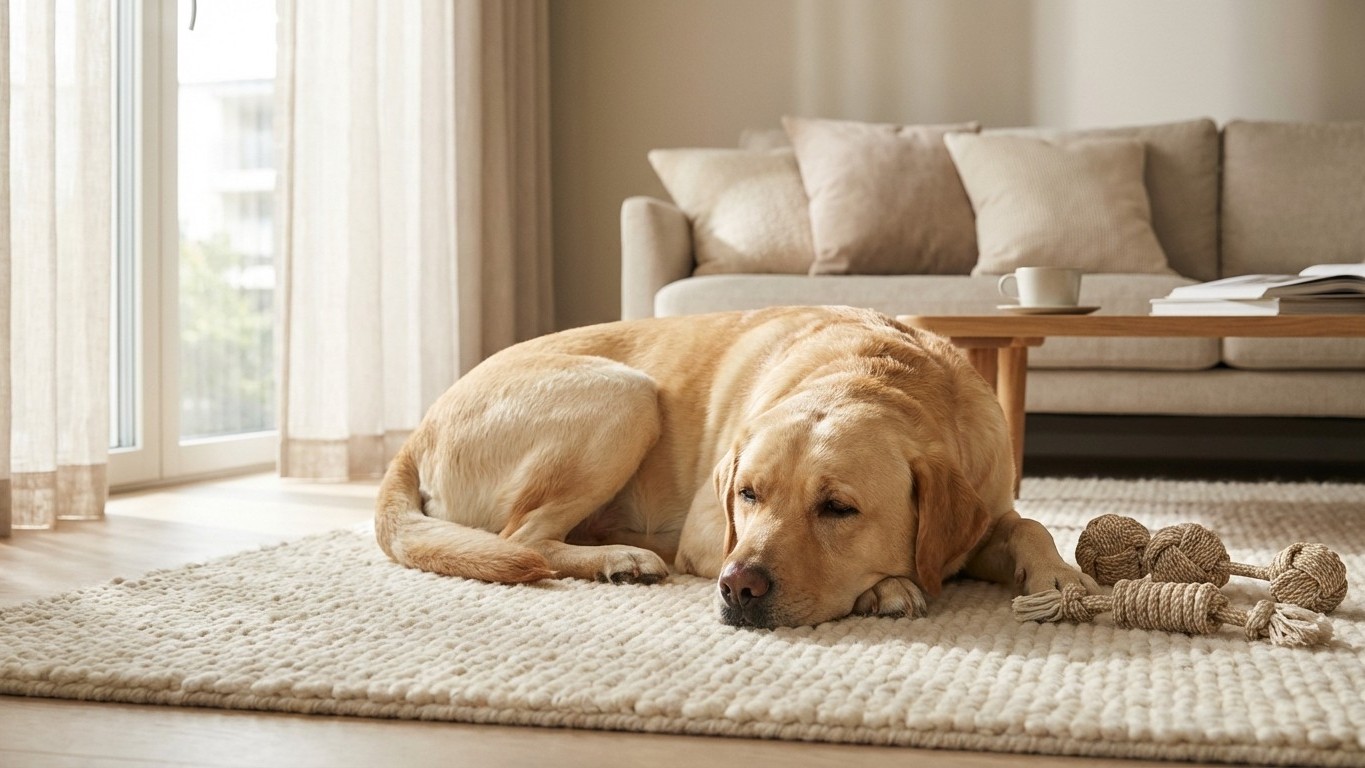
Some dogs bound through the front door like a furry hurricane. Others simply wander over, settle at your feet, and exhale deeply, as if they’ve been waiting all day for exactly this quiet moment. If you’re dreaming of the second kind of dog, you’re in the right place. This calm dog breeds guide cuts through the noise to help you understand what genuine canine serenity looks like, which breeds tend to embody it, and how to make sure that peaceful temperament has every chance of thriving in your home.
Why Choose a Calm Dog Breed?
Who Actually Benefits from a Laid-Back Dog?
The appeal of a calmer breed spans a surprisingly wide range of people. Seniors living alone, flat dwellers in city centres, remote workers who want companionship without chaos, families with young children who already have enough noise in their lives, all of them often find that a more measured dog simply fits better into the rhythm of everyday life. There’s no shame in knowing yourself well enough to admit that a Border Collie’s boundless energy or a Siberian Husky’s operatic demands aren’t quite what you’re after.
People managing chronic illness, anxiety, or mobility limitations also tend to thrive with lower-energy breeds. A calm dog can be a genuine anchor: present, affectionate, and content with a shorter walk and a long afternoon on the sofa. That’s not settling for less. That’s choosing wisely.
The Everyday Advantages
Living with a calmer breed tends to mean fewer chewed furniture disasters, quieter greetings when visitors arrive, and a dog that transitions more easily between activity and rest. Vet waiting rooms feel less dramatic. Training sessions require less physical management. Holidays, houseguests, and routine disruptions tend to register as mild inconveniences rather than full-blown crises. A posé dog, as the French rather elegantly put it, brings a certain groundedness to a household that a more excitable dog simply can’t replicate in the same way.
What Does “Calm” Actually Mean in a Dog?
Temperament vs Trainability: Not the Same Thing
Here’s a distinction worth holding onto. A calm temperament refers to a dog’s baseline emotional tone, how easily aroused they become, how quickly they settle after stimulation, how reactive they are to environmental triggers. Trainability is something else entirely. Some of the most biddable, quick-learning breeds (think Golden Retrievers or Poodles) are also relatively high-energy. Conversely, a Basset Hound might be gloriously unbothered by the world but spectacularly unmotivated by obedience work.
Calm dogs are not automatically easy dogs. They have their own stubbornness, their own quirks, their own communication style. What they typically lack is that hair-trigger reactivity and relentless physical drive that can make certain breeds genuinely exhausting to live with. For a deeper look at how breed temperament plays out across a range of traits, the dog breeds temperament guide offers a thorough breakdown worth exploring.
Behavioural Signs of a Naturally Settled Dog
A genuinely calm dog tends to settle readily in new environments rather than pacing and scanning. They greet strangers with curiosity rather than frantic excitement or suspicion. Their resting heart rate is lower, their recovery from arousal faster. They’re less likely to bark at shadows, less easily triggered by passing bikes, and generally more content to observe the world rather than throw themselves into it headfirst.
Nature, Nurture, and Everything In Between
Genetics provide the foundation, but they’re not the whole story. A calm breed raised in a chaotic, unstimulating environment, or one that missed out on proper socialisation as a puppy, can grow into an anxious, reactive adult dog that bears little resemblance to the breed standard. The reverse is also true: with thoughtful early socialisation and consistent training, even a moderately energetic breed can develop excellent emotional regulation. That said, starting with a breed whose genetics already lean towards lower arousal gives you a genuine head start.
Ten Calm Breeds Worth Knowing About
A Selection of Naturally Settled Temperaments
The Basset Hound is a low-slung philosopher, deeply devoted, mildly stubborn, and utterly unimpressed by urgency. They’re scent-driven dogs, so mentally engaging them matters, but their physical needs are modest. The Cavalier King Charles Spaniel is another classic: gentle, adaptable, and genuinely happy in a flat provided they get daily walks and human company. Their one real vulnerability is separation, they’re deeply social dogs who don’t thrive alone for long stretches.
The Shih Tzu was literally bred to be a companion to Chinese royalty, and they have retained every inch of that regal, unhurried energy. A Shih Tzu will observe your morning rush with mild bemusement and then return to their cushion. The Maltese shares that companion-dog serenity while being slightly more playful, a good middle ground for households with children. Both breeds suit apartment living well.
Larger dogs aren’t excluded from this conversation. The Greyhound surprises almost everyone who hasn’t lived with one. Despite their racing pedigree, they are famously low-energy indoors, content with a couple of short-to-medium walks and long stretches of horizontal rest. They are, in the words of one very accurate observation I’ve heard from rescue volunteers, “40mph couch potatoes.” The Saint Bernard is another gentle giant whose calm, patient nature makes them excellent family dogs, though their size and grooming needs require honest consideration.
The Chow Chow is quieter and more reserved than many breeds, with a cat-like independence that appeals to owners who want companionship without clinginess. They’re loyal to their family but not effusively so. The Clumber Spaniel — less well known than its Cocker and Springer cousins, is methodical, gentle, and far less intense, with an endearingly dignified bearing. The Bulldog (English variety) is famously unhurried, though potential owners should be aware that flat-faced (brachycephalic) breeds carry specific health considerations that a vet should always discuss before adoption.
Finally, the Newfoundland deserves a mention: calm, patient, extraordinarily gentle with children, and historically used in water rescue. They are, however, substantial dogs who drool with impressive commitment. If your home has light carpets, factor that into your decision-making.
For a wider view of how exercise demands and activity levels vary across breeds, the high energy dog breeds guide provides useful contrast, sometimes understanding what calm is not helps clarify what you’re actually looking for.
Choosing the Right Calm Breed for Your Life
Matching a breed to your lifestyle is genuinely more art than science, but certain patterns hold. Flat dwellers tend to do best with smaller calm breeds (Cavaliers, Shih Tzus, Maltese) or the surprisingly adaptable Greyhound. Households with young children benefit from breeds with high tolerance for noise and unpredictable movement : Bulldogs, Newfoundlands, and Cavaliers score well here. Homes with cats or existing dogs need a breed with low prey drive and solid social instincts.
Seniors or people with limited mobility should think carefully about size (a large dog that pulls can be genuinely risky), grooming commitment, and health costs. Breeds like the Cavalier or the Maltese tick many of those boxes, though it’s worth noting that smaller dogs can still have outsized personalities. The dog breeds guide offers a practical framework for matching breed characteristics to real-life constraints beyond temperament alone.
One question that comes up constantly: are calm breeds suitable for people who are out of the house for significant parts of the day? The honest answer is that it depends on the breed and on the dog. Some calm breeds handle solitude reasonably well (Basset Hounds, Chow Chows); others, particularly Cavaliers, find it genuinely distressing. This is worth researching carefully before committing, and discussing with the rescue or breeder you work with.
Don’t Overlook These Needs
Stimulation, Socialisation, and Staying Balanced
A calm breed is not a low-maintenance breed in the full sense. Every dog needs mental engagement, social interaction, and enough physical activity to feel physically comfortable. For calmer breeds, the volume is lower, a 30-minute walk rather than two hours of running, a puzzle feeder rather than agility training — but the need doesn’t disappear. A bored Basset Hound can still dismantle a shoe collection. A Cavalier left alone too long will still vocalise their distress. Serenity, in dogs as in people, requires the right conditions.
Sniff walks, slow, exploratory outings where the dog sets the pace and investigates everything — are brilliant for calm breeds. They provide genuine mental stimulation without physical strain, which is ideal for older dogs or those with joint concerns. Short training sessions using positive reinforcement also keep these dogs engaged without overwhelming them. The dog breeds temperament guide explores how different temperament types respond to various training approaches, which is useful context here.
The Risks of Getting It Wrong
Even the most placid breed can develop anxiety, stress-related behaviours, or compulsive habits if their needs go unmet. A dog that seems calm on the surface but is actually shutdown or under-stimulated is not a happy dog, it’s a dog that has learned to suppress its distress. Knowing the difference matters. Watch for subtle signs: excessive licking, yawning in stressful contexts, reluctance to engage, or sudden changes in appetite. If you notice anything that concerns you, a conversation with your vet is always the right first step.
Frequently Asked Questions About Calm Dog Breeds
Which calm breeds suit apartment living best? The Cavalier King Charles Spaniel, Shih Tzu, Maltese, and (surprisingly) the Greyhound all adapt well to flat life, provided they receive adequate daily walks and company.
Do calm dogs need less exercise than energetic breeds? Generally yes, but not zero. A calm breed still benefits from daily walks, mental stimulation, and social interaction, the difference is in duration and intensity, not in the fundamental need for activity.
Are calm breeds good for families with children or elderly owners? Many are, but it depends on the specific breed and the individual dog. Bulldogs, Newfoundlands, and Cavaliers are often recommended for families; smaller breeds like the Maltese or Cavalier often suit seniors well. Always meet the individual dog before committing.
Is a calm dog automatically easy to train? No. A calm temperament and trainability are separate traits. Some calm breeds are independent-minded and require patient, consistent training, they’re just not bouncing off the walls while you work through it.
How do you maintain a calm dog’s serenity long-term? Routine, adequate exercise, positive socialisation, mental stimulation, and regular veterinary care all play a role. A settled dog is rarely an accident, it’s the product of an environment that meets their needs consistently.
Going Further
Choosing a dog is one of the more consequential decisions a household can make, and the question of temperament sits at the heart of it. If this guide has narrowed your thinking, the next step is exploring how those traits translate across different life stages, family structures, and activity levels. The dog breeds guide and the dog breeds temperament guide both offer routes deeper into those questions.
The right dog for a quiet life isn’t necessarily the calmest dog on paper. It’s the one whose specific needs, personality, and history align most naturally with yours. That alignment, more than any breed label, is what creates a genuinely serene life together, for both of you.