
As winter blankets the UK with its chilly embrace, dog owners often make well-intentioned choices that, unbeknownst to them, can jeopardise their canine companions’ health. Understanding these common missteps is crucial to ensure your dog remains safe and comfortable during the colder months.
Key takeaways
- Are your winter routines putting your dog at hidden risk?
- Learn what common winter hazards lurk beneath icy walks and snowy scenes.
- Discover overlooked dangers and how to safeguard your dog’s health this season.
Overlooking Paw Care
Winter walks expose your dog’s paws to harsh elements like ice, snow, and de-icing agents such as rock salt. These substances can cause irritation, dryness, and even chemical burns. After each walk, it’s essential to thoroughly wipe your dog’s paws to remove any residual salt or grit. This practice prevents discomfort. Also, stops your dog from ingesting harmful chemicals when they lick their paws. Additionally, applying a pet-safe paw balm can provide a protective barrier against the cold and prevent cracking. dogs
Neglecting Visibility During Walks
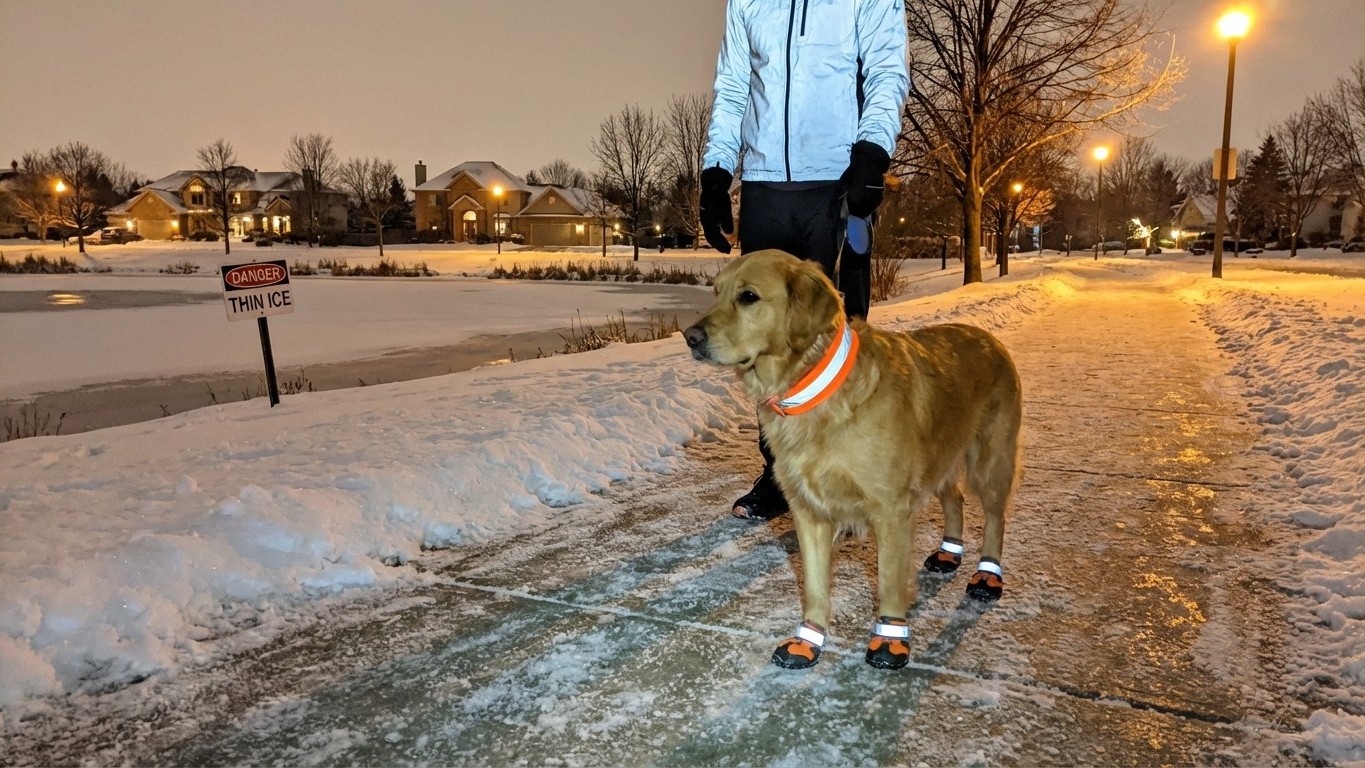
With shorter days and longer nights, visibility becomes a significant concern. Failing to make your dog visible during early morning or evening walks increases the risk of accidents. Equipping your dog with a reflective collar or an LED light attachment ensures they are seen by motorists and other pedestrians. Similarly, wearing reflective clothing yourself enhances safety for both you and your pet. winter dog care
Allowing Access to Frozen Water Bodies
Frozen ponds and lakes may appear solid but often conceal thin ice that can’t support a dog’s weight. Allowing your dog to venture onto these surfaces poses a drowning risk if the ice breaks. Always keep your dog on a lead near frozen water bodies and steer clear of these areas during walks. cold weather advice
Exposure to Toxic Substances
Antifreeze, commonly used during winter, contains ethylene glycol, a substance highly toxic to dogs. Its sweet taste can attract dogs, leading to accidental ingestion and potentially fatal kidney failure. Ensure all antifreeze containers are securely stored out of reach, and promptly clean up any spills. Be vigilant during walks, preventing your dog from licking or ingesting unknown substances. dogs
Inadequate Grooming Practices
While it might seem logical to trim your dog’s coat to prevent matting, doing so in winter can strip them of their natural insulation. Instead, maintain regular grooming to keep their coat clean and free of tangles, which helps retain warmth. For breeds with shorter hair, consider using a dog coat to provide extra warmth during outdoor activities. winter dog care
Ignoring Behavioural Changes
Winter can bring about changes in your dog’s behaviour, such as increased lethargy or reluctance to go outside. While some of this is normal, significant changes could indicate discomfort or health issues. Ensure your dog has a warm, comfortable place to rest away from drafts, and engage them in indoor activities to keep them mentally and physically stimulated. how to care for your pet in winter
By being aware of these common winter mistakes and taking proactive steps, you can ensure your dog enjoys the season safely and comfortably. Remember, when in doubt about your dog’s health or behaviour during the colder months, it’s always best to consult your veterinarian for personalised advice.